
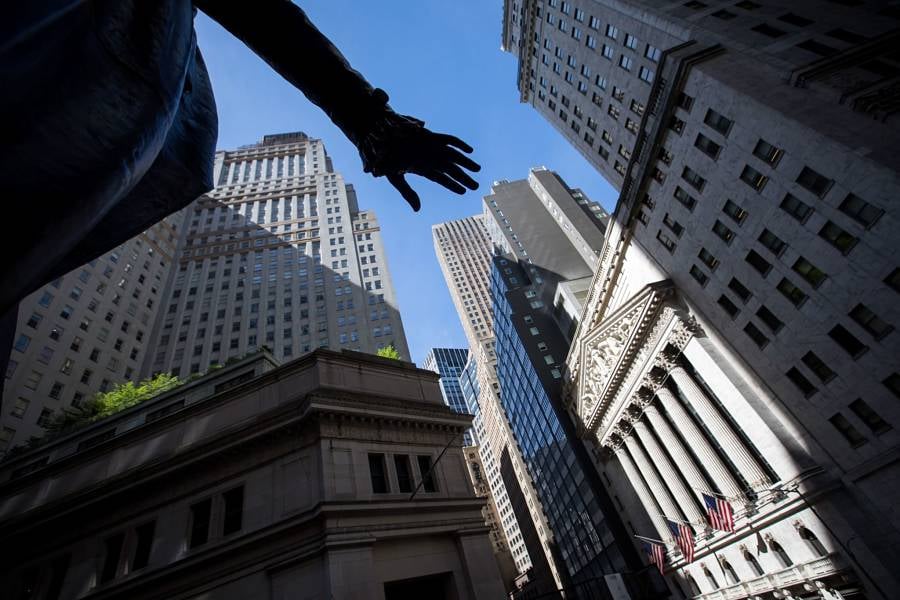
Bonus season on Wall Street is looking grim for bankers in an industry hobbled by rising interest rates, bank failures and a dealmaking slump. Next year will probably be no better.
Merger advisers could see their payouts for 2023 slide as much as 25%, according to a report Tuesday from compensation consultant Johnson Associates Inc. At regional banks, year-end compensation for professionals in retail and commercial businesses could fall 10% to 20%, the company found.
“Pay statements will be down moderately for most, in another disappointing year,” Alan Johnson, managing director of Johnson Associates, said in an interview. Inflation will also make the declines seem even more dramatic, he said, as costs continue to rise.
Even though bonuses will probably drop, relative pay is still high in financial services when compared to the rest of the global economy. Indeed, it’s not all doom and gloom. Some professionals — including those involved in equity underwriting and wealth management — could see a modest bump. Bigger is also often better, with retail and commercial bankers at major global banks seeing their pay flat to up 10%, rather than down like at the regionals.
“Regional banks were suffering, especially the big holders of real estate debt and longer-dated bonds that are underwater,” Johnson said.
A separate report that Options Group released Tuesday found similar trends. The firm said investment bankers will see the biggest hit to compensation, down almost 22%, while wealth management workers can expect gains of about 5%.
“While it’s been a tough year, the cost of replacement is high on several levels and not just financially, but also considering the impact on overall client business and team morale,” Michael Karp, Options Group’s chief executive, said in a statement. “Limited talent pools in certain divisions could also mean replacement hiring is near impossible.”
Looking ahead, 2024 may be no better, Johnson said. He cited headwinds including cost pressures, interests rates and geopolitical tensions continuing to weigh on fees. Other businesses that have fared better under these circumstances, such as private equity and private credit, will be hard to get “back on the growth path that they were on,” he said.
This year’s bonuses will probably take a hit from many of those same factors, along with the collapse of several regional banks. In 2022, the average Wall Street payout plunged 26% as the dealmaking slump and banks’ efforts to contain costs weighed on compensation, according to an analysis by New York State comptroller Thomas DiNapoli. That percentage brought the average bonus closer to what employees received before the Covid-19 pandemic.
Those working in asset management may see a decline in bonuses of as much as 10% on lower profits, while payouts at wealth management firms are projected to be up 5%, Johnson Associates said. At private equity firms both big and small, incentive compensation is likely to be flat.
Bankers in debt underwriting are poised to fare better than merger advisers, with their incentive pay flat to down 10%, according to the report.
The five biggest U.S. banks collectively posted a seventh straight quarter of declines in investment banking fees in the three months through September, matching the seven quarters of heightened M&A activity during the pandemic era of easy money. The battle for talent has also eased in the finance sector, with some firms trimming head count or freezing hiring to manage expenses.
As for the bright spots in the industry, investment bankers that work on equity underwriting deals have fared better this year, with debt being the more costly option for companies tapping the capital markets. Those professionals could see their bonuses increase 5% to 15%, according to the report. Wealth advisers could also see their bonuses increase 5%, the report shows, with financial advice in demand.
Some desks benefit from rising interest rates and the move away from equities to lower-risk assets such as bonds or money-market funds. Fixed-income traders could see their bonuses increase as much as 5%, outperforming their equity-trading peers as initial public offerings remain muted, according to the report. Those traders could see their bonuses fall 5% to 10%.
Elsewhere in finance, incentive pay is likely to be flat or down. Those working in asset management may see a decline of 10% on lower profits, while bonuses at hedge funds are projected down 5% to up 5%, Johnson Associates said. At private equity firms both big and small, incentive compensation is likely to be flat.

Aging populations and underfunded systems are forcing wealth managers to rethink how they prepare clients for retirement.

A new Morgan Stanley survey signals a fundamental shift in how employees view retirement benefits - and raises the stakes for plan advisors.

Proposition 40 wealth tax could raise $30 billion, not $100 billion, as departures erode the base and voters remain split

Jump is piping FMG marketing content into post-meeting workflows as Zocks opens its platform to more than 32,000 LPL financial advisors

Trevor Uhls pleaded guilty to one count of wire fraud and one count of money laundering.
Knighthead Life entered the market with a competitive MYGA. A strong launch earned advisor confidence and paved the way for FIAs.
As AI makes financial information more accessible than ever, Lana Hock explains why human judgment, trust, and empathy remain the qualities clients value most in a financial advisor

