
Fees are how advisors make their money from clients, and while there are several ways advisors can structure fees, there’s one structure in particular that seems to be trending.
A recent Advyzon study found that performance-based billing, a fee structure typically associated with hedge funds, is seeing more advisors using it.
Performance-based fees have a troubled past, and an advisor’s compensation can be curtailed for underperforming a benchmark – even if the portfolio itself was up with the market. And if advisors participate to a greater extent in the relative outperformance of the benchmark, they have an extra incentive to try to beat it.
“With performance-based billing, certain fees are triggered only when assets perform well enough to pass a specified threshold,” Advyzon said in the study. “While some investors might shun this type of fee structure as overly complex, others might gravitate toward it.”
But what do advisors think? As it turns out, many are divided when it comes to fee structures.
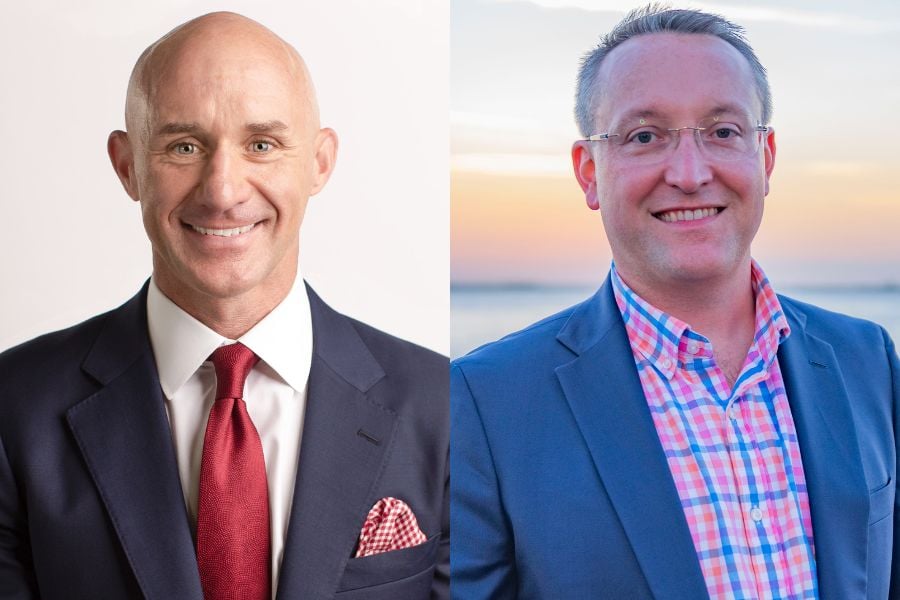
Andrew J. Evans, CEO and founder of Rossby Financial, an RIA platform, says he doesn’t use performance-based fees.
“When you embrace that, you are working in a very specific way of running money,” he says. “You are specifically looking at every investment, looking for things that will absolutely grow, and things that you can get out of.
“For us, it's better to work off a general wealth management model, where, for the products and services that we provide, the client is paying a flat fee or a singular cost, like a tier or a break point, and that's that,” Evans added.
Catherine Avery, founder and CEO of CAIM, said that while her firm is performance-based, it tends to keep the fee percentage below the market.
“We want to have our clients for a long time, and we certainly don't want our clients to leave because of large fees,” she said. “Eventually, it makes itself up because if they stay with you a long time, and the assets grow, you're collecting more fees along the way.”
Advyzon said that while the number of firms offering performance-based billing increased significantly in 2023, the portion using it is only a minority – just 1% of the 1,200 firms it pulled data from. However, Advyzon also said that it’s seen the number “increase steadily year over year” among smaller firms like RIAs.
But Evans said performance fees are becoming more and more outdated. “When it comes to [performance-based fees], you really don't see it that that much anymore,” he says. “There are hedge fund managers in some of their presentations … saying ‘that model has become even harder for us.’ So they're finding new ways to get their revenue.”
Evans added that, ultimately, that there’s no right or wrong fee structure. “It’s more of, ‘If I'm a client, what am I comfortable with?’ And for the advisor, whatever you're charging, can you deliver on what you stated you're doing for that fee? Whatever that fee is.”
Ashley Folkes, founder and senior wealth manager of Inspired Wealth Solutions, says the majority of people in the marketplace that he’s competing with are still charging the traditional fee on assets under management.
Avery said the flat fee structure should really be the model that trends over the next year, especially when it comes to attracting younger people.
“The flat fee helps to bring in a lot of the younger clients who may not really have enough in AUM,” she said. “It keeps them in the loop with an advisor until they really have enough assets under management to bring them in under a different tier and make it palatable or low enough for them to be able to afford it.”
Because the industry is becoming more and more diverse, there will also continue to be new fee-based models, Folkes said. “There's just so many different ways to go about charging clients these days.”

Also, Raymond James's employee advisor channel adds breakaways from Wells Fargo and Stifel, while UBS welcomes an ex-Morgan Stanley duo in Indiana.

It promised guaranteed principal and 10% monthly returns. The SEC says it invested nothing.

Ten years after entering the fee-based annuity market, MassMutual Ascend says nearly half its lifetime sales came in the past two years alone – but barriers remain among fee-only advisors.

Amplify, WealthReach, Zeplyn and Zocks have unveiled partnerships aimed at automating portfolio management, content creation, account opening, and client communication.

New Treasury and IRS proposals would let employers add tax-free payroll contributions to the retirement accounts as advisors weigh the fit for client families.
Northern Trust’s Ken Lassner shows advisors how to convert volatility into after-tax portfolio gains
Dan Biagini of American Equity says the steady decline of pensions, longer lifespans and a reset in interest rates are rewriting how advisors build retirement income

