

A global analysis of key factors that drive retirement security has seen the United States slip down the rankings in 2024.
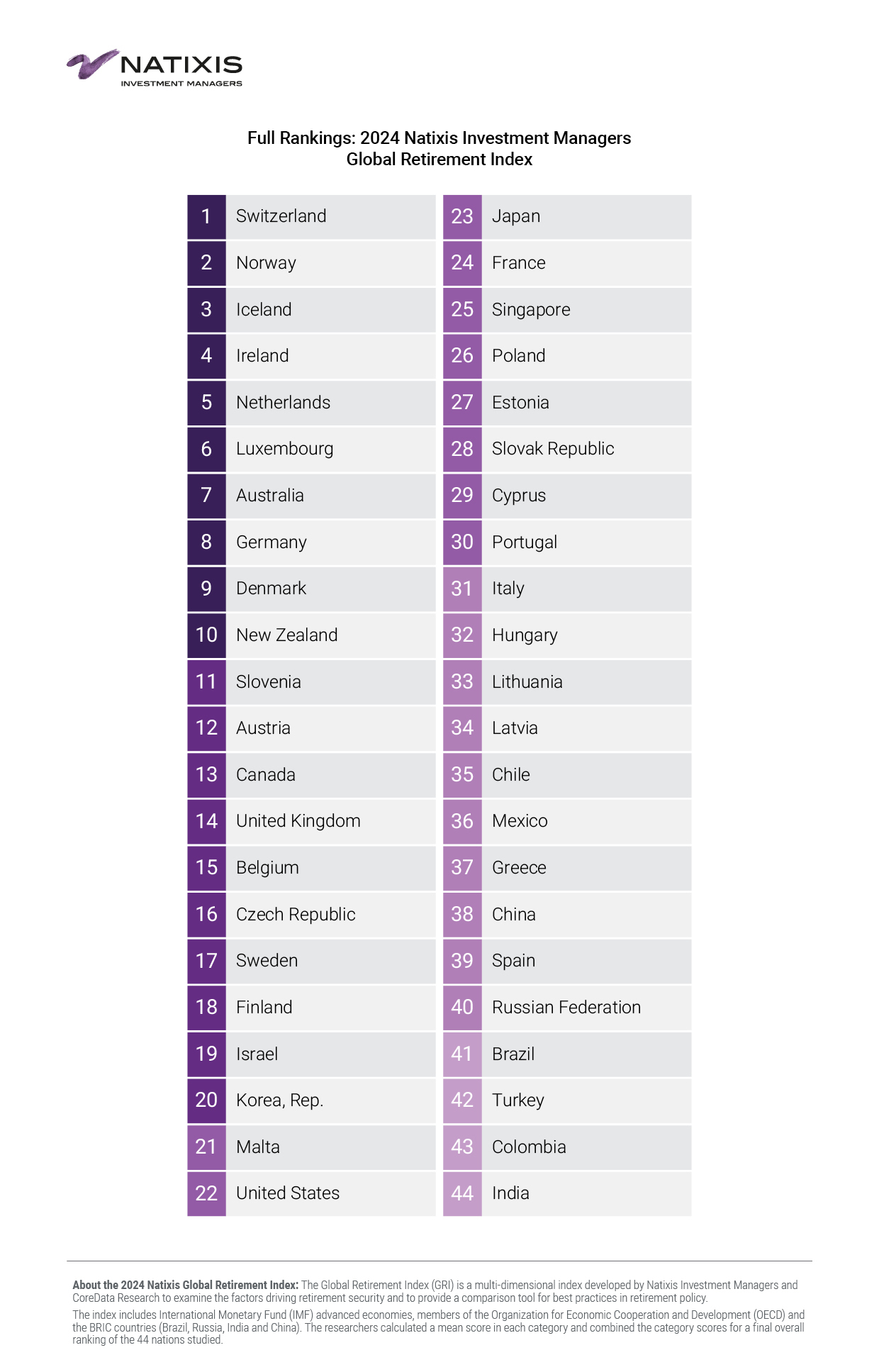
The Global Retirement Index from Natixis Investment Managers shows that the US is now 22nd overall, down from 20th in 2023, as the material wellbeing element weighs on overall resilience of the country’s retirement landscape, mostly due to a rise in unemployment. There is also a decline in the happiness sub-index.
In the finance sub-index, the US ranks 15th and the report states that the US has little to no change in rankings due to improvements in tax pressure, interest rates, bank non-performing loans, and old age dependency, driven in part by the Federal Reserve's decision to maintain interest rates to combat inflation, with potential rate cuts expected later in the year.
However, the United States is leading all other countries in GDP growth at 2.5%, driven by an influx of immigration.
Globally, the study shows a stabilizing retirement outlook but it notes that individuals are feeling the pressure as more come to the realization that they are on their own when it comes to funding income later in life.
“Globally, we’ve seen a consistent set of results in this year’s index, though there is room for improvement to be made for most,” said Dave Goodsell, executive director of the Natixis Center for Investor Insight. “The United States continues to experience a ‘good news/bad news’ scenario for retirement security, with inflation slowly returning to normal while unemployment and public debt levels rise.”
The report was created in collaboration with Core Data Research.
Natixis IM’s Global Survey of Individual Investors found that 27% of respondents said that even if they saved $1 million, they still couldn’t afford to retire – that includes 24% of those who have already accumulated $1 million.
It also highlighted four key risks for individuals: interest rates, inflation, public debt, and investors themselves not making reasonable assumptions and realistic goals.
“As individuals increasingly take charge of their retirement planning amidst these challenges, financial service providers must become more proactive in supporting them,” Liana Magner, Executive Vice President and Head of Retirement and Institutional in the U.S. for Natixis Investment Managers. "To prevent future crises, it's crucial to offer personalized solutions that address both the current economic landscape and individuals’ specific retirement needs, including access to both public and private markets.”

Elsewhere, Wells Fargo Advisors adds a $400 million Morgan Stanley veteran in Naples as an ex-Cetera advisor goes independent with LPL

According to a federal charges Bradley Heppner, 60, received more than $150 million in payments through funneling money from GWG Holdings to a shell company.

A $1B fund allegedly skimmed 30% off the top, then swapped cash for locked-up stock.

Insiders allegedly rewrote projections three times in four days.

TCI Wealth Advisors also has also tapped JIFFYAI to unify onboarding and servicing, while TradePMR adds ICE market data to its Fusion advisor platform
Knighthead Life entered the market with a competitive MYGA. A strong launch earned advisor confidence and paved the way for FIAs.
As AI makes financial information more accessible than ever, Lana Hock explains why human judgment, trust, and empathy remain the qualities clients value most in a financial advisor

