
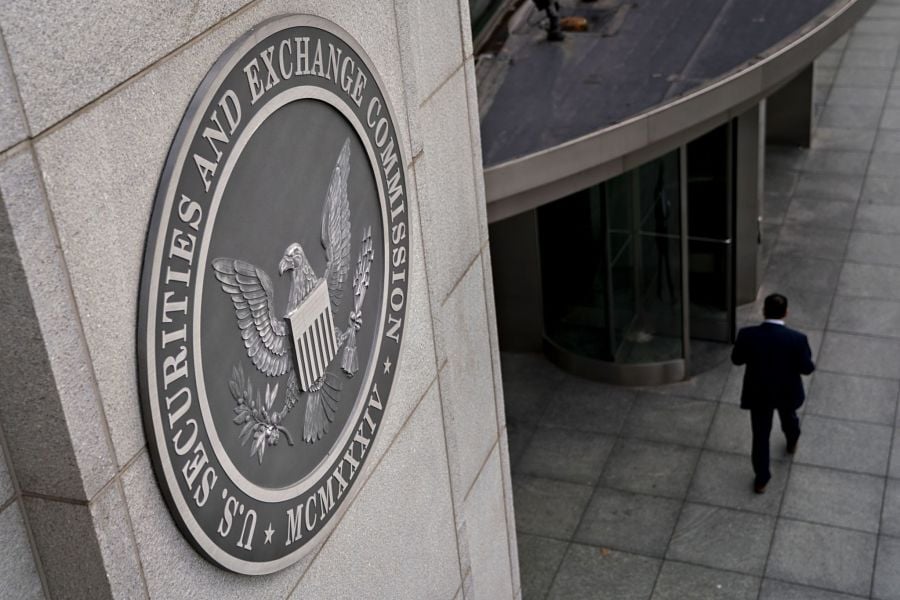
Gary Gensler has barely settled into his seat as chairman of the Securities and Exchange Commission but he already is being encouraged by a leading investor advocate to beef up Regulation Best Interest and admonished by Capitol Hill Republicans to slow down on environmental, social and governance disclosures.
Gensler was confirmed by the Senate last week and sworn in over the weekend. Now that he's in place, the commission is at full strength and has a 3-2 Democratic majority. It didn’t take long for him to get advice on how to formulate his agenda.
Barbara Roper, director of investor protection at the Consumer Federation of America, wants the SEC to revisit Reg BI, the broker investment advice standard that went into force last summer, and related measures affecting investment advisers.
“For decades, the Commission has failed to live up to its central investor protection mission when it comes to the regulation of broker-dealers and investment advisers,” Roper wrote in a letter Monday to Gensler. “You have an opportunity to correct that failure, and we urge you to do so.”
Reg BI is “too weak and undefined to deliver the promised protections of a true best interest standard backed by meaningful restrictions on harmful incentives,” Roper wrote. She added that “most firms seem content to make minor tweaks to their practices.”
Two other parts of the Reg BI regulatory package — SEC guidance on the Investment Advisers Act and the customer relationship summary, Form CRS — are similarly flawed, Roper said, and should be improved.
The SEC should adopt a principles-based definition of "best interest" and clarify how it will assess brokerages’ efforts to mitigate conflicts of interest. She suggested that the agency could use the Department of Labor’s recent guidance on its investment advice rule to strengthen Reg BI.
“If the SEC were to follow DOL’s lead, industry would get the benefits of consistency across different account types, while investors would reap the benefits of long-overdue constraints on the toxic incentives that pervade the broker-dealer business model,” Roper wrote.
The SEC also should strengthen the fiduciary duty that governs investment advisers under the Investment Advisers Act and test the effectiveness of Form CRS, Form ADV and Reg BI disclosures.
Roper said that the steps she’s recommending don’t require the SEC to undertake a new rulemaking process.
“The good news is that we do not believe it will be necessary to scrap these rules and start from scratch in order to deliver the protections investors expect and deserve when they turn to financial professionals for help with their investments,” Roper wrote.
Two House Republicans sent a different message to Gensler, cautioning him to do avoid “mission creep” when it comes to ESG regulation.
Reps. Patrick McHenry, R-N.C. and the ranking member of the House Financial Services Committee, and Bill Huizenga, R-Mich. and the ranking member on the panel’s securities subcommittee, expressed concern about the intense SEC activity on the issue in the weeks before Gensler’s arrival.
The agency established an enforcement task force on climate and ESG and released a request for public comment on strengthening climate-risk disclosures, among other moves.
“To the extent that as Chairman you intend to continue this ‘enhanced focus’ on climate and other ESG-related issues, we insist that the Commission ensure any changes to the Commission’s disclosure regime are consistent with the historical practice of requiring only disclosures of information that are actually material to investors,” McHenry and Huizenga wrote in a letter Monday.
The lawmakers also warned Gensler not to make changes in ESG oversight policy through enforcement or examinations, rather than by proposing new rules.
“We ask for your confirmation that the SEC will not effectively engage in ESG-related rulemaking through new enforcement or examination standards in the interim period before any relevant regulatory changes are completed through the notice-and-comment rulemaking process,” McHenry and Huizenga wrote.

InvestmentNews reported in 2017 that the IRS was scrutinizing the tax shelter land deals, called syndication conservation easements.

Advisors gain a second workflow for 401(k) guidance as the fintech expands beyond bulk rebalancing, backed by new policy research on advice access.

New data shows most people do not have enough saved to cover costs and are not fully utilizing their accounts.

Firms announce new recruits this week, with teams overseeing hundreds of millions in client assets switching affiliations.

It’s the 12th deal for Stratos since SEI's investment and follows 11 acquisitions worth $4.8B in 2025.
Northern Trust’s Ken Lassner shows advisors how to convert volatility into after-tax portfolio gains
Dan Biagini of American Equity says the steady decline of pensions, longer lifespans and a reset in interest rates are rewriting how advisors build retirement income

