
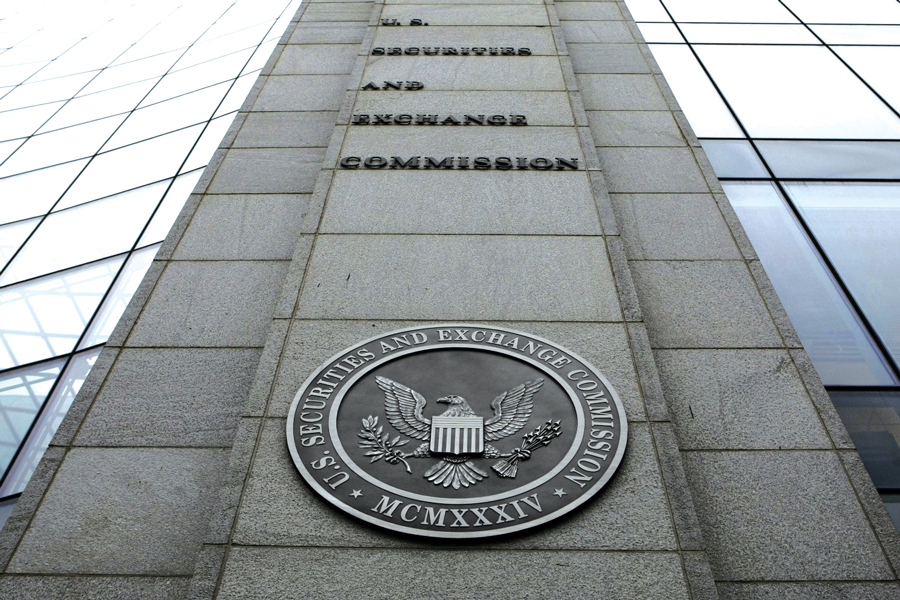
The Securities and Exchange Commission announced Thursday it has created an enforcement task force on climate and environmental social and governance issues — the latest in a flurry of agency activity emphasizing climate risk and sustainability.
“Consistent with increasing investor focus and reliance on climate and ESG-related disclosure and investment, the Climate and ESG Task Force will develop initiatives to proactively identify ESG-related misconduct,” the SEC said in a statement.
The 22-member task force initially will look for “material gaps or misstatements in issuers’ disclosure of climate risks” under existing rules and also will analyze “disclosure and compliance issues” related to ESG strategies used by investment advisers and funds.
[Webcast: What Biden means for ESG investing in 2021]
“Climate risks and sustainability are critical issues for the investing public and our capital markets,” SEC Acting Chair Allison Herren Lee said in the statement. “The task force announced today will play an important role in enhancing and coordinating the efforts fo the Division of Enforcement, the Office of the Whistleblower and other parts of the agency to bolster the efforts of the Commission as a whole on these vital issues.”
In recent weeks, the SEC has announced the appointment of a senior policy adviser for climate and ESG, placed an emphasis on climate and ESG in examinations and ramped up its review of corporate disclosures about climate risk. On Tuesday, the Biden administration’s nominee for SEC Chair, Gary Gensler, indicated backing for increased climate disclosures.
But the SEC’s two Republican members, Hester Peirce and Elad Roisman, seemed to have reached a tipping point on the agency’s intensity about climate change. They questioned whether the agency was breaking new ground or simply putting a climate overlay on ongoing corporate and investment adviser disclosures.
“Over the past two weeks … our Divisions of Corporation Finance, Examinations and Enforcement all have announced climate- or ESG-related initiatives,” Peirce and Roisman said in a statement. “What does this ‘enhanced focus’ on climate-related matters mean? The short answer is it’s not clear yet.”
They noted that the SEC has not approved new standards or expectations regarding climate disclosure and that the agency’s examination priorities report “refer only briefly” to climate and ESG-related risks.
“Wouldn’t it be more prudent for us to await the results of the Corporation Finance staff’s latest review of climate change-related disclosure and the Examinations staff’s climate- or ESG-related findings in this new exam cycle before allocating resources to an ESG-specific enforcement initiative?” Peirce and Roisman said.
Pete Driscoll, the director of the Division of Examinations, said Thursday the SEC will soon release an ESG risk alert.
“We’re working on a risk alert based on some exams that we’ve done at the end of this past year because we think that it’s very timely and, obviously, it’s going to be a priority for us,” Driscoll said at the online Investment Adviser Association Compliance Conference.
The agency is assessing disclosures, trading patterns, policies and procedures and whether a firm’s or fund’s ESG-related activity lives up to what it’s advertised to be.
“We’ll look at the trading and the investment style,” Driscoll said. “We’ll dig into the detail. We’ll compare the trading and the holdings versus the benchmarks as well.”
He said that the agency added to its exam priorities this year reviewing climate-related changes to business continuity plans.
“It’s a little bit different angle than we did last year,” Driscoll said. “But we do think it’s much more relevant this year, so we will focus on that.”

IRA and 403(b) balances eased too, while SECURE 2.0 data shows sponsors taking a selective approach to optional plan features

As the great wealth transfer drives demand for advanced trusts, former Stinson partner and head of Hargrove's new UHNW practice says the traditional billable-hours model is failing wealthy families

The SEC's restructuring plan would bring the CAT under direct federal oversight, eliminating a decentralized governance model.

The new Portfolio Model Management capability lets advisors scale investment implementation while retaining client-level flexibility.

Demand for formal youth investing education is surging, but advisors may be the missing piece in filling the classroom gap.
Advisors are broadening the conversation beyond savings to help clients prepare for the realities of longer lives
Growing wealth, evolving priorities, and untapped opportunities are reshaping how women approach long-term investing.

