
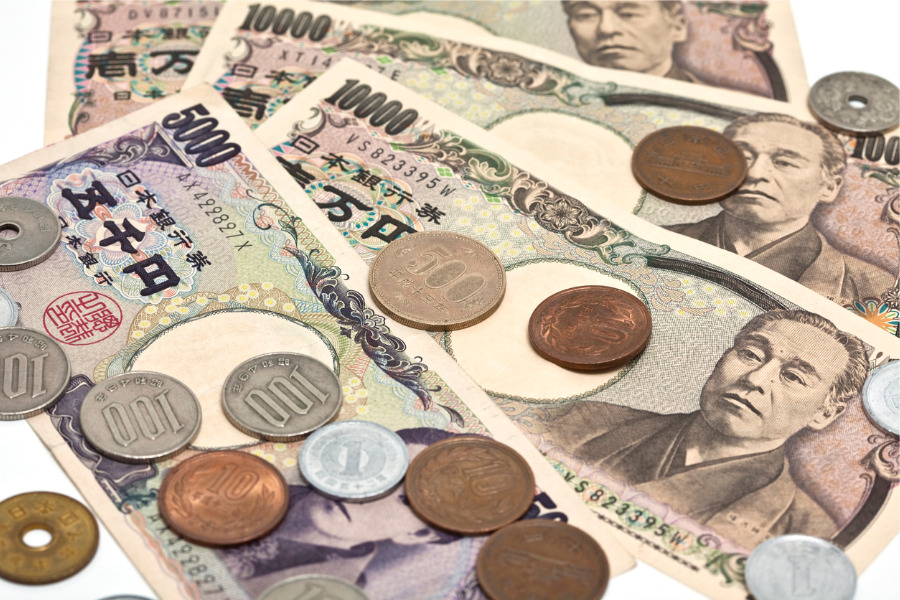
Currency traders preparing for this week’s policy decisions from the Federal Reserve and Bank of Japan got fresh reminders that Japanese officials stand ready to intervene in the currency market with possible US backing if swings in the yen are deemed excessive.
Japan’s top currency official Masato Kanda said Wednesday he’s keeping in close contact with his counterparts in the US on a day-to-day basis, and both sides agree that excessive currency moves are unwelcome.
“We maintain extremely close communication with foreign authorities, especially the United States, on a regular basis,” Kanda said.
US Treasury Secretary Janet Yellen said earlier that any intervention by Japan to prop up the yen would be understandable if it is aimed at smoothing out volatility.
Kanda said he won’t rule out any steps to address unruly markets if deemed necessary, and he continues to monitor developments with an extreme sense of urgency. The yen strengthened only a whisker after Kanda’s remarks during morning trading in Asia. It gave up those gains and slid past 148 versus the dollar to the weakest level this year in the afternoon. It was at 148.15 as of 4:49 p.m. in Tokyo.
Kanda was speaking ahead of a decision later Wednesday by the Fed, where authorities are expected to hold rates steady. The yawning interest-rate gap between Japan and the US has been a key factor in yen weakness, making the higher-yielding dollar more appealing.
BOJ Governor Kazuo Ueda and his team are also expected to stand pat when they wind up a two-day policy meeting on Friday, a year to the day since Japan’s first intervention to prop up the yen since the late 1990s.
“Markets will be paying attention to how Ueda describes the relationship between foreign exchange and monetary policy and how far he’ll go in talking about currencies,” said Hideo Kumano, economist at Dai-Ichi Life Research Institute. “There’s a risk that an excessively weak yen could lead to rapid inflation via costly imports.”
Speaking on the sidelines of the the United Nations General Assembly in New York, Yellen said that any intervention by Japan shouldn’t aim to affect the level of the exchange rate.
“It would depend very much on the details,” Yellen said when asked whether the Treasury Department would be understanding if Japan intervened to buy yen in the foreign-exchange market. “We usually communicate with them about these interventions.”
Economists see the remarks pointing to a US green light to act should the yen move sharply over the coming days.
“Yellen’s comments give Japan more leeway to intervene in the foreign exchange this time if needed,” Kumano said. “But this also could mean that Japan would need similar permission when volatility increases in the future again.”
A year ago Japanese authorities conducted the first yen-buying operations since 1998 as the yen continued to slide, briefly putting a floor under the currency before it hit a multi-decade low of 151.95 per dollar in October. Ultimately Japan needed to shell out more than $60 billion in three interventions last year to help stabilize the currency.
While a weak yen supports exporters, it also raises the cost of food and energy imports, hurting households and domestically focused businesses, creating a headache for Prime Minister Fumio Kishida.
Inflation has remained above the BOJ’s 2% price target for well over a year, raising the prospect of the central bank paring its massive stimulus program, a move that would likely support the yen, provided US rates don’t go up any further.
Ueda recently flagged the possibility of ending the BOJ’s negative interest rate should prices and the economy prove stronger than expected.
A surge by oil on supply concerns raises the possibility that inflationary pressure could increase globally to complicate the outlook for price growth and central bank policy.

CFP, CFA and CPA holders could gain accredited investor status as regulators weigh wider private market access for advisory clients

DeepVest, Vanilla and Libretto roll out tools to help financial advisors launch firms, close estate plans and sharpen planning skills

“People aren't effectively using their wealth in retirement,” said David Blanchett of Prudential.

Second-generation NFL ref Shawn Hochuli co-founded IWM Partners in Irvine, California, a wealth management practice with more than $500M in client assets

U.S. seniors lose $28.3 billion annually as a result of financial exploitation, according to a 2023 AARP study.
As AI makes financial information more accessible than ever, Lana Hock explains why human judgment, trust, and empathy remain the qualities clients value most in a financial advisor
Northern Trust’s Ken Lassner shows advisors how to convert volatility into after-tax portfolio gains

