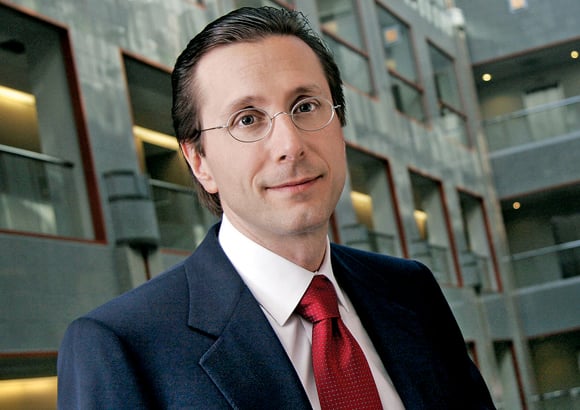
Fairholme boss surprised by flap over his activism at property company; 'will think long and hard about doing it again'
Given the months of controversy surrounding his role as an activist investor with real estate developer The St. Joe Co., iconic fund manager Bruce Berkowitz isn't so sure he wants to play the part again.
“Clearly with hindsight I didn't realize how interesting that Fairholme being a mutual fund and my being an activist would be for commentators,” he told InvestmentNews. “We would think long and hard about doing it again,” said Mr. Berkowitz, founder of Fairholme Capital Management LLC.
Nonetheless, he said he had no regrets over all of the work he has done with St. Joe, and doesn't rule out buying more stock in the company in the future.
“I suspect St. Joe will be an outstanding success one day for shareholders,” Mr. Berkowitz said.
On July 1, St. Joe disclosed that the Securities and Exchange Commission is investigating the company, looking at a number of issues, including how the property company values its land. The probe also names Mr. Berkowitz, who became chairman of St. Joe in March.
Fairholme, which owns slightly less than 30% of St. Joe, hasn't been contacted by the SEC directly, Mr. Berkowitz said.
“We are big fans of the SEC and we are big fans of full disclosure,” he said. “This is a normal part of doing business.”
The disclosure of the SEC probe is the latest headache for Mr. Berkowitz, who made headlines last year when he bought more of St. Joe after David Einhorne, another well-known investor, said that he was shorting the company.
Mr. Berkowitz joined St. Joe's board late last year, only to resign six weeks later, citing differences with management. Then in February, he was successful in removing St. Joe's chief executive, Britt Greene, and three other board members. On March 4, Mr. Berkowitz was named chairman.
Although St. Joe accounts for just 3% of The Fairholme Fund, the firm has spent a lot of time on the position, prompting concern from some investors.
“Since St. Joe is such a modest position for Fairholme, people have wondered if it is going to suck up a disproportionate about of time for Berkowitz,” said Russel Kinnel, director of mutual fund research at Morningstar Inc. “He has maintained in the past that it won't, but an SEC investigation could certainly change that.”
The $14.9 billion Fairholme Fund has been struggling recently from poor performance and huge outflows.
For the year to date, the fund has returned about -8.04%, ranking it in the 99th percentile of its category, down from leading its category for 10-year performance, according to Morningstar. Since March 1, the fund has seen $2.5 billion in net outflows.
“I am worried that this news will cause further redemptions,” said Bob Weisse, director of research at Heritage Financial Services Inc., which has $20 million invested in The Fairholme Fund. “[Mr. Berkowitz] has kept a lot of cash, so that has been fortunate, but I am worried he is going to be forced to sell positions.”
Mr. Berkowitz contends that the SEC investigation won't take his time away from the fund. “There are people handling this,” he said. “I am not.”
And he isn't worried about the outflows either. “As a fund we were always prepared for the potential for outflows,” Mr. Berkowitz said, adding that the fund has “a significant amount in cash.” In June, Mr. Berkowitz told Bloomberg that the fund had 5% cash, down from 27% in cash at the end of February. Now it has “much more,” Mr. Berkowitz said, though he declined to elaborate.
“Those investors who wanted a smaller Fairholme Fund are now getting that,” he said. “Every dollar that goes out allows us to own more of what we like and I think we have done really well.”
As for the fund's underperformance, Mr. Berkowitz notes that short-term underperformance in the Fairholme Fund historically has resulted in gains for long-term shareholders.
“During the Obamacare scare, we did a lot with life and health care companies and were criticized for being in those risky areas,” Mr. Berkowitz said. “Today, those companies are considered the most defensive in the market.”