

Heading into 2026, the economic backdrop looked favorable for consumers. The Federal Reserve (Fed) had cut its policy rate from 5.50% to 3.75% over 2024 and 2025, inflation was moderating and tax relief was expected to put more disposable income back into household budgets. Futures markets were pricing more easing to come. It had the makings of the “soft landing” investors entered the year hoping for.
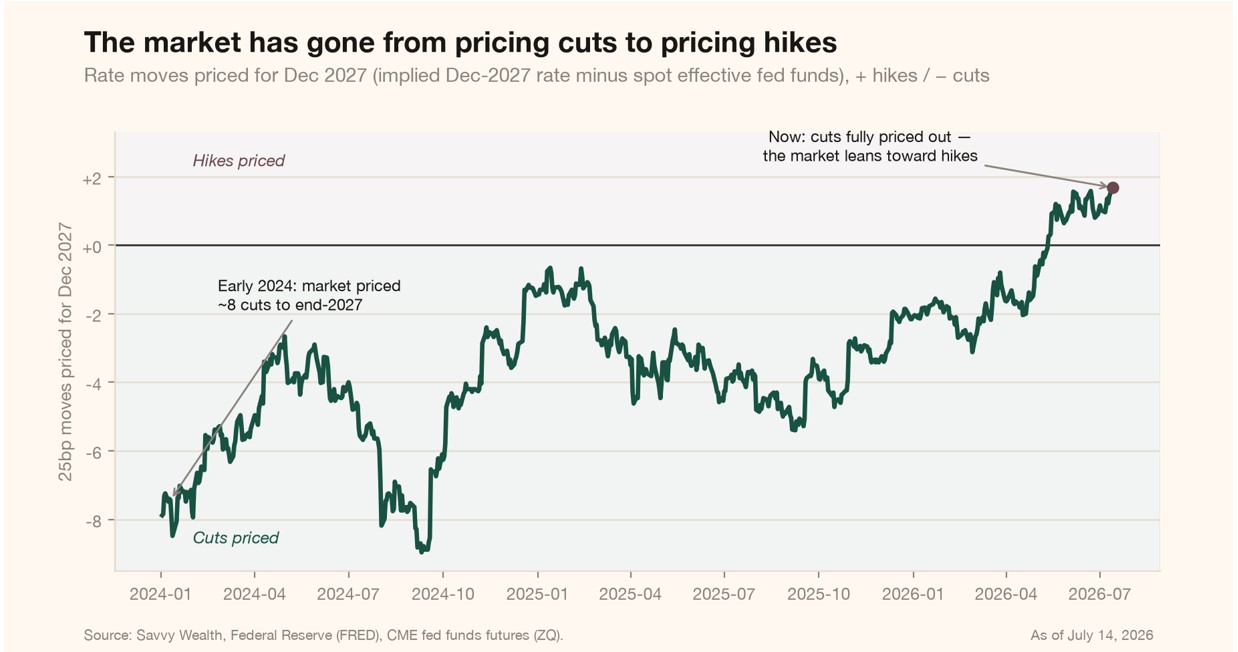
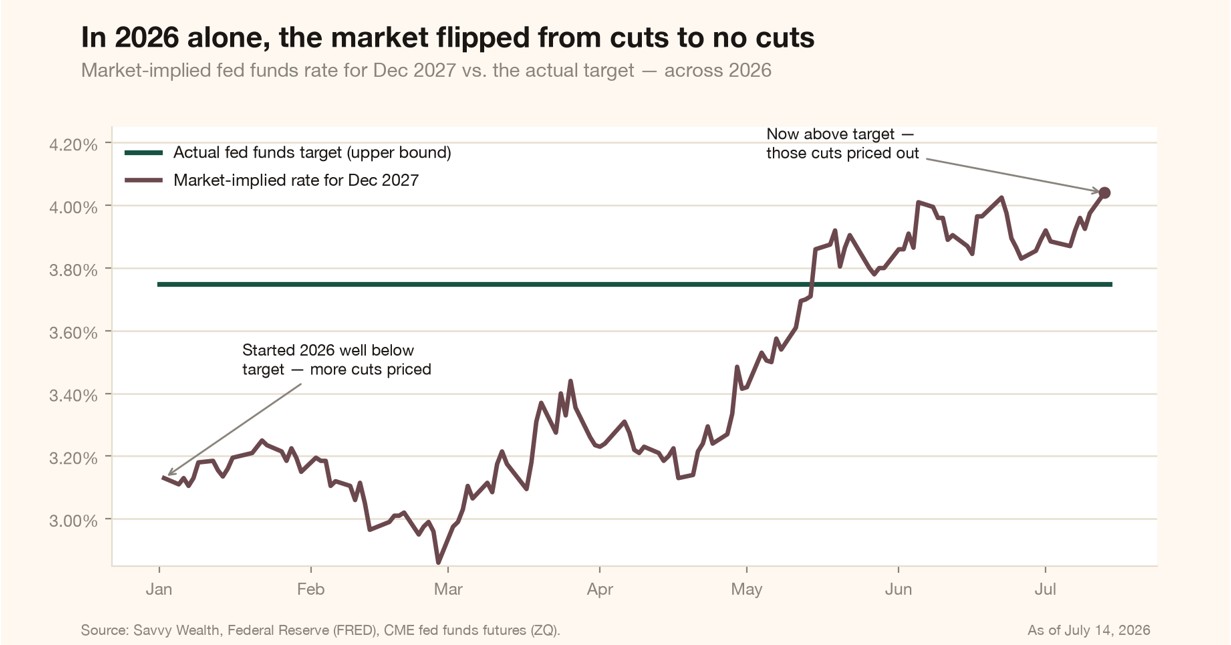
That optimism has since unwound. Firmer inflation and a resilient-enough labor market have pushed the market to price those cuts back out, to lean toward hikes. Within 2026 alone, the rate investors expect the Fed to hold by the end of 2027 has climbed from well below today’s target to above it.
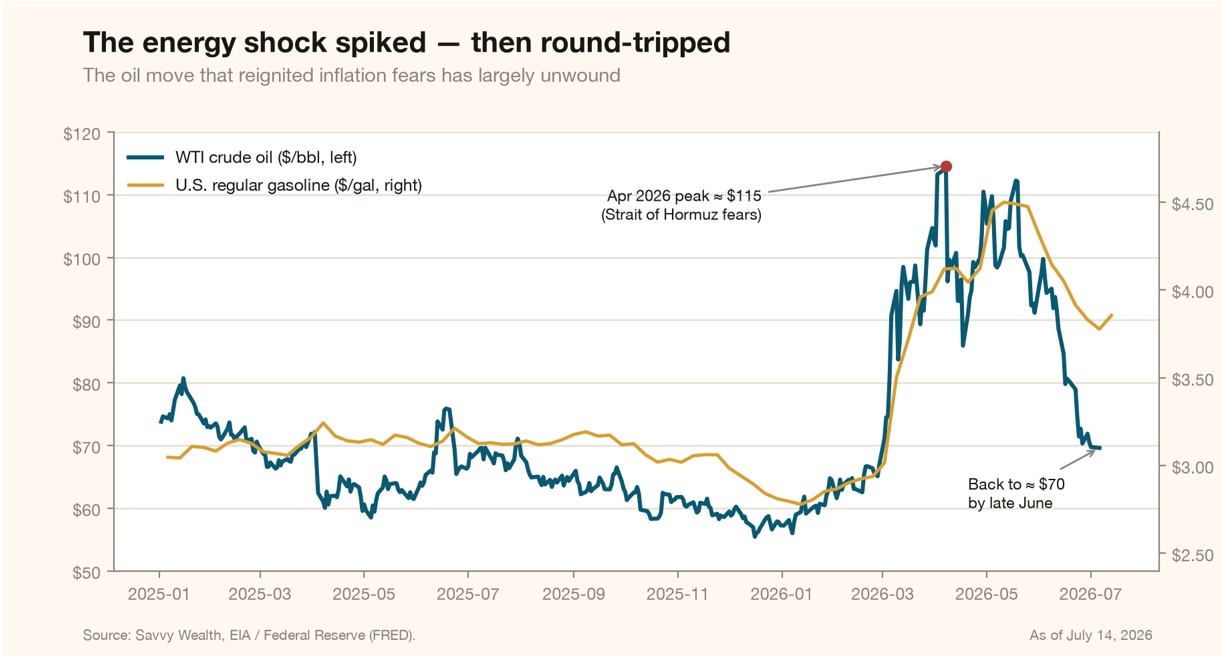
Then the Iran conflict escalated and energy roared back to the focus of the story. Attention snapped to the Strait of Hormuz, the chokepoint for roughly a fifth of the world’s oil, and crude spiked toward $115 a barrel, dragging pump prices sharply higher. What began as a geopolitical headline quickly became another inflationary pressure point for households already contending with elevated housing, grocery and utility costs.
Months on, much of that energy shock has reversed. Crude has round-tripped back toward $70 and gasoline has eased from its spring peak near $4.50 toward $3.85, still meaningfully above where it began the year, but well off the highs. Yet the episode served as a useful X-ray of an economy that was already dividing in two.
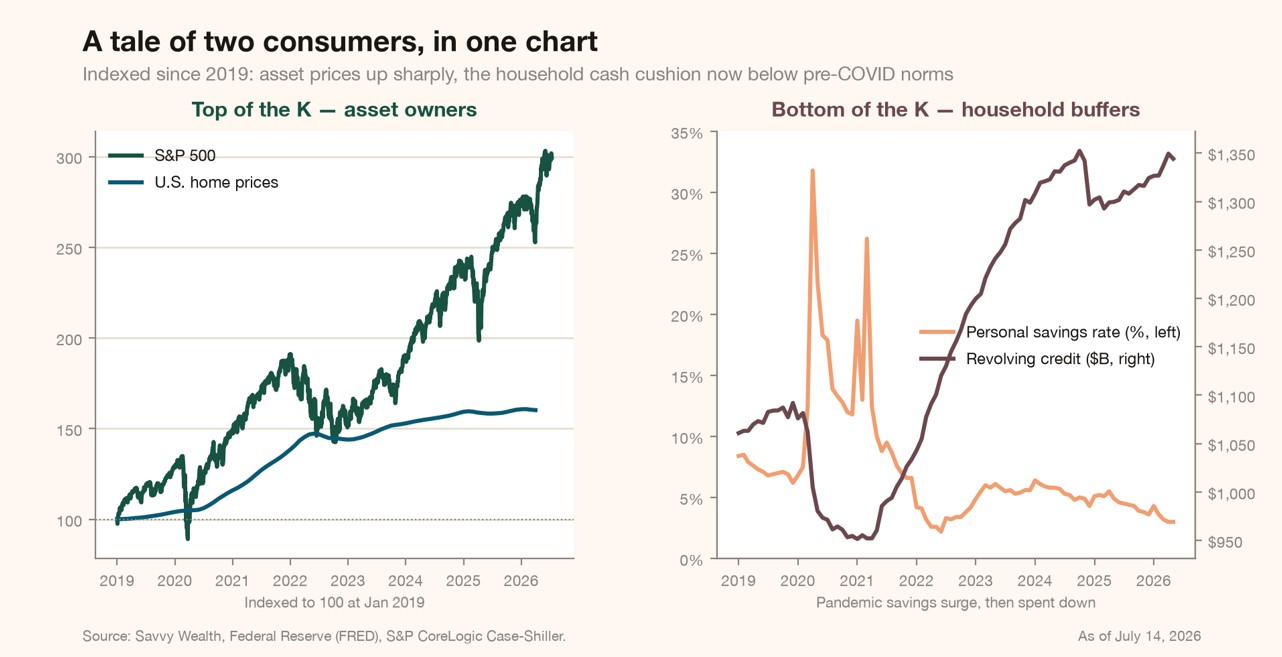
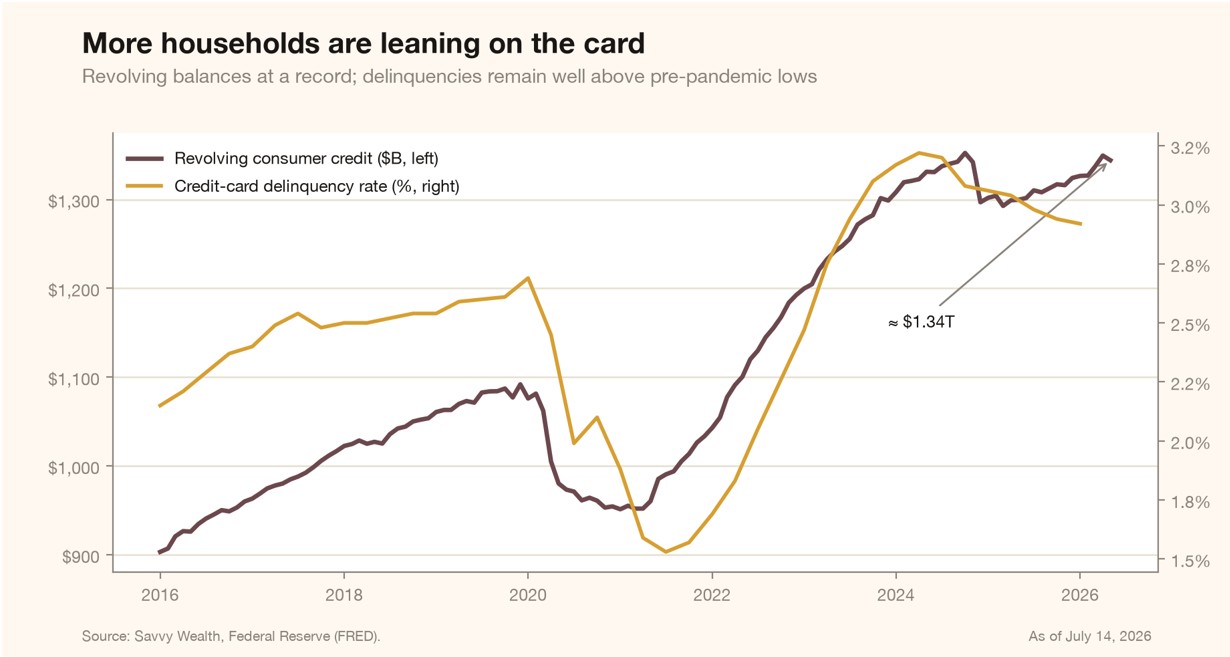
That divide is at the heart of the matter. On one hand there are higher-income households benefiting from strong asset prices, rising home equity and concentrated gains in the stock market. On the other hand, consumers leaning harder on credit, with revolving balances pushing to $1.34 trillion, drawing down thin savings to manage everyday expenses. The result is what increasingly feels like a tale of two consumers: a K-shaped economy in which markets keep climbing and luxury spending holds up, even as many households quietly pull back and strain under persistent cost pressures.
Earlier this year we sketched three paths for how the conflict could shape consumers, inflation and Fed policy. With some distance it’s clear that the third, prolonged uncertainty, is the one that has materialized. But it’s worth revisiting all three since no one knows the end game.
In the most optimistic case, tensions ease, energy normalizes, inflation pressure moderates and the Fed regains flexibility. As it relates to price, this is roughly what happened: oil retreated, equities flirted with new highs and home values held near records in most markets. But many households exhausted their pandemic-era savings by 2024 and have since accumulated more revolving debt. Calmer energy markets prevent conditions from worsening but do not reverse the strain levered consumers face.
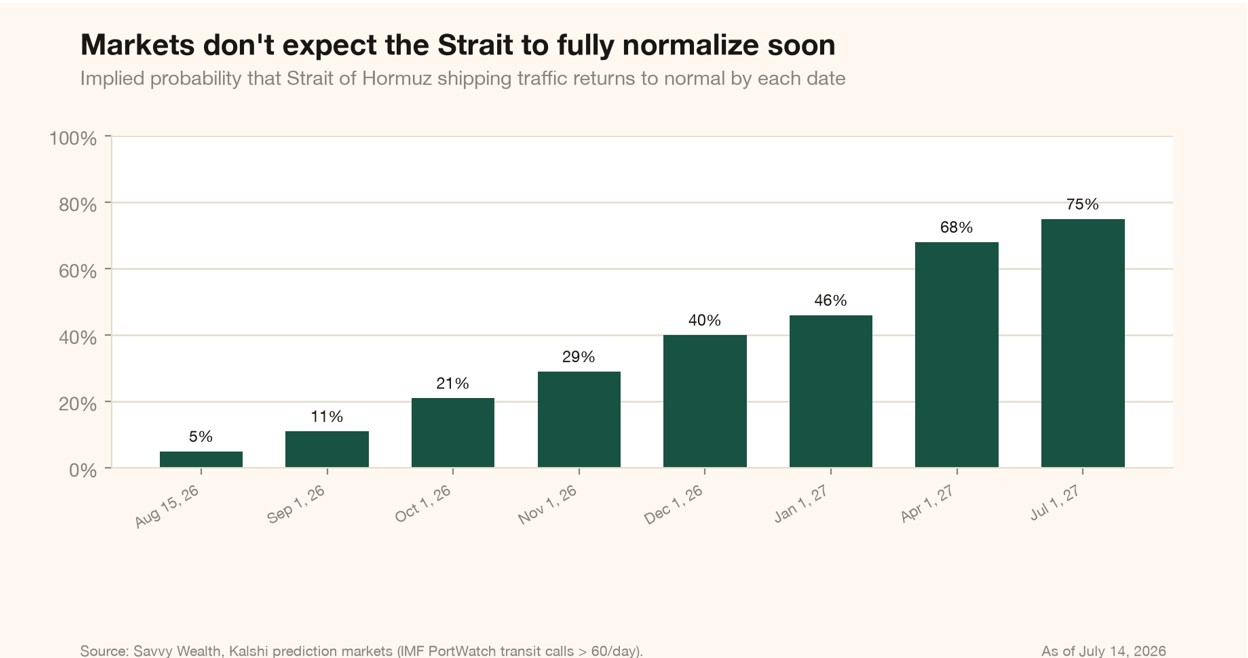
A more severe escalation, and sustained disruption at the Strait with crude toward $120–140 barrel, would have made inflation the dominant concern again and forced the Fed to keep rates high for longer. That did not come to pass, as the price shock unwound. However, prediction markets still put low odds on Strait of Hormuz shipping traffic returning to normal in the near term, which is why a renewed energy spike is a live tail risk rather than the base case. Were it to occur, the burden would fall hardest on households with the least financial flexibility: higher borrowing costs on top of elevated essentials is a genuine double squeeze.
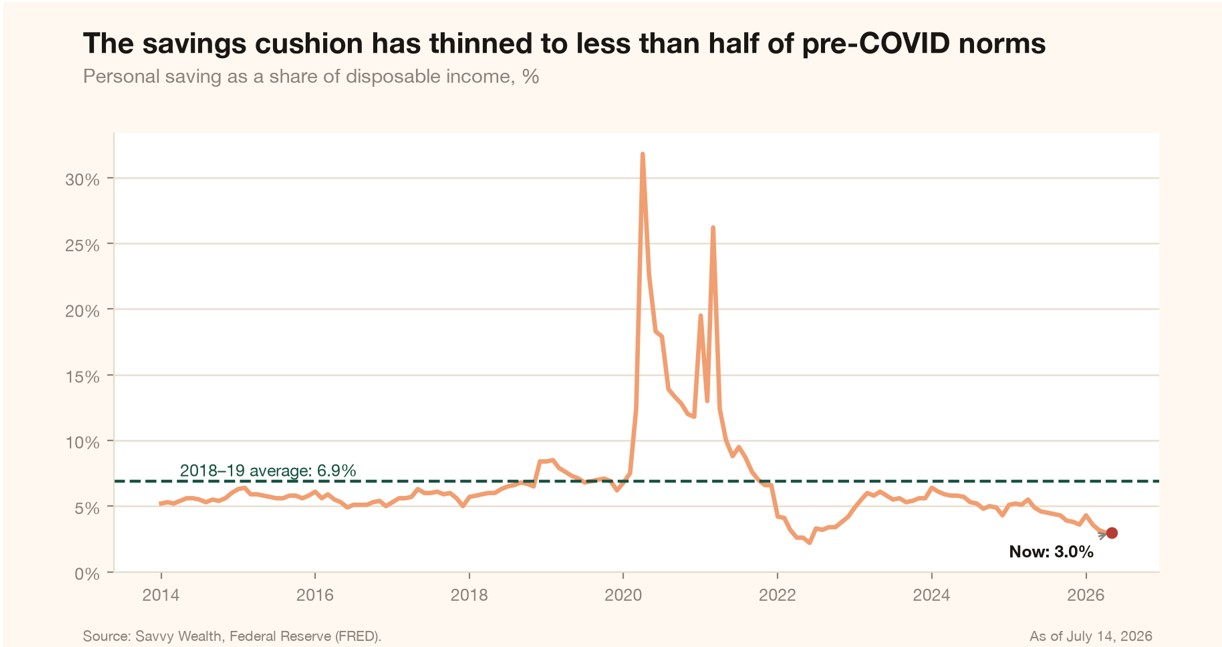
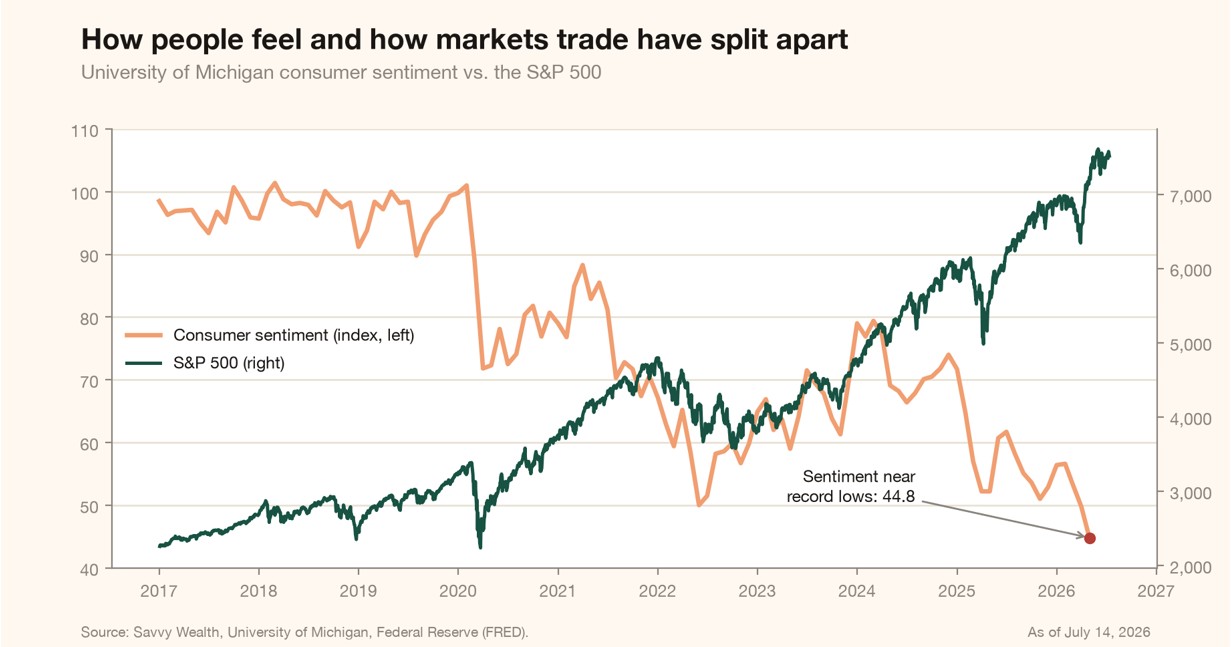
The third scenario, an extended stretch of temporary truces, renewed tensions and choppy, headline-driven markets, is occurring at the moment. This environment gradually wears on consumer confidence and discretionary spending. Consumer sentiment sits near historic lows even as the index prints records, and the savings rate has thinned to about 3%, or less than half its pre-pandemic norm. Travel, leisure and other nonessential purchases are the first to slow as stretched households prioritize essentials.
At the same time, parts of the market keep performing. Enormous investment in AI infrastructure and corporate efficiency gains continue to support earnings for a concentrated set of leaders, which is why equities and the main street can drift apart for long stretches. The gap between how people feel and how markets trade has rarely looked wider.
The pressure is most visible in how the lower half of the “K” is funding daily life. Revolving credit sits at a record, and while card delinquencies have come off their 2024 peak, they remain well above pre-pandemic levels.
The geopolitical backdrop remains uncertain, but history is reassuring. Over the long run, markets have weathered wars, geopolitical tension and black swan events. The greater risk for most investors is reacting emotionally to headlines and abandoning a sound, diversified plan.
Our own positioning reflects that read rather than any single macro call. We are overweight equities, with a quality bias toward the companies genuinely earning their multiples, and underweight fixed income, where Fed cuts and an uncertain inflation path leave little reward in longer duration instruments. We hold alternatives at a neutral, diversifying weight, and keep the unresolved energy tail firmly on the risk map. The goal is to build diversified portfolios that can withstand the previously mentioned scenarios.
For advisors, this environment reinforces the value of helping clients separate headlines from their long-term goals, ensuring portfolios stay diversified, aligned with each client’s risk tolerance and built to weather multiple economic scenarios. In a two-track economy, discipline is the edge.
Anshul Sharma is chief investment officer at Savvy Wealth.
This material is for informational purposes only and does not constitute investment, tax or legal advice or a recommendation to buy or sell any security. Views are as of July 14, 2026, and are subject to change. Data sources: Federal Reserve (FRED), U.S. Energy Information Administration, S&P CoreLogic Case-Shiller, University of Michigan and Kalshi prediction markets; analysis by Savvy Wealth. Past performance is not indicative of future results.

Jim Walesa worked in the securities industry for 39 years before leaving in 2021.

Also, SEI names LPL’s Kristie Edling-Day as CIO, TD Bank U.S. taps Hardeep Walia to lead wealth, and BMO adds an Illinois regional president

FINTRX data shows 342 company transactions in the quarter, with wealth management consolidation driving nearly one in seven deals.

State regulators secure $4.4 million from two broker-dealers over unreasonable charges on small-dollar retail equity trades.

New F&G survey finds most pre-retirees are delaying or redesigning retirement, creating fresh planning opportunities for financial advisors.
Knighthead Life entered the market with a competitive MYGA. A strong launch earned advisor confidence and paved the way for FIAs.
As AI makes financial information more accessible than ever, Lana Hock explains why human judgment, trust, and empathy remain the qualities clients value most in a financial advisor

