
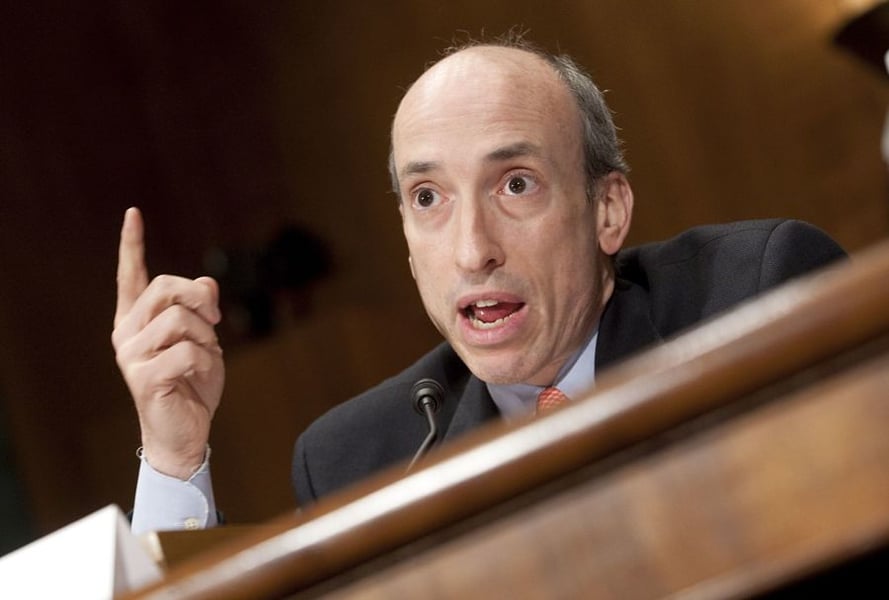
The intersection of finance and technology in securities marketplaces was the general subject of testimony earlier this month by Gary Gensler before the House Committee on Financial Services. The new chairman of the Securities and Exchange Commission appeared on the Hill to discuss recent market volatility, especially involving trading in shares of companies including GameStop Corp., and the role of app-based securities firms such as Robinhood. The key issue, as Gensler put it, is how the SEC continues to ensure that markets work for everyday investors when new technologies change the face of finance.
Without getting into semantic nitpicking, it’s worth parsing that phrase “everyday investors.” It’s safe to assume that the SEC chairman intended the term as a descriptor for the millions of people who accumulate some money and invest in equities, very often through a workplace savings plan or an individual retirement account of some type. Most of those investors, many of whom use a financial adviser, don’t “play the market” or trade very much, and probably most don’t find markets or trading all that interesting.
But a sizable number of “everyday” people do engage in short-term trading to a much greater degree than investors with long-term horizons. For many of them, the casino-like nature of stock markets — in which share prices move up and down in what appears to be random fashion, often with little apparent connection to a company’s business prospects or its actual results — can be alluring, offering the potential for big profits, which some participants do earn. The ease and low cost of entry made possible by today’s technology have provided an inviting on-ramp, and while some of those thrill-seekers probably understand the risks, many probably don’t.
Of course, to academics and financial planning professionals who see diversified, low-cost, long-term investing as the key to building wealth, short-term trading is anathema. There’s ample evidence that just as smoking or excessive drinking can affect one’s physical health, too much trading can be financially harmful.
To help make sure those engaging in short-term trading are not hurt, Gensler’s plan to look at the SEC’s rules and possibly update them in light of today’s technology makes sense. He has asked his staff to prepare a request for public input on issues related to the “gamification” of investing that apps have encouraged. Also important to ensuring that markets work for everyone is his intention to keep an eye on market issues away from the public eye, including payment for order flow, internalization, and clearance and settlement.
Perhaps some of the lessons learned taming potentially harmful physical habits may also be useful in the financial sphere. How about online commercials featuring real people who have lost their savings as a result of excessive trading? Or perhaps, like the surgeon general’s warning on cigarette packages, there could be an SEC warning on online brokerage sites noting that too much trading may be injurious to your financial health.
Such disclosure could be effective and would be in tune with today’s technology, which is what Chairman Gensler said he is seeking.

A Nationwide survey finds 47% of GLP-1 users have never discussed the drugs’ financial impact with an advisor, even as many dip into savings.

The hundreds of millions of dollars from a sale of Inspired Healthcare properties does not mean an immediate windfall for investors.

Its SEC filings said one thing - a congressional probe said another.

Sham agreements allegedly padded revenue by 345%.

"Most pre-retirees are uncomfortable making key retirement income decisions without an advisor's help," said Chris Bailey of Cerulli.
Knighthead Life entered the market with a competitive MYGA. A strong launch earned advisor confidence and paved the way for FIAs.
As AI makes financial information more accessible than ever, Lana Hock explains why human judgment, trust, and empathy remain the qualities clients value most in a financial advisor

