
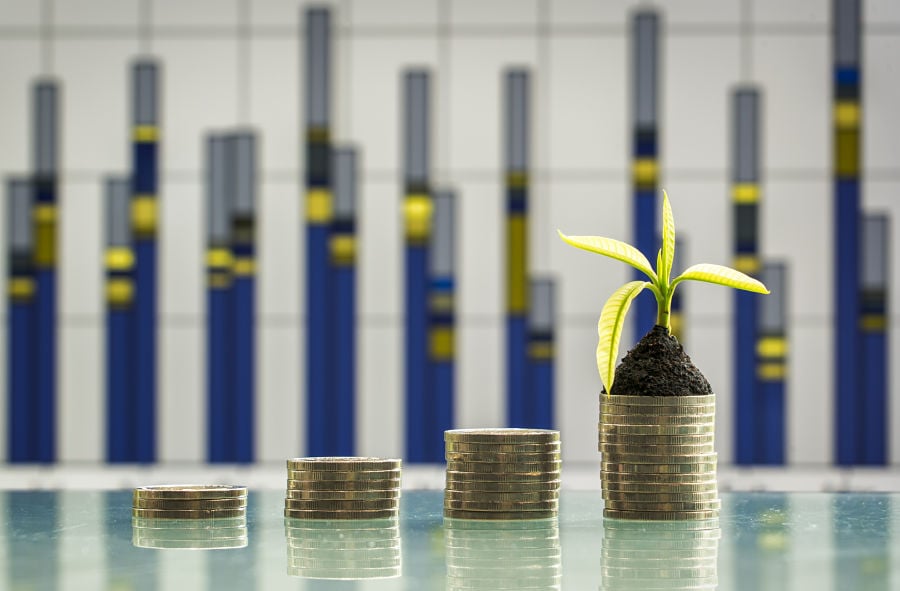
The world is aggressively seeking sustainability. While the topic has been around for perhaps a decade, the “awakening” really hit the public consciousness in 2020 and it has now become a mega-theme. It’s transitioning into a revolution and shepherding an era of conscious capitalism that’s playing out across the investment landscape.
This is not the traditional socially responsible movement that historically involved divestment from tobacco, weapons and other so-called "sin" stocks. This is about driving returns first, while providing social and environmental benefits.
The approach of using the planet’s resources as if they were endless has been damaging to the environment. Fortunately, through technological innovation and sheer force of activism, the tide is shifting. We are making better use of less, while constantly improving quality and affordability.
To become more sustainable, there is a necessary change from linear to circular economies, for example, where the costly depletion of resources and waste accumulation migrate to recycling and resource replacement with little waste and pollution in the process.
We are experiencing a generational shift and redistribution of wealth that is driving demand for sustainable investing, forcing platforms to design suitable offerings. Although this awakening began in earnest before then, 2020 will be remembered as the year the world finally took steps to address and solve major challenges.
Some of the world’s most pressing challenges have been given newfound attention. The devotion to issues such as climate change, water scarcity, ocean pollution (plastic), diversity gaps, health and safety, income equality, inclusion and human rights is the bedrock of the sustainable revolution.
These are long-term secular themes and structural changes occurring on a global scale. We are in the early stages of a multidecade tectonic shift. The consequences of these changes will be shifts in how we make basic decisions, how we consume resources and how we live on the planet. The permanent shift in behavior is also reshaping the investment landscape.
We see three converging forces driving the revolution:
• Technological innovation driving cost declines and efficiency improvements.
• Aggressive action by government and corporate leaders.
• Demand for positive societal changes from consumers and corporates.
How does this translate into portfolio performance? After decades of debate and procrastination, it is now clear these forces of change are irreversible and here to stay, strengthened by demands from multiple generations. The power of these forces makes sustainable investing a strategy of growth at a reasonable price, or GARP, and in some cases, a tech-like strategy, in which companies’ growth potential and valuations are misunderstood. They have aggressive growth prospects where value is not appreciated.
There are a number of reasons why, starting with the fact that addressing societal and environmental challenges can be a highly profitable business. This is part of the conscious capitalism philosophy that businesses should operate ethically while pursuing profits.
Many companies are growing their top and bottom lines and benefitting from rapidly improving growth prospects, multiple expansion and lower cost of debt. Moreover, the expanding pool of ESG capital is bringing greater awareness and receptivity to their stocks.
In addition, these companies will have better access to talent, be less exposed to certain regulatory risks and the risks posed by environmental and social variables. The companies that are dedicated to sustainable practices — and providing transparency — are attracting lower costs of capital and experiencing the early stages of a “sustainability premium.”
Here are examples of global sustainable mega-themes:
• Renewables 3.0.
• Rise of electric transportation.
• Rise of “electricity at home” as a larger growth industry.
• Sustainable project finance in waste and recycling.
• Access to clean water.
• Social impact, affordable housing and income inequality.
The case for a return-oriented approach to sustainable investing has become clear. The impact of addressing sustainable issues, from climate change to racial and social justice, has become a compelling investment case and, just as important, not factoring these issues represents an investment risk. Societies need to accelerate the transformation to greener, decarbonized and more sustainable economies. These powerful and secular forces can generate substantial wealth creation and compelling risk-adjusted investment opportunities for both companies and investors.
Brent Newcomb is president of Ecofin, which sits at the intersection of ecology and finance.

Thrivent Investment Management Inc. in May fired Nicholas Hale, according to his BrokerCheck profile.

About 70 bank and credit union advisors move to the Raymond James platform, while a $480M New Jersey team goes independent with LPL

The best tax plan asks not only how much a client could save, but what they would have to give up to save it.

A 20-year financial services veteran brings values-driven planning expertise to the St. Louis-based RIA.

New research shows a 71% plunge in actions in fiscal year 2026, with total settlements the lowest since the database began.
Growing wealth, evolving priorities, and untapped opportunities are reshaping how women approach long-term investing.
Knighthead Life entered the market with a competitive MYGA. A strong launch earned advisor confidence and paved the way for FIAs.

