
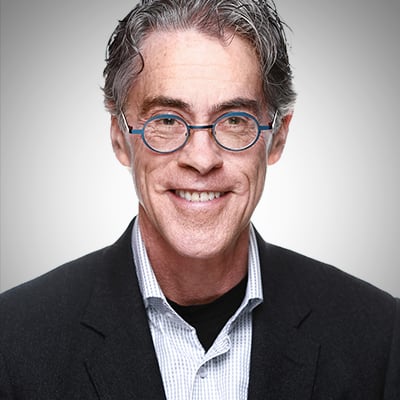
Throughout his career, Rick Kahler, president of Kahler Financial Group in Rapid City, S.D., has strongly empathized with the needs of clients. This approach has taken him through an interesting evolution from real estate sales to financial therapy.
During the 1970s, while selling real estate, he realized nobody in his field was working in the client’s interest. Responding to the opportunity, he began working with his clients in a fiduciary capacity as a buyer’s agent, a common scenario now but unheard of then.
This closer relationship with clients resulted in becoming exposed to their finances, which led Mr. Kahler to work with them on financial planning. Continuing his fiduciary approach, he became the first fee-only planner in South Dakota in 1981 and its first certified financial planner in 1983.
His next “first” resulted from his personal experience of group therapy while recovering from divorce. Noticing that no one ever mentioned money, he became inspired to incorporate therapy with advising. After working with the Kinder Institute for Life Planning for several years, Mr. Kahler held the first-ever financial therapy workshop in 2003. He co-founded the Financial Therapy Association in 2010 and is widely known for his writing and teaching on the discipline.
“Consumers are drawn to financial therapy like a magnet,” he said. “It is amazing to see how deeply money affects people. Financial planners don’t have a clue of what they’re dealing with.”
In his practice, Mr. Kahler’s therapeutic approach includes “exquisite listening” and “internal data gathering” on clients’ money attitudes and history to inform both their financial and life plans.

Halbert Hargrove senior wealth advisor weighs in on the products' guaranteed income upside, the operational drag and his wish list for carriers.

With 8.6% of advisors set to switch firms in 2026, Cerulli says advisor recruitment hinges on technology, branding and HNW support.

“I’m seeing more disputes like this between advisors and other advisors at the same practice,” said one industry executive.

Longer retirements and steady inflation could drain retiree portfolios before heirs inherit, with 4% net returns running dry by year 34.

A single fintech partner triggered a $68.8M credit hit.
As AI makes financial information more accessible than ever, Lana Hock explains why human judgment, trust, and empathy remain the qualities clients value most in a financial advisor
Northern Trust’s Ken Lassner shows advisors how to convert volatility into after-tax portfolio gains

