
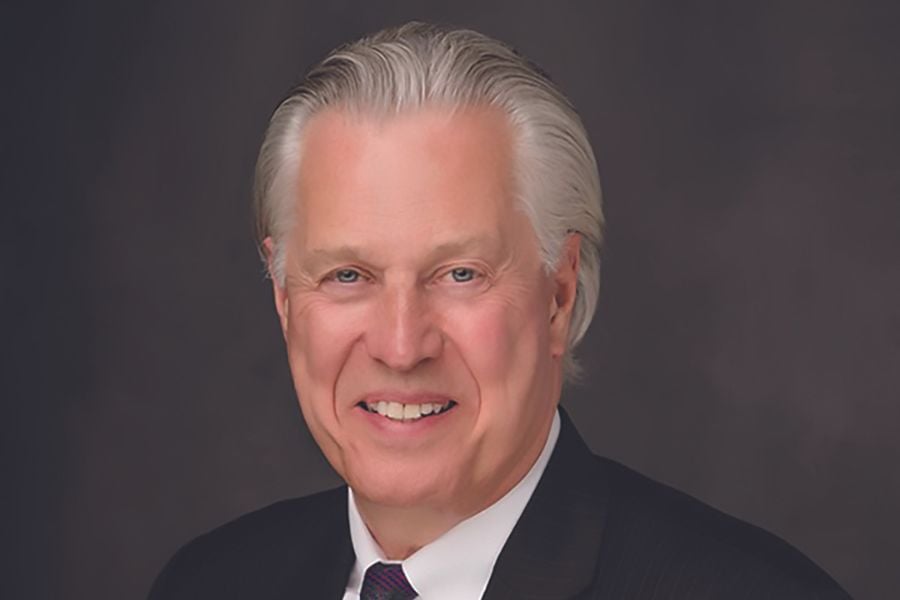
With a career spanning more than 48 years, Joseph Montgomery, managing director of investments at The Optimal Service Group of Wells Fargo Advisors in Williamsburg, Virginia, has seen the philosophy of wealth management evolve over time. When he first began, it was a transactional business – but by the mid-90s, a consultative approach had emerged as the industry standard.
“We’ve always approached it that way,” Montgomery says. “We’ve also always tried to use the broadest set of tools. If you go back to ancient days, it was pretty much stocks and bonds. That’s obviously changed a lot – and by having a consultative approach, we have changed, too. We’ve evolved [alongside] that.”
Part of this changing philosophy means having the ability to work with people over longer periods of time – something that historically wasn’t always possible.
“One of our philosophies is that it’s only a business if it outlives you,” Montgomery says. “A lot of the teaming in our industry is just matching up people for coverage. [Instead,] you need to be able to give the client continuity of care. That’s very important. People need to know that we have documented processes and procedures so that nobody they’re working with in this group is cowboying anything. They’re not independently running off and deciding to do XYZ [alone].”
For Montgomery, this approach is about that commitment to consistency – no matter what side of the equation the team is handling.
"We’re looking at very broad asset allocation,” he says. “That’s a carryover from what we do institutionally – which was an easy carryover to the ultra-high-net-worth [clients]. However, you always have to keep in mind when you’re working with any kind of asset pool – broad or narrow – that things go in and out of favor. It’s like Mark Twain said: ‘History doesn’t repeat itself, but it often rhymes.’”
The essence of Montgomery’s strategy lies in exposing clients, whether they are ultra-high-net-worth or those with more modest assets, to a wide array of investment opportunities, thereby democratizing access to truly diversified portfolios.
Looking ahead to what the future holds for the market, Montgomery says he’s optimistic.
“This is going to sound like Pollyanna – but if you believe what I believe, the market has an upward bias,” he says.
“I feel like this is probably the best situation that I’ve seen in the almost five decades I’ve been doing this,” he added. “I don't think I'm overly optimistic … because we have such a broad tool kit that we didn’t have even 10 years ago. Wealth management should flourish under those circumstances.”

Proposition 40 wealth tax could raise $30 billion, not $100 billion, as departures erode the base and voters remain split

Jump is piping FMG marketing content into post-meeting workflows as Zocks opens its platform to more than 32,000 LPL financial advisors

Trevor Uhls pleaded guilty to one count of wire fraud and one count of money laundering.

Osaic and LPL Financial routinely square off in recruiting advisors from other firms as well as from each other.

Meanwhile, Wealthspire's Ground Control business picks up a $1B private wealth firm in London, and Modern Wealth deepens its presence in California.
Knighthead Life entered the market with a competitive MYGA. A strong launch earned advisor confidence and paved the way for FIAs.
As AI makes financial information more accessible than ever, Lana Hock explains why human judgment, trust, and empathy remain the qualities clients value most in a financial advisor

