
Advisers fare way better than policymakers on 'do not trust' list

Advisers fare way better than policymakers on 'do not trust' list
Over 80% of investors said they have faith in their financial advisers; Congress, the Fed and the president -- no so much
FEB 24, 2012
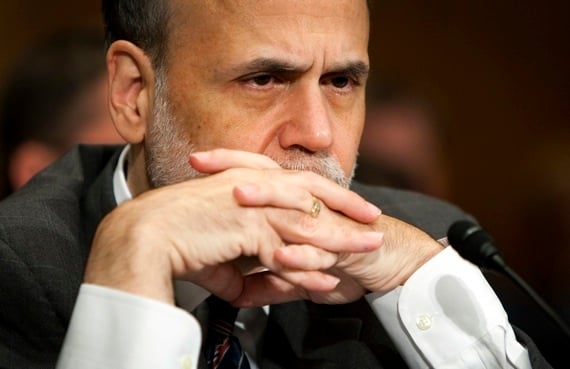
American investors have plenty of trust in their financial advisers, but not their elected leaders. A John Hancock Financial Services Inc. survey of 1,001 investors revealed that a sizable 82% of those polled said they trust their financial adviser. Policymakers in Washington didn't fare nearly as well. The second-most-trusted person on the list was Federal Reserve head Ben Bernanke — and only 30% of the investors said they had faith in him. The next-most-trusted person in the survey was President Barack Obama, with 28% of the surveyed investors saying they trusted the president. The study didn't ask the investors, all of whom have at least $75,000 in annual household income and more than $100,000 in assets, whether their advisers are fiduciaries or commissioned brokers. But John Hancock's chief marketing officer, David Longfritz, said he believes that the results would not vary much by standard of care. “They'd still have that same level of trust in that person; I don't think [how the adviser gets paid] would change anything,” Mr. Longfritz said. “We've done a number of focus groups and asked people to talk about their advisers: The clients always felt like the advice was focused on them.” He noted that one of the deterrents to getting clients to invest during tough economic times is a lack of trust in their own financial adviser, so a strong relationship means a lot these days. “Despite ongoing uncertainty in financial markets, this bond is an enduring one,” Mr. Longfritz added. Participants in the survey have a lot of confidence in their own ability to pick out their financial advisers, with 76% claiming they feel certain in their ability to evaluate an adviser, and 74% feeling assured that they could find an adviser they trust. Of note, congressional members are “distrusted strongly” by 68% of the polled participants, with the Occupy Wall Street movement triggering the same response from 57% of the investors. Meanwhile, fully 44% of those surveyed said they don't trust the president.

Latest News

SEC to lose Hester Peirce, deepening a commissioner crisis

The "Crypto Mom" departure would leave the SEC commission with just two members and no Democratic commissioners on the panel.

Florida B-D, RIA owner pitches bold long-term plan to sell to advisors

IFP Securities’ owner, Bill Hamm, has a long-term plan for the firm and its 279 financial advisors.

Fintech bytes: Vanilla, Wealth.com forge new estate planning partnerships

Meanwhile, a Osaic and Envestnet ink a new adaptive wealthtech partnership to better support the firm's 10,000-plus advisors, and RIA-focused VastAdvisor unveils native integrations with leading CRMs.

Fiduciary failure: Ex-advisor who sold practice fined after clients lost millions

A former Alabama investment advisor and ex-Kestra rep has been permanently barred and penalized after clients he promised to protect got caught in a $2.6 million fraud.

Why the evolution of ETFs is changing the due diligence equation

As more active strategies get packaged into the ETF wrapper, advisors and investors have to look beyond expense ratios as the benchmark for value.

SPONSORED Are hedge funds the missing ingredient?

Wellington explores how multi strategy hedge funds may enhance diversification

SPONSORED Beyond wealth management: Why the future of advice is becoming more human

As technical expertise becomes increasingly commoditized, advisors who can integrate strategy, relationships, and specialized expertise into a cohesive client experience will define the next era of wealth management