
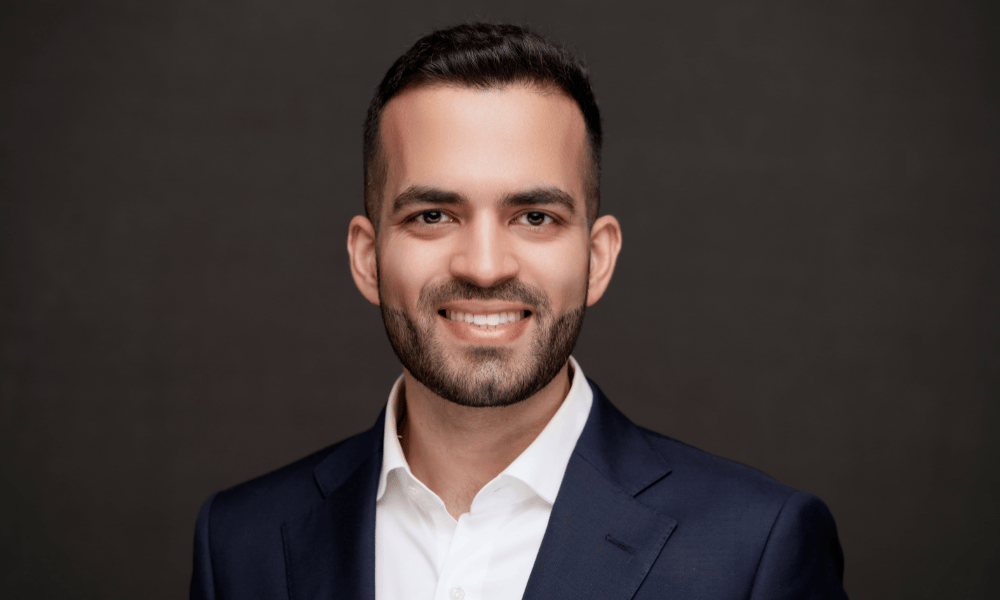
Savvy Wealth is positioning its latest product launch as a fundamental rethink of how financial advice is delivered; one that starts with data but ultimately aims to elevate the role of the advisor.
Telling InvestmentNews about the debut of Savvy Intelligence, CEO Ritik Malhotra describes a platform built not as an add-on, but as a fully integrated system designed to unify investments, tax, and planning from the ground up.
“Most firms are trying to stitch this together after the fact, pulling data through APIs from 6 or 7 tools that were never designed to talk to each other,” Malhotra says. “The intelligence you can build on top of that is structurally capped by how incomplete and stale the data is.”
By contrast, Savvy’s approach centers on owning the full stack.
“We built the RIA, the investment platform, the tax infrastructure, and the planning environment as one system from day one,” he says. “The data layer isn't a feature we added. It's the foundation everything else sits on, and it compounds with every agent we ship.”
That unified data layer now underpins Savvy Intelligence, which the firm describes as a “household-level system of record” that eliminates the need for manual reconciliation and system switching, giving advisors a continuously updated, real-time view of each client’s financial life.
Malhotra argues that this foundation is what will ultimately separate winners from losers in the race to apply AI in advice.
“The next generation of financial advice won’t be determined by the firms with the biggest AI budgets; it will be won by the advisors with data that provides the context that powers their AI, turning insight into actionable, real-time client outcomes,” he says.
Central to that vision is the idea that independent advisors can achieve enterprise-level capabilities—if they have the right infrastructure behind them.
“The quality of any AI agent is limited by the data it can see,” Malhotra says. “Wirehouses can throw money at AI, but if they're bolting it onto a fragmented stack, the output is only as good as the fragments.”
On Savvy’s platform, he says, the equation changes.
“Our advisors' AI operates on the complete client picture (investments, tax, planning, CRM, meeting notes) in one environment,” Malhotra explains. “That means a single independent advisor on the Savvy platform has the analytical firepower of a team of 10.”
“That's a structural advantage you can't replicate by buying more software. You have to own the full stack, and the advisor on our platform gets to keep their independence while operating with enterprise-level capacity.”
Equally important, he adds, is the role advisors themselves play in shaping the technology.
“Our advisors are literally in the room building this with us. Every agent we ship was shaped by practitioners using it on real clients,” Malhotra says. “You can raise a round and hire engineers. You can't manufacture a community that's been co-building the product with you for years.”
The first application of that system is Savvy’s Financial Planning Agent, designed to model complex financial scenarios in real time using the platform’s unified data layer.
It allows advisors to run thousands of “what if” scenarios, automatically pulling from portfolios, tax data, and planning assumptions, and generating outputs on a live, interactive canvas.
For Malhotra, the key is not just speed, but control.
“Every output the agent produces is auditable and reviewable before the advisor does anything with it,” he says. “The advisor directs the analysis, reviews the results, and decides what to share.”
“The AI handles the modeling underneath; the advisor applies the judgment on top,” he adds.
That structure also addresses concerns around compliance and data security.
“We have no data retention agreements with any model provider we work with,” Malhotra says. “Client information is used to answer the question in front of the advisor, then it's gone.”
“We designed it so the agent does the technical heavy lifting while the advisor stays in control of every recommendation that reaches a client.”
Savvy estimates that advisors spend roughly 70% of their time on non-client-facing work; something the firm sees as both a challenge and an opportunity. Malhotra says the impact of automation is immediate.
“Advisors see the time compression immediately,” he says. “Planning scenarios that used to take 30 minutes to 3 hours are getting done in minutes.”
Much of that comes from eliminating the need to assemble data across multiple systems.
“Assembling a client's full financial picture used to mean toggling between half a dozen systems. That assembly step largely disappears,” he says. “That's fewer nights catching up on analysis after the kids go to bed or waking up early to ensure they are prepared for the day ahead.”
Over time, those efficiencies translate into a different kind of advisory business.
“Once advisors get those hours back, the business model shift follows naturally,” he says. “They can take on more households, serve more complex clients, or offer services (tax planning, estate coordination) that used to require additional headcount to manage.”
While Savvy Intelligence is just launching, Malhotra says advisors are already seeing tangible returns.
“The value shows up fast,” he says. “One of our advisors ran income planning projections for a client (Social Security, phantom stock, RMDs, a Roth conversion strategy, IRMAA surcharges) in 20 minutes with no financial plan or documents in the system yet.”
“That’s the speed of payoff we're seeing across the board,” he adds.
Looking ahead, Savvy plans to expand its suite of AI agents to include capabilities across tax strategy, relationship monitoring, and investment management, all built on the same unified data layer.
Malhotra is particularly focused on background automation that works proactively for advisors.
“I'm most excited about background agents that will be able to do work for advisors while they are away and proactively highlight what they should be focused on,” he says.
“Human connection is the single biggest differentiator any advisor has,” he adds. “The advisors who will win long-term are the ones who show up at the right moment and who catch the life change before the client even thinks to call.”
“The background agents are built to make sure no signal gets buried in a book of 150+ households, so the advisor can be more present with clients, not less.”
As the firm scales (now managing nearly $6 billion in client assets) Malhotra says maintaining clear boundaries around AI is critical.
“We're clear-eyed about the boundary: our AI automates and streamlines advisor workflows,” he says. “It doesn't interact directly with retail clients, and it doesn't make investment decisions.”
“The advisor remains solely responsible for every recommendation,” Malhotra adds. “That line is firm and it's built into how the product works, not just a policy document.”
“We ship fast, but the architecture enforces the guardrails,” he says. “Every output is reviewable. Every scenario is auditable. The advisor is always the one in the driver's seat.”
Ultimately, Malhotra sees AI not as a replacement for advisors, but as a catalyst for redefining their role.
“The biggest shift is moving from assembly to direction. Advisors have spent years being the person who pulls the data together, builds the spreadsheet, drafts the plan. That's changing,” he says. “The skill that matters now is knowing the right questions to ask and having the judgment to evaluate what comes back.”
Savvy’s goal, he adds, is to support that evolution without adding technical complexity.
“We built Savvy Intelligence so advisors don't need to become technologists,” Malhotra says. “They don't configure anything. They don't prompt-engineer anything.”
“They direct the analysis inside workflows they already understand,” he says. “This lets advisors focus on what is most important to them while we take care of making sure their technology is built exactly to their needs today, while evolving to meet their needs of tomorrow.”

Salespeople at the firm often went beyond the matching algorithm to recommend network advisors on its Zoe Wealth platform, according to the regulator.

The Protect College Sports Act would cap school payments and codify NIL rights, with implications for advisors guiding young athletes.

"I know the number that I want to be able to retire on, and now I just want out," says Wilmington Trust's Marguerite Weese, describing a common refrain among business-owner clients.

Bessemer and Brown Brothers Harriman veteran Robert Ludricks III and private markets specialist Olof Akesson join the ultra-high-net-worth push on the East Coast.

765 investors were promised 260% annual returns on truck leases
As AI makes financial information more accessible than ever, Lana Hock explains why human judgment, trust, and empathy remain the qualities clients value most in a financial advisor
Northern Trust’s Ken Lassner shows advisors how to convert volatility into after-tax portfolio gains

