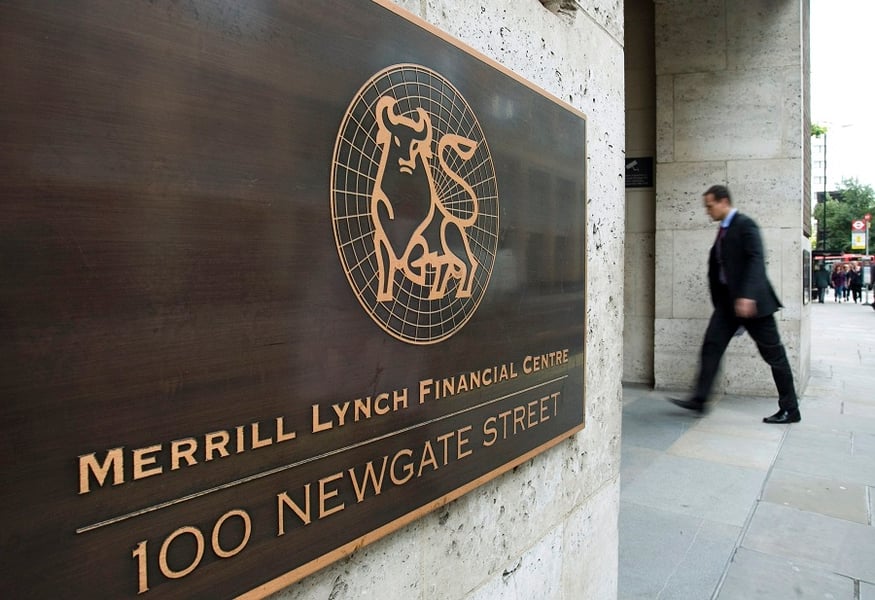
Bank of America Merrill Lynch told its financial advisers Tuesday to halt the sale of mutual funds in brokerage-based individual retirement accounts, months before the Labor Department's new fiduciary regulation takes effect.
Frank McDonnell, head of Global Mutual Funds, said Tuesday in a memo to Merrill advisers that selling mutual funds in brokerage retirement accounts is no longer allowed. Mutual funds may still be purchased in Merrill Lynch investment advisory program accounts and non-retirement brokerage accounts, according to the memo.
The brokerage firm is eliminating the potential for compensation conflicts that could arise between now and April 10, 2017, when the Labor Department fiduciary rule takes effect. The new regulation, which requires advisers to put their clients' interest first for retirement accounts, has
created a rift in the industry on whether to keep selling IRAs on a commission basis or restrict them to fee-based accounts.
“The decisions we've made regarding the Department of Labor's fiduciary rule are grounded in our strategy to provide best-interest, goals-based advice to our clients regarding their retirement accounts while preserving client choice,” Mr. McDonnell said in the memo. “They also reflect our goal of ensuring that our
advisers and our firm are best positioned to comply with the rule.”
Early last month, Merrill Lynch became the first among wirehouses to reveal its compliance strategy,
announcing that it would no longer offer new commission-based IRAs starting next year. IRA brokerage clients will have the option to transition onto Merrill One, the firm's investment advisory platform, or onto Merrill Edge, where clients can use the firm's self-directed brokerage platform. They may also use the firm's robo advisory service.
Recommendations by advisers to purchase mutual funds within brokerage retirement accounts between now and April 10 could create a conflict of interest for clients. That's because they'd be charged a commission for the purchase, and then would be charged an additional fee for the same mutual fund when later enrolling in the firm's investment advisory program, according to a person familiar with the matter.
“We are implementing this decision in advance of the DOL rule's applicability date, to ensure as seamless and positive experience for our clients and advisers as possible,” a Merrill Lynch spokesperson said. “Advisers are receiving in-depth training on the rule, which includes its impact on product-related changes as well as how to document recommendations.”
[More: Merrill Lynch to drop unpopular pay hurdle in 2023]
AdvisorHub first reported this story.