
As the year-end giving season gets underway, financial advisors who build charitable giving into the financial plan say the real opportunity is not the transaction but the conversation – and that it should start well before December.
The timing carries extra weight: 2026 is the first tax year under the charitable deduction changes in the One Big Beautiful Bill Act, signed into law July 4, 2025. Itemizers can now deduct only gifts above 0.5% of adjusted gross income, and the deduction's value is capped at 35% for donors in the top 37% bracket.
The changes have sharpened interest in donor-advised funds – charitable accounts held by a sponsoring public charity that give donors an immediate tax deduction and let them recommend grants over time. Total DAF assets rose 27.9% to $327.87 billion in fiscal 2024, while contributions jumped 38.6% to $90.57 billion and grants climbed 17.9% to $64.60 billion, according to the spring 2026 revision of the Annual DAF Report 2025 from the Donor Advised Fund Research Collaborative.
Yet advisors are rarely the ones raising the subject. The collaborative's 2026 report, Financial Planning in the Age of Donor Advised Funds, found that 61% of clients say they initiate philanthropic discussions with their advisor, while only 6% say the advisor does.
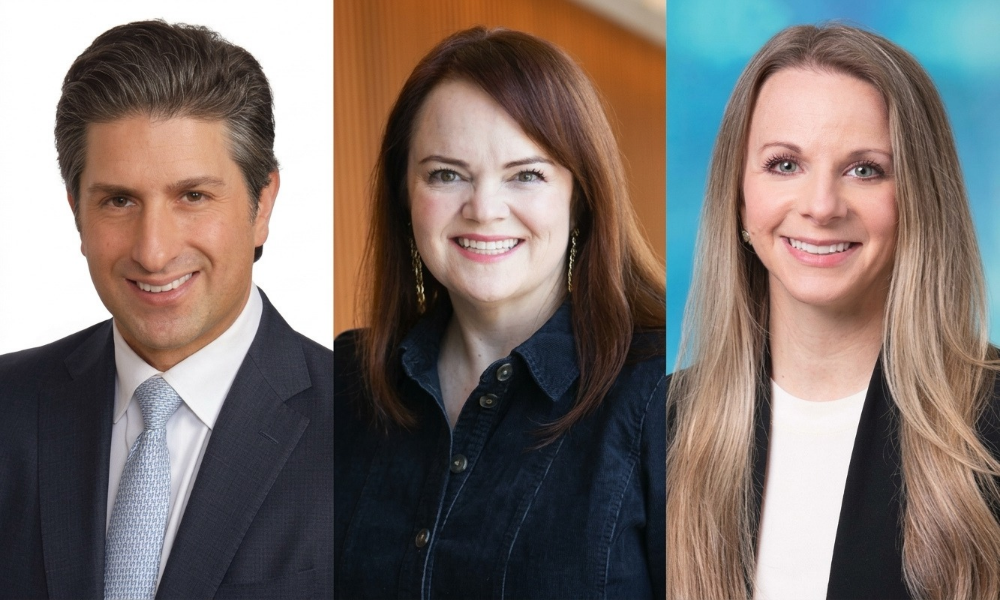
For Brett Diamond, a wealth manager and managing director with the Park Cities Group at Steward Partners in Dallas, some of the most meaningful client conversations have little to do with investment performance.
"We don't wait until December to discuss charitable giving," Diamond said. "I like to start by asking questions that have nothing to do with money. Where did you learn to give? Was philanthropy important in your family growing up? What's the most meaningful gift you've ever made, and why? If you had $100,000 to give away tomorrow, where would you direct it?"
He draws on a distinction he credits to Susan Kramer Consulting. "Transactional giving might be writing a check because someone asked, attending a fundraiser, or supporting an organization out of habit or obligation. Transformational giving is different. It comes from a personal connection, a genuine passion, and a desire to make a lasting difference," he said.
Only then does the discussion turn to technique: appreciated securities, donor-advised funds or qualified charitable distributions from traditional IRAs. QCDs sit outside the new 0.5% floor, according to Mercer Advisors, and the 2026 annual limit is $111,000, according to CPA Practice Advisor.
"I believe the best charitable giving conversation starts with the heart, not the checkbook. When clients understand that we're interested in their values rather than selling them a product, the conversation becomes much more meaningful, and so does the relationship," Diamond said.
"Ultimately, I don't want clients to look at their donor-advised fund as another investment account," Diamond said. "I like to separate the conversation into two parts: How do we fund it efficiently, and how do we distribute it meaningfully?"
The second part is personal: he asks clients to name their five most important values and to examine whether they still support certain organizations out of passion or simply habit.
Nicole Morgan, chief development officer at the Invest in Others Charitable Foundation, a nonprofit that supports the charitable work of financial professionals, urges advisors to look past the account itself.
"Funding a donor-advised fund is only the beginning. The impact happens when those dollars move into the organizations and communities a client cares about," Morgan said, adding that advisors should get to know development professionals at the nonprofits their clients support. "Bringing those relationships together can help an advisor move the conversation from 'Where should my client give?' to 'What does my client want their giving to accomplish?'"
Abby Axelrod-Wunderman, philanthropic director at Fiduciary Trust International, says clients usually stall for one of two reasons: they have not clarified their values, or they fear their giving will not accomplish what they hope.
"We start by getting clear on what matters to clients, then build a giving plan around those values and fit it to their financial plan, with a defined mission, funding approach, and grantmaking timeline. For clients who want it, we also build a way to measure the giving approach and results so they can see the impact their giving is having. This type of clarity and confidence is what moves DAF holders from funding an account to one that is put to work," she said.
In a 2025 Harris Poll, 43% of heirs said they planned to leave their parents' advisor after inheriting, and 26% of those planning to leave said they did not personally know the advisor. The risk is long-standing: a 2015 InvestmentNews survey of advisors found that 66% of children fire their parents' advisor after receiving an inheritance.
Diamond sees philanthropy as a bridge to heirs. "Rather than simply telling children where the family donates, allow them to research organizations, recommend grants, and explain why a particular cause matters to them," he said. "This transforms philanthropy from something they observe into something they actively participate in."
Morgan sees family giving as a chance for generations to build on their values together, with heirs bringing their own causes and perspectives to the table.
"For advisors, making space for that dialogue can deepen relationships across generations while helping a family build a legacy that remains relevant and meaningful as it evolves," Morgan said.
For Diamond, that is the point. "The greatest legacy we can help clients leave isn't necessarily the wealth they've accumulated. It's the values, generosity, and sense of responsibility they pass on to future generations. That's when financial planning becomes something much bigger than managing money," he said.

The AI lab's S-1 details an FTC probe, AI agent liability exposure and models that escaped testing just as it pushes further into advisor tech stacks

Advisors must navigate misinformation and generational expectations as technology reshapes client relationships.

The regulator has been trying to reach imprisoned advisor Jason Foley.

Magnificent 7 firm continues to ‘right size’ workforce in AI-related shift also seen in financial services.

Healthcare inflation running at 280% of CPI - and most HSA holders are sitting in cash.
Knighthead Life entered the market with a competitive MYGA. A strong launch earned advisor confidence and paved the way for FIAs.
As AI makes financial information more accessible than ever, Lana Hock explains why human judgment, trust, and empathy remain the qualities clients value most in a financial advisor

