
Note to advisors. There’s a fine line between reaching out to clients when markets get rocky and freaking them out.
In periods of political, economic, and social uncertainty, advisors say clients tend to respond best when outreach is calm, thoughtful, and rooted in perspective rather than reaction. The greatest value often comes from reminding families that uncertainty is a normal part of investing, their plan was built with that uncertainty in mind, and short-term headlines rarely justify long-term changes.
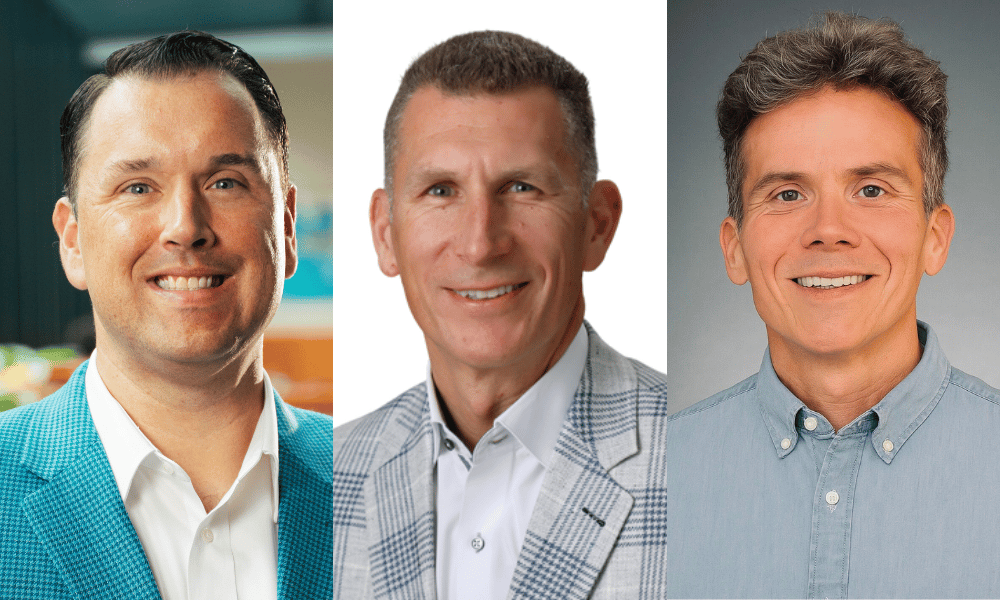
Matthew Nordmann, managing partner at Morrison Nordmann Wealth Management, for one, is a firm believer that “proactive communication” matters and how and when he communicates with clients matters just as much. For example, he says that too much outreach can sometimes spur anxiety among clients.
“Too much commentary can cause clients to focus on noise rather than the plan in place to help them achieve all they tell us is most important to them. There is a balance. More communication is not always better, better communication is better,” Nordmann said.
The right time to reach out, according to Nordmann, is when communication can provide genuine clarity, leadership, or reassurance, not simply because markets are volatile.
“We focus on moments when clients may benefit from perspective, such as major geopolitical events, significant policy shifts, or when fear in the media risks overwhelming disciplined thinking. The goal is to be intentional, lead when leadership is needed, not react for the sake of reacting, Nordmann said.
From a behavioral perspective, Daniel Crosby, chief behavioral officer at Orion, says market volatility creates an almost primal desire for certainty. When the world feels unstable, people seek information, reassurance, and some sense that someone is in control.
“At its best, communication from an advisor can provide exactly that. It can anchor clients, widen their time horizon, and remind them of the plan they built when emotions were quieter,” Crosby said.
That said, Crosby believes that communication is never neutral. Any outreach from a trusted advisor carries an implicit message. Even if the content is reassuring, the very act of reaching out can communicate that something unusual is happening and that this may deserve attention.
“For some clients, that creates comfort. For others, it creates vigilance where there may have been none previously,” Crosby said.
In terms of timing and cadence of client calls, Crosby tries to measure a client’s Risk Composure, which is essentially a measure of how likely someone is to become emotionally reactive under financial stress. That allows advisors to move beyond blanket communication and toward precision communication.
“Some clients have the psychological makeup to ride out volatility with very little intervention. Others may need education, context, or reassurance. Others may need a phone call before anxiety has a chance to turn into action. That, to me, is where the industry is headed,” Crosby said.
Finally, Brian Boswell, wealth manager at Savvy Advisors, calls his experience reaching out to clients during periods of volatility “overwhelmingly positive.” In his view, the vast majority of the time, these end up being calming, productive conversations that allow him to work through the brief turbulence together so clients don't experience long-term consequences from selling into a down market.
“I always try to bring data into the conversation, and that tends to be especially reassuring. More often than not, clients hang up the phone feeling steadier than when we started,” Boswell said.
When it comes to the best times to reach out to clients, Boswell says his biggest indicator is the headline news.
“If my clients are seeing it, I assume they're feeling it, so when the headlines turn ominous or alarming, that's my barometer to start picking up the phone. I work from the assumption that silence from us creates space for anxiety to grow, and our job is to close that gap before it ever opens,” Boswell said.

TIAA survey finds 53% of Americans worry about running out of money, as AI and medical advances scramble retirement income planning.

Two wirehouse veterans choose advisor-owned model as independents target ultra-high-net-worth clients beyond portfolio management.

Guardian's Nancy DeRusso tells InvestmentNews how advisors can help close the 'longevity gap'.

Goldman Sachs retirement survey finds 83% want guaranteed income, while the annuities providing that income increasingly hold private credit.

The AI meeting assistant's Advisor Intelligence plugin turns client conversation data into annual reviews, tax scans and attrition alerts.
As AI makes financial information more accessible than ever, Lana Hock explains why human judgment, trust, and empathy remain the qualities clients value most in a financial advisor
Northern Trust’s Ken Lassner shows advisors how to convert volatility into after-tax portfolio gains

