
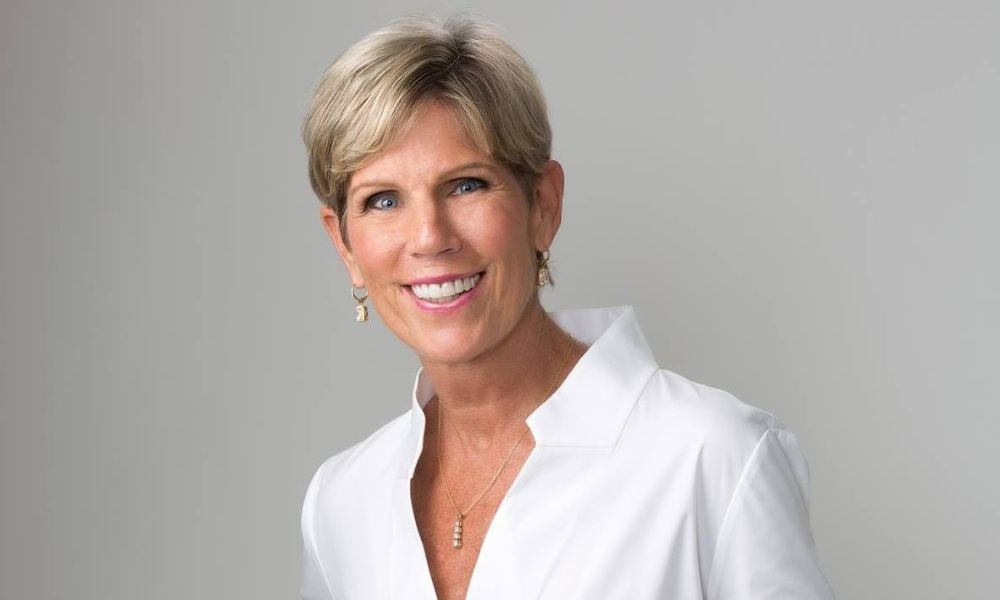
Patti Brennan doesn’t shy away from confronting the political and economic turbulence that colors today’s financial landscape. “Uncertainty is certainly the word of the day,” she says, but insists it’s nothing new. “There’s always been a crisis or a worry – it’s just part of life.”
Despite this outlook, she recognizes this moment in time brings a unique level of unpredictability. The answer for clients and advisors? Focus on what can be controlled. “We can’t control politics, what politicians are going to do, fiscal policy, or the Federal Reserve. So let’s think about what we can control,” the president and CEO of Key Financial, Inc., says. “It’s going to be volatile. Just expect it so that when it happens, you don’t panic.”
Recent political decisions, such as the US withdrawal from the Paris Agreement, weigh heavily on the broader investment landscape, particularly for impact investing. “The fact that Trump just withdrew from the climate agreement, it’s a little disturbing,” she says. “Biden made great strides, and now this is thrown out the window.”
Brennan acknowledges that such shifts create uncertainty for investors committed to sustainability. Yet she urges her clients to stay the course, even in challenging times. “Don’t stop doing well by doing good,” she urges, emphasizing that the goals of environmental and social responsibility are worth pursuing despite the hurdles.
This turbulence highlights the need for a steady hand in wealth management, particularly for high-net-worth individuals. Brennan works to anticipate her clients’ concerns, offering strategies that are adaptable to evolving circumstances. “These are smart people, clever people,” she says of her clients. “They’ve been through cycles before.” Still, even seasoned investors benefit from guidance. Brennan’s emphasis on long-term thinking helps them navigate volatility without losing sight of their goals.
Her approach is particularly effective in addressing transitions, such as retirement, when uncertainty often peaks. “I’ve helped over 1,000 people retire and stay retired and never run out of money,” she says. “You get to do it once. We kind of know the things that could happen and the landmines you want to avoid.”
Economic shifts, like rising inflation and interest rates, are another area in which Brennan’s steady perspective proves invaluable. She doesn’t advocate for reactive changes. “We’re not changing based on inflation or changes in interest rates,” she explains. Quoting John Bogle, she adds, “Don’t just do something; stand there.”
“We go into every day of every year expecting that something bad is going to happen, and we want to set clients up accordingly,” she says.

LPL Financial and Raymond James also add independent advisors from Osaic and Edward Jones in Michigan and Arizona.

The SEC-registered RIA advises on more than $1 billion in client assets, with no advisory fee through 2027 and no human financial advisors.

The four wirehouse firms lost 1,449 experienced advisors and recruited 932 in the first six months of the year, according to Diamond Consultants.

Merit's 10th Commonwealth addition deepens its Western New York reach, while another Hightower partner joins its Signature Wealth platform in Michigan.

Report on Climate Action 100+ signals risk for passive managers' 13G status heading into the 2027 proxy season.
Knighthead Life entered the market with a competitive MYGA. A strong launch earned advisor confidence and paved the way for FIAs.
As AI makes financial information more accessible than ever, Lana Hock explains why human judgment, trust, and empathy remain the qualities clients value most in a financial advisor

