
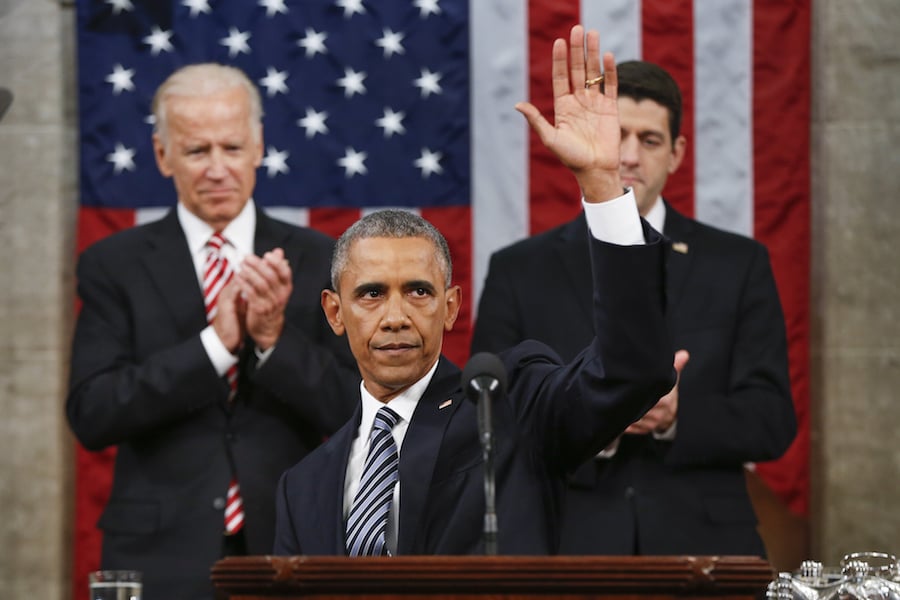
Even though Mr. Obama ignored the DOL fiduciary rule, that doesn't mean it's in trouble. The address was designed to be a legacy-building exercise for the president. For the most part, he kept it at the 35,000-foot level, rather than getting entangled in the weeds of regulations and legislation. One of his few explicit mentions of regulation was bipartisan-applause-worthy about cutting outdated regulations. If he's going to carve out precious space for a topic in the State of the Union address, the president probably wants it to generate at least some positive reaction. There has been enough concern expressed on both sides of the aisle in Congress about the DOL rule that a mention of it would get a tepid reply at best. There could have been a bipartisan sitting on hands. More importantly, Mr. Obama is winning the battle over the DOL rule. It is a regulation being promulgated by an executive agency. Congress can't stop him, despite the introduction of legislation late last year to do so. Why would Mr. Obama gloat about the rule in front lawmakers? TEA LEAVES If you're reading tea leaves about the rule, there are more prosaic and effective ways than monitoring the State of the Union speech. Watch the Office of Management and Budget's regulatory dashboard, which provides a list of rules that are under review. When it receives the final DOL rule, it must post a public notice on this site. And don't worry, you'll hear about it from me. Once the rule gets to OMB, the agency likely will take several weeks to assess it, even under an expedited process. The final rule will then be publicly released, probably in early spring. At that point, Congress will have 60 legislative days to review it. But congressional rejection of a regulation is rare. After the review period, the rule would become effective — likely comfortably before the end of the Obama administration. Of course, with a regulation this controversial, surprises may occur — and an industry lawsuit is a near certainty. That means the administration will stay engaged ... though sometimes quietly.Doesn't look like major developments on #retirement planning front. In fact word #retirement only to appear 4 times https://t.co/3oKyyM6e1c
— Jeffrey Levine, CPA (@IRAGuru4EdSlott) January 13, 2016

Shorter waits for failed SIE and Series 7 candidates take effect Jan. 19, speeding the path to registration

Raymond James and Cetera also welcomed advisors from UBS and LPL as competition for experienced teams stays fierce

Jim Walesa worked in the securities industry for 39 years before leaving in 2021.

As the market turned from pricing in cuts to betting on hikes this year, the developing reality of a K-shaped economy has had real implications for households and investors alike.

Alleged cash payments, stolen client data, and a court that jumped the gun
Knighthead Life entered the market with a competitive MYGA. A strong launch earned advisor confidence and paved the way for FIAs.
As AI makes financial information more accessible than ever, Lana Hock explains why human judgment, trust, and empathy remain the qualities clients value most in a financial advisor

