
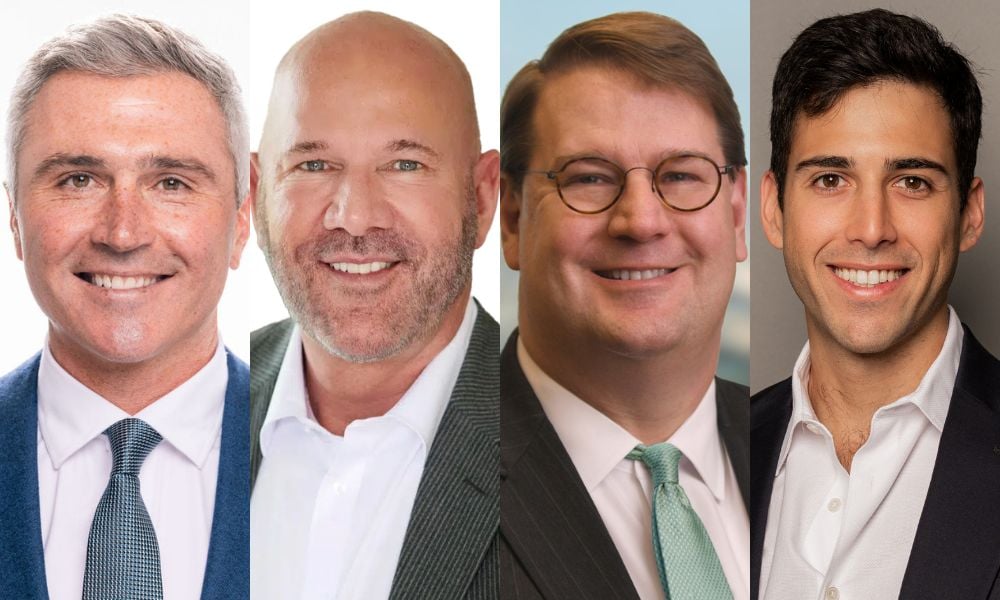
Elder financial exploitation has reached crisis proportions. Adults age 60 and older lost more than $7.7 billion to scams in 2025 — a 59% increase from the previous year — according to the FBI's Internet Crime Complaint Center, with the real figure likely far higher given that most fraud goes unreported. The US House recently passed the Financial Exploitation Prevention Act of 2025 by a 414-2 vote, giving mutual funds and transfer agents authority to place a temporary hold of up to 15 days on a redemption request when financial exploitation is suspected. The bill now awaits Senate action. But four advisors who work directly with older clients say the new legislation, however useful, represents the last line of defense — and that the real protection is built years before any suspicious transaction hits a system.
Angelo V. Esposito Jr., founder and private wealth advisor at Harbor View Private Wealth, says every account at his firm carries a trusted-contact designation. That contact holds no transactional authority but can be reached when unusual activity surfaces. Staged authority — durable powers of attorney, springing provisions that activate only under defined conditions, and co-signers on large or unusual distributions — adds a further structural layer.
The monitoring is ongoing. Esposito's team watches for red flags including sudden beneficiary changes, unfamiliar wiring instructions, and patterns of urgent requests, with internal escalation protocols so no single advisor makes a consequential call in isolation. But the deeper point, in his view, is that these mechanisms work best when families have been brought into the conversation long before there is any reason for concern.
"We try to bring families into the conversation early and proactively, well before a crisis, so any shift in who's involved in financial decisions feels like part of a plan the client helped design rather than something imposed on them. A well-structured estate plan means that if a client does become vulnerable, there's already a legal framework in place for who can step in and how, rather than a scramble that can leave accounts frozen or exposed," Esposito said.
Powers of attorney, trusts, and clearly documented beneficiary designations reduce the ambiguity that bad actors — and, in some cases, family members — can exploit. Esposito frames early estate planning not as a reactive compliance measure but as the primary fraud-prevention tool, one that becomes more protective the earlier it is completed.
Arne Boudewyn, family governance and education advisor at Callan Family Office, argues that the most effective protection against elder financial exploitation begins before there are any concerns about diminished capacity.
Practical safeguards — trusted contacts, clearly defined decision-making authorities, periodic reviews of estate documents, coordinated oversight among advisors — are necessary but not sufficient. The most resilient families, Boudewyn has observed over more than two decades of work with ultra-high-net-worth clients, are those that have intentionally prepared for governance transitions through ongoing communication, education, and thoughtful succession planning.
"When these conversations occur early, older family members are able to retain their dignity, voice, and autonomy while gradually sharing responsibilities with trusted successors as circumstances evolve," Boudewyn said.
The distinction matters operationally. When a family has pre-agreed on who gets notified under what conditions, what triggers a review, and who arbitrates disagreements, the transition away from sole financial authority is experienced as honoring a plan — not as family members taking the keys away. That framing, Boudewyn argues, makes clients more likely to engage with protective structures while they are still fully capable of designing them.
Dory A. Wiley, president and CEO of Commerce Street Holdings, frames the problem in terms that should prompt advisory firms to review their monitoring infrastructure.
By the time a suspicious redemption reaches a fund company, Wiley says, the wealth manager has typically missed three or four earlier warning signs. Real guardrails, in his view, are built years in advance: trusted contacts on every account, dual authorization on large wire transfers, and staged authority where a family member progresses from account visibility, to co-approval authority, to full discretion on a pre-agreed schedule.
"A client who's rebalanced twice a year for twenty years suddenly wiring money to an unfamiliar payee is a flashing red light. Your systems and your people both have to be trained to see it. We have clients set the standards themselves while they're sharp — who gets notified, what triggers a review, who arbitrates. Then the transition isn't the family taking the keys away; it's honoring the client's own instructions," Wiley said.
Wiley draws a direct line between estate structure and fraud prevention. A revocable trust with a clearly defined incapacity standard and named successor trustee removes the legal ambiguity that fraudsters — and sometimes family members — exploit. He notes that the 15-day hold authorized under H.R. 2478, if it passes the Senate, will provide a useful pause mechanism for fund companies and transfer agents. But for advisors who have done the estate and governance work correctly, he says, the provision is rarely needed.
Jacob Taurel, managing partner at Activest Wealth Management, offers the most direct challenge to how the industry typically frames this problem.
Most firms, in his view, treat diminished capacity as a compliance event. The result is a conversation that happens too late, framed in a way that strips clients of autonomy rather than preserving it. Taurel builds authority in stages — a second signer on one account, expanded visibility for a trusted family member, a documented escalation path — before any cognitive concern surfaces. The monitoring, he emphasizes, is as much about the family communication rhythm as it is about account activity. A client who suddenly cannot reach their adult child, or who mentions a new financial advisor nobody in the family has met, is a signal worth investigating.
"The word that matters here is dignity, and most of the industry gets it wrong by treating diminished capacity as a compliance event instead of a human one. Nobody wants to be told they can no longer be trusted with their own money. If the first time a family talks about this is the day something goes wrong, you've already failed the client," Taurel said.
The approach Taurel describes — initiating the conversation while clients are fully in command, framing protection as the client's own choice rather than an imposition — reflects a philosophy shared across all four advisors in this story. Legislative tools like H.R. 2478 give the industry a pause button, but the advisors best serving older clients are those who ensure the button is rarely needed.

Shorter waits for failed SIE and Series 7 candidates take effect Jan. 19, speeding the path to registration

Raymond James and Cetera also welcomed advisors from UBS and LPL as competition for experienced teams stays fierce

Jim Walesa worked in the securities industry for 39 years before leaving in 2021.

As the market turned from pricing in cuts to betting on hikes this year, the developing reality of a K-shaped economy has had real implications for households and investors alike.

Alleged cash payments, stolen client data, and a court that jumped the gun
Knighthead Life entered the market with a competitive MYGA. A strong launch earned advisor confidence and paved the way for FIAs.
As AI makes financial information more accessible than ever, Lana Hock explains why human judgment, trust, and empathy remain the qualities clients value most in a financial advisor

