
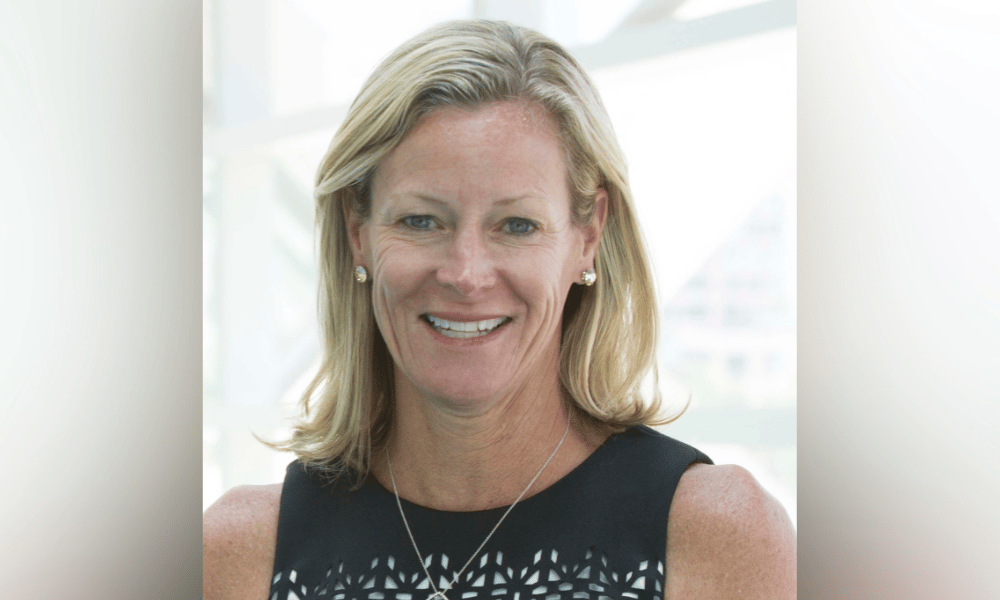
Elizabeth Anderson is stepping into the top board role at the Investments & Wealth Institute with a straightforward priority: make sure far more advisors actually know the institute exists — and understand why its designations and education matter.
Anderson, who began her two-year term as board chair on January 1, said she still runs into experienced industry leaders who have never heard of the group or only vaguely recognize its credentials.
“While it’s 40 years old … there are still so many advisors that don’t know we’re here,” she said in an interview with InvestmentNews. “It’s almost a shout from the mountaintop. How is it that that can be true?”
The institute, founded in 1985 and based in Denver, bills itself as a membership association, education provider and credentialing body for advisors working with high-net-worth and ultra-high-net-worth clients. It offers three flagship marks – the Certified Investment Management Analyst, Certified Private Wealth Advisor, and Retirement Management Advisor designations – and delivers education to more than 30,000 practitioners annually in over 40 countries.
A three-decade veteran of the industry, Anderson began her career as an advisor with Merrill Lynch, then went on to serve as president of Concourse Financial Group and chief executive of Sterne Agee Asset Management, holding senior product and platform roles at several regional broker-dealers along the way. She is now the community engagement leader for the Cetera Wealth Partners community at Cetera Financial Group, which acquired Concourse in early 2025.
“I have done all the things, roles both as an advisor, an independent advisor, working at a wirehouse, and being a wholesaler,” she said.
Anderson’s relationship with the institute began in 2008, when a mentor pushed her to pursue advanced portfolio-construction training and due diligence skills. That led her to the CIMA program and then to her first national conference. She recalls being struck by the quality of speakers – and the fact that the academics and practitioners she had been reading were not only on stage, but approachable.
“These are the guys I was just reading about and studying. And they’re here and they’ll talk to you,” she said. “It was amazing.”
From that first event, Anderson quickly moved into a volunteer role on the institute’s conference committee around 2009 or 2010, which she later chair. She eventually was invited to apply for the IWI board; after serving as a director and then taking on two vice chair roles, she is now moving into the chair seat.
While there's something to be said for the energy and networking experience at conferences, she also highlights the institute’s community as a circle where growth-minded advisors can find peers who take the educational aspect of the job seriously.
“It’s a group of like-minded people who are trying to get better at what they do,” she said, emphasizing the strength of conference agendas where “you can’t decide between two or three sessions going on at the same time.”
Over time, the audience at institute events has diversified. In addition to individual practitioners, Anderson said there is now meaningful representation from home offices and wholesalers. Along with women advisors and professionals from underrepresented communities, one priority for the board is to help those different segments find each other and build support networks, especially as more advisors move to independent models.
“Those people running their own business, they need a group,” she said. "They need a tribe."
The institute has a clear economic argument to make as it tries to raise its profile. A 2025 report it produced with CEG Insights, based on a survey of more than 1,000 advisors, found that professionals holding all three of its certifications earned nearly $762,000 annually on average – about one-third more than peers without any of its marks.
Even advisors with a single institute certification fared better. CPWA holders in the study reported average annual income of roughly $721,000, compared with about $570,000 for advisors without an institute designation. The research also said teams with at least one institute-certified advisor oversaw, on average, $267 million more in client assets than teams with no such credentials.
The study suggested those advisors were not just earning more; they were serving wealthier households and offering a broader menu of high-net-worth services, from tax mitigation and estate planning to retirement income strategies and family governance.
Despite the strong economic case, Anderson sees a need to push for greater awareness of the institute’s designations, noting how many advisors are still blind to the benefits of the institute's ongoing and still-evolving continuing education requirements.
“If you got the [CIMA] designation 10 years ago you certainly didn’t learn about crypto, and you wouldn’t have learned about AI, but you do today," she said. "There are far too many [advisors] that don't even know we exist.”
For advisors heading into 2026, Anderson argues that the flood of information facing investors is one of the biggest structural challenges. Clients can now query large language models about building portfolios or scour social media for strategies, which can give them a false sense of confidence.
“Clients might be thinking, ‘Oh, I can just go and ask ChatGPT to build a portfolio. I’m good, right?’” she said. “Even while there is so much information out there, and you can research everything, the guided hand of someone you trust … can really walk you through.”
As it is now, she sees AI as an assistive tool rather than a threat to human advice, especially when used to streamline documentation and follow-up. Like many others, she sees the growing use of AI-powered notetakers on advisor calls as an immediate win.
“What’s nice about that is my advisors are all learning, 'Okay, now I look over the notes from that call. I correct a few of them. It gives me a to-do list,'” she said. “How much easier is that than taking your notes and typing them into a CRM?”
Her own recent decision to complete the Retirement Management Advisor program underscores another focus for her term: helping advisors get better at decumulation planning and retirement risk.
“When you get to retirement, it’s not exactly like taking the accumulation portfolio and just putting it in reverse,” she said. “There’s a lot going on.”
Anderson highlighted the behavioral and emotional side of retirement as clients shift from building wealth to spending it down, often on a fixed income and with limited room for error. Decisions around Social Security, Medicare and withdrawal strategies can be irreversible and life-altering, particularly as people live into their 90s or beyond.
“That’s where someone helping them make those decisions can be critical,” she said.
As a longtime executive and former broker-dealer president who often found herself the only woman in the room, Anderson is also focused on how the institute can support more diverse leadership across advice firms. After going through a divorce during her time at Merrill Lynch, she recalled juggling 7 AM meetings with raising three young children – a "second job" that she sees more men actively helping with today.
Anderson also recalls the challenge of finding the right professional balance, having been told once she was “too nice” for the business while still recognizing how "pushy" women are perceived in the workplace. Despite that, she said she was able to succeed by taking on multiple roles and responsibilities, which has allowed her to connect with different sides of the advice ecosystem and bring an empathetic lens to leadership today.
“I’ve always just put my head down, worked hard, and done what I said I was going to do,” she said. “Eventually it paid off.”

Siddharth Jawahar was sentenced 11 years in prison and $31M in restitution for running Swiftarc Capital fraud scheme

Wall Street banks expand wealth services as ultra-high-net-worth client demands extend further above and beyond investment management.

The acquisition of $2 billion Gilbert & Cook extends a buying spree for the ultra-high-net-worth firm that has already touched six states this year.

After years of encouraging sacrifice and delayed gratification, advisors have to do the next emotional lift: helping clients let go of a potentially harmful scarcity mindset.

A new JPMorganChase Institute report reveals how deeply stock market wealth now drives everyday American spending, especially for retirees.
Northern Trust’s Ken Lassner shows advisors how to convert volatility into after-tax portfolio gains
Dan Biagini of American Equity says the steady decline of pensions, longer lifespans and a reset in interest rates are rewriting how advisors build retirement income

