
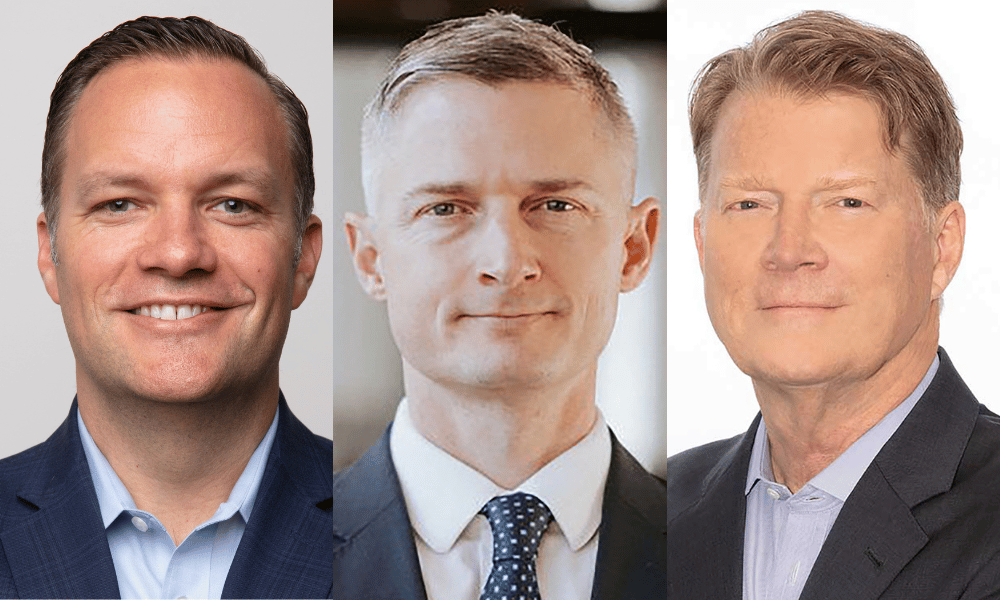
Late last month, Integrated Partners announced the launch of Integrated Private Wealth, a private wealth brand focused on guiding business owners and their families through complex, high-stakes liquidity events and business transitions.
Put simply, instead of expanding UHNW services within the traditional RIA model, Integrated Partners decided to launch a family office.
Not a bad idea considering the expanding UNHW market. And one that seems to be catching on across the wealth management space.
Homer Smith, executive director and private wealth advisor at the newly-created Integrated Private Wealth, says UHNW families require a significantly different approach than less-affluent clients. By establishing the family office, Smith believes they can efficiently and cost-effectively address the diverse financial and non-financial needs and wants of UHNW families, including billionaires.
“To be clear, this is not about expanding a menu of services; it’s about delivering the expertise that enables UHNW families to optimize their financial lives,” Smith said.
There are approximately 200,000 UHNW individuals in the US today, representing a 20% increase since 2023, and all signs point to this market segment's growth continuing to accelerate.
To tap into that growth, Mercer Advisors created the Regis Group to serve clients with $25 million up to $1 billion in investable assets. For families that reach this level of success, complexity often outpaces the services they can access by a traditional RIA platform, according to Jon Kennedy, managing partner at Regis Group at Mercer Advisors.
“We combine the benefits and breadth of our institutional platform with a dedicated team of advisors, tax and estate specialists, and others who have deep experience and expertise in the challenges this level of wealth creates. This team, by design, needs to work with a smaller number of families and have capacity to handle the often daily financial management that comes with this space,” Kennedy said.
Along similar lines, Wealthspire formalized its work with ultra-high-net-worth households earlier this month by introducing a new Wealthspire Family Office platform aimed at complex, multigenerational relationships. The New York-based firm overseeing nearly $600 billion in assets combined capabilities from Wealthspire, Fiducient Private Client and Ground Control into a single offering for families with significant complexity and scale.
According to a release on Monday, the family office platform currently works with more than 300 families representing close to $50 billion in assets, with an average relationship north of $130 million in AUM.
Elsewhere, Jon Foster, president & CEO at Angeles Wealth Management, says the birth of Angeles Family Office was in response to both pressing client needs and market opportunity. In Foster’s view, those that want to have their own unique family office need a net worth exceeding $1 billion.
Complex families with $50 million to $1 billion in net worth are actually underserved, according to Foster. They either get stuck in a private banking model which is not comprehensive, or a multi-family office, where they don’t feel special.
The answer for those particular clients is the “skinny” family office, says Foster, a bespoke model where the client pays fairly for the services they need and how often they need them.
“With Angeles as the family office provider, we can actually make this all cost-effective because we also manage your money. We don’t need to overcharge you for family office services because we make our own economics work, by hopefully doing a great job managing your money, which means if you do better, we do better,” Angeles said.
Angeles Family Office offers three pillars of services: investment management, executive office services, and what he calls “special projects.”
“What is intellectually challenging about this business is that every day is a new day, and every client has unique 'hot buttons.' This usually falls into the special projects bucket. Some families are extremely charitable and charting a course of effective philanthropy is their number one issue. For others, it could be political contributions. For another it may be construction of an estate plan which guides or perhaps controls behavior of future generations,” Angeles said.
Added Angeles: “Our job is often to say ‘no’ to people who seldom hear that word. What unites these families is that none of them are worried about running out of money. What a great position to be in. However, all of them are worried about legacy, and the definition of legacy is really personal.”

Siddharth Jawahar was sentenced 11 years in prison and $31M in restitution for running Swiftarc Capital fraud scheme

Wall Street banks expand wealth services as ultra-high-net-worth client demands extend further above and beyond investment management.

The acquisition of $2 billion Gilbert & Cook extends a buying spree for the ultra-high-net-worth firm that has already touched six states this year.

After years of encouraging sacrifice and delayed gratification, advisors have to do the next emotional lift: helping clients let go of a potentially harmful scarcity mindset.

A new JPMorganChase Institute report reveals how deeply stock market wealth now drives everyday American spending, especially for retirees.
Northern Trust’s Ken Lassner shows advisors how to convert volatility into after-tax portfolio gains
Dan Biagini of American Equity says the steady decline of pensions, longer lifespans and a reset in interest rates are rewriting how advisors build retirement income

