
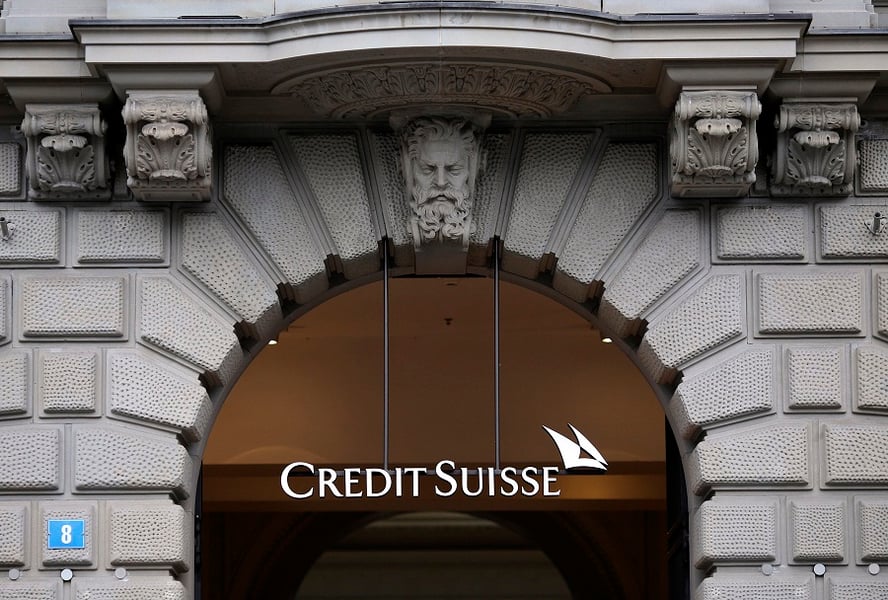
Finra arbitrators last week ruled in favor of Credit Suisse in a deferred compensation claim related the closure of its U.S. brokerage business in 2015, a victory after several losses in similar cases.
In the Feb. 11 award, a three-person Financial Industry Regulatory Authority Inc. arbitration panel denied the claims of three former Credit Suisse brokers — Frank Hogan, Daryl Allen and Langston Turner — who left the firm for UBS in 2015 when Credit Suisse shut down its U.S. private bank.
Hogan, Allen and Turner, who worked in the Credit Suisse Houston office, cited wrongful discharge, illegal forfeiture of earned and unvested compensation, failure to pay wages upon termination, breach of contract and breach of fiduciary duty, among other causes of action. They filed their case in November 2016.
The arbitrators — two public and one industry — not only denied the brokers’ claims but also ordered them to pay Credit Suisse a total of $3,781,308.93 in compensatory damages and interest for outstanding promissory note obligations.
The brokers alleged Credit Suisse enticed them to come work for the firm “and then intentionally sacrificed claimants’ and claimants’ clients’ best interest by shutting down its domestic private banking business,” the arbitration award states.
In an unusual move, the arbitrators articulated the reasoning behind their decision. They said there was “substantial evidence” that the brokers voluntarily resigned from Credit Suisse.
“Even if there was a constructive discharge, the panel finds that claimants suffered no damages because their UBS deals were designed to, and in fact did, more than fully compensate them for the loss of their Credit Suisse deferred compensation,” the award states.
The decision was a win for Credit Suisse after it suffered several losses in similar actions.
“The latest arbitration award vindicates Credit Suisse’s position that no one is entitled to double-dip and be paid the same dollar twice,” Credit Suisse spokesperson Jonathan Schwarzberg said in a statement. “We believe, as did this arbitration panel, that our position is correct as a matter of law and right as a matter of fair play in the marketplace.”
An attorney for the brokers praised his counterpart who argued Credit Suisse’s case, David Pegno, but said the arbitrators’ decision was wrong.
“Dave Pegno is a worthy adversary,” Rogge Dunn of the Rogge Dunn Group law firm in Dallas said in a statement. “Unfortunately, the panel intentionally ignored the law. We are planning to appeal and are confident the ruling will be reversed.”
When Credit Suisse shut down its U.S. brokerage, it struck a recruiting agreement to send its brokers to Wells Fargo. Many former Credit Suisse brokers have been taking the firm to Finra arbitration seeking deferred compensation that they say it didn’t pay when they departed to firms other than Wells Fargo.

The financial advice industry has been facing inquiries into its cash sweep programs for years now.

Investor money allegedly went to strip clubs, exotic cars, and landscaping

Procyon adds $415 million in assets under management in New Jersey while Savant picks up a $213 million Southern California planning firm

With a growing number of real estate-rich Baby Boomers aging into retirement, some advisors may be failing to consider all the options available for those clients' assets.

Cornerstone Advisors study reveals compliance bottlenecks stall campaigns weeks after customer opportunities close.
As AI makes financial information more accessible than ever, Lana Hock explains why human judgment, trust, and empathy remain the qualities clients value most in a financial advisor
Northern Trust’s Ken Lassner shows advisors how to convert volatility into after-tax portfolio gains

