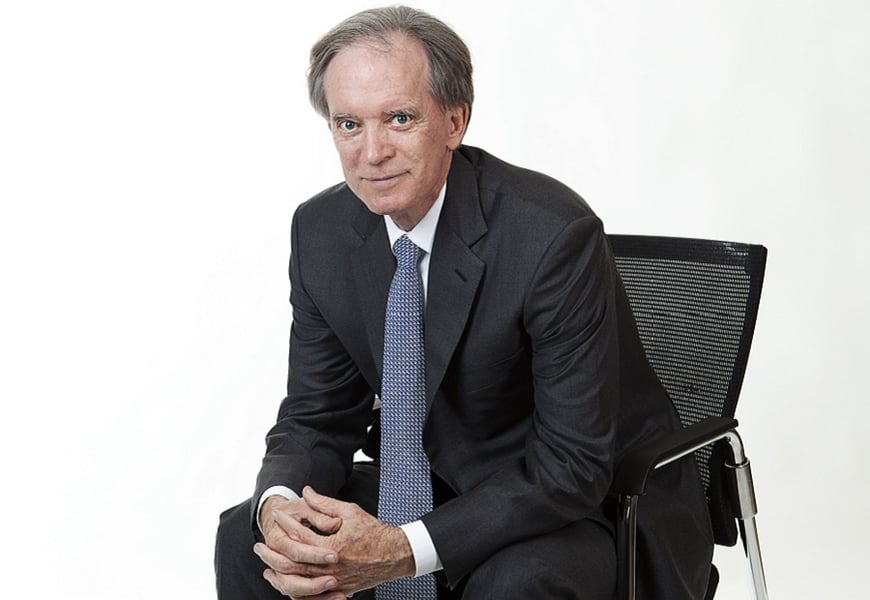
Bill Gross, former manager of the world's largest bond fund, said prices for many assets will fall this year as record-low interest rates fail to restore sufficient economic growth.
With global expansion still sputtering after years of interest rates near zero, investors will gradually seek alternatives to risky assets,
Mr. Gross wrote Tuesday in an investment outlook for Janus
Capital Group Inc., where he runs the $1.2 billion Janus Global Unconstrained Bond Fund (JUCIX).
“When the year is done, there will be minus signs in front of returns for many asset classes,” Mr. Gross, 70, wrote in the outlook. “The good times are over.”
See also:
Why 2015 will be a banner year for the economy
Six years after the end of the financial crisis, borrowing costs in the world's richest nations are stuck near zero, a sign investors have little confidence that their economies will strengthen. Mr. Gross, co-founder and former chief investment officer of Pacific Investment Management Co. who left that firm in September to join Janus, has argued the
Federal Reserve won't raise interest rates until late this year if at all, as falling oil prices and a stronger U.S. dollar limit the central bank's room to increase borrowing costs.
Stocks plunged yesterday, with the S&P 500 dropping 1.8% to 2,020.58 and the Chicago Board Options Exchange Volatility Index increasing for the fifth time in six days. Declines spurred by tumbling oil and concerns Greece will exit the euro have sent American equities to the biggest decline to start a year since 2005, data compiled by Bloomberg show.
TIMING MARKETS
While timing the end of a bull market is difficult, the next 12 months will probably see a turning point, Mr. Gross wrote.
“Knowing when the 'crowd' has had enough is an often frustrating task, and it behooves an individual with a reputation at stake to stand clear,” he wrote. “As you know, however, moving out of the way has never been my style.”
Mr. Gross said investors should hold high-quality assets with stable cash flows, such as Treasuries, high-quality corporate bonds, and stocks of companies with little debt and attractive dividends.
“With moments of liquidity having already been experienced in recent months, 2015 may see a continuing round of musical chairs as riskier asset categories become less and less desirable,” Mr. Gross wrote.