
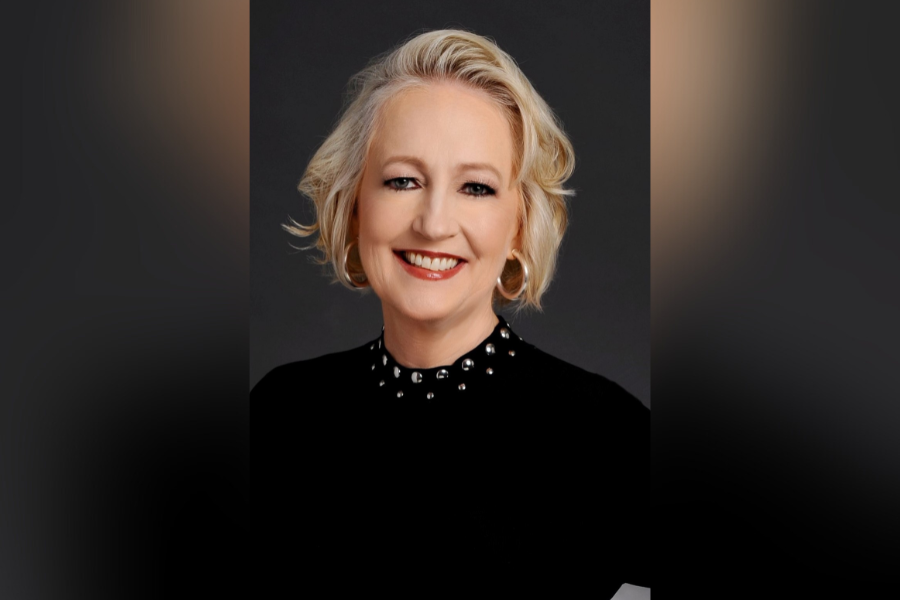
Kim Hoffman’s deeply personal and holistic approach to client relations has resulted in her repeatedly being named one of the country’s top advisors. However, the Edward Jones advisor says that while she started her adult life with numbers, it was in a very different manner.
“I wanted to major in accounting in college and I went to Wake Forest University,” she says. “They got me through the CPA exam the very first time – which I think only about eight to 10 percent of the population does. From there, I went into public accounting for 10 years – and that was an outstanding background for this industry. I could understand all the numbers, the financial statements, and the tax implications, which was hugely helpful.”
Despite this, Hoffman always knew she had an interest in financial planning, eventually making the leap to Edward Jones, a place she credits with giving her a deeper understanding of the industry. Notably, she values the collaborative approach among CPAs, attorneys, and other professionals – all in the name of client success.
“I had a CPA refer a client to me who had an estate-planning problem,” she explains. “[They] didn't understand that the 20 insurance policies they owned were compounding their estate problems. After partnering with the client, it took a year of work to get all the information needed on these policies. We ultimately partnered with the estate attorney.”
Together, they created a second-to-die policy, a strategic move that would have significant implications after the clients' passing.
“This was many years ago, and unfortunately, we’ve since lost both of the clients," adds Hoffman. “Their daughter received the proceeds – she owned a struggling business, so the money helped her a tremendous amount. And she has now helped her daughter start a business. The parents’ business was sold to another individual whose wealth we now help manage – including a 401(k) plan – and they have a son who will get into the business. It's a lot of fun seeing the multiple generations affected by this planning.”
It’s this commitment to helping the individual in every facet of their wealth management – and that of their family – that has led to Hoffman attracting a diverse set of clients.
“There are fundamentals these clients have, regardless of whether they’re business owners, executives, or retirees,” Hoffman says. And it’s these essentials – wealth preservation, enhancement, protection, and transfer – that are the pillars upon which her strategies are built.
But it’s not all money-minded. In fact, a large part of Hoffman’s approach is helping people figure out what they want to achieve next in life. Edward Jones recently conducted “Age Wave” research which provided valuable insights that extend beyond simple financial planning, identifying four key life pillars: health, family, purpose, and finances.
“We found out that health is the new wealth,” Hoffman says. “As important as finances sound, today’s retirees are overwhelmingly more worried about their health – to live a long retirement – and good health gives them lots of choices. While good health is ideal, we’ve learned many adults spend about 10 years in poor health, so we want clients to plan for this.”
Family, according to Edward Jones’ findings, is a significant source of satisfaction, but can also become a point of concern, especially when financial support for family members jeopardizes one’s own financial stability.
“Family seems to be the greatest source of satisfaction, support, finding purpose – and maybe worry,” Hoffman remarks.
Above all, Hoffman understands the importance of adapting to the changing needs of clients – especially in the current uncertain economic market. Looking at the younger demographic of wealth builders, Hoffman is quick to anticipate their unique set of demands.
“We actually brought in my son, who’s in his 40s,” she says. “He's able to bring a new perspective to the table. We have team members between 30 and 60 years old – so we cover several generations. Each generation absolutely communicates differently, meaning we’ve had to learn and develop those styles of communication.”
Here, Hoffman’s team has embraced technology to enhance client interactions, recognizing that today’s clients, regardless of age, expect digital savvy and flexibility in communications.
"Texting through approved and compliant channels is now the easiest way of communication,” she tells IN. “You’d think it would just be younger clients, but many of our older clients also enjoy texting.”

The financial advice industry has been facing inquiries into its cash sweep programs for years now.

Investor money allegedly went to strip clubs, exotic cars, and landscaping

Procyon adds $415 million in assets under management in New Jersey while Savant picks up a $213 million Southern California planning firm

With a growing number of real estate-rich Baby Boomers aging into retirement, some advisors may be failing to consider all the options available for those clients' assets.

Cornerstone Advisors study reveals compliance bottlenecks stall campaigns weeks after customer opportunities close.
As AI makes financial information more accessible than ever, Lana Hock explains why human judgment, trust, and empathy remain the qualities clients value most in a financial advisor
Northern Trust’s Ken Lassner shows advisors how to convert volatility into after-tax portfolio gains

