
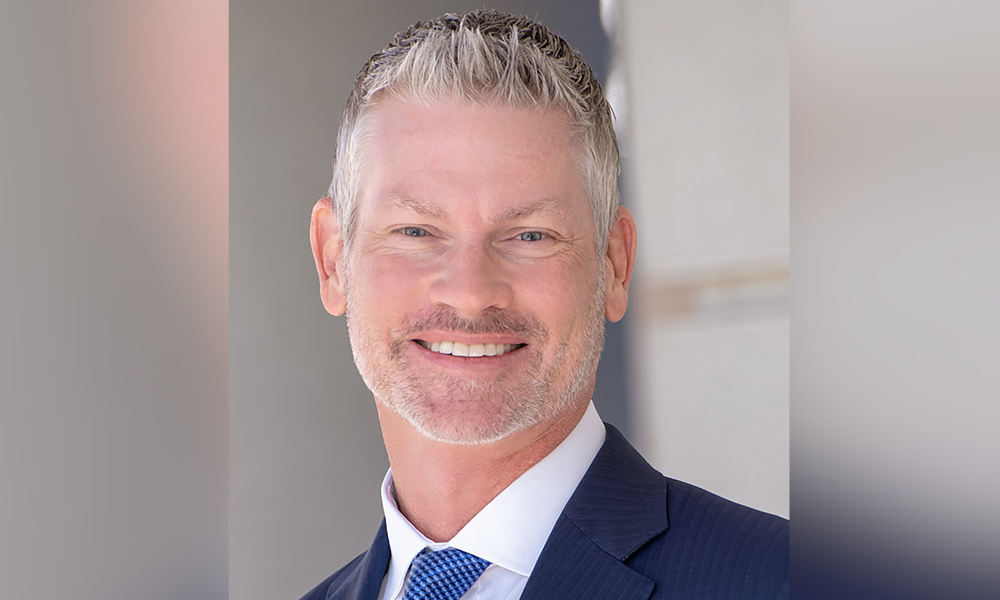
Matthew Matrisian, head of client growth at AssetMark, focuses his career on transforming the advice delivery models for financial advisors, with a clear emphasis on adapting to the ever-evolving financial landscape.
“Across the industry, we’ve seen high fee compression taking place across the value stack ... but the one area where we haven’t seen fee compression is really when it comes to advisor fees,” he explains. Despite the stability in advisor fees, the number of services advisors are expected to deliver has increased, creating a strain on profitability as additional costs are layered into the business.
Matrisian points out that clients now demand expanded services beyond traditional investment management, including estate planning, tax services, and trust services, which can stretch an advisor’s resources.
“If I have to add more services, I have to add more headcount ... ultimately, I’m going to be layering additional costs into my business,” he says. This is where advisors face margin compression, as their costs rise while their fees remain constant. To counteract this, advisors must focus on scaling their business models. Matrisian urges them to consider the transferability of their business, ensuring it can be passed on to the next generation or positioned for acquisition.
“Transferability is key,” he asserts, adding that advisors need to focus on building business models that are sustainable beyond the individual.
While advisor fees have remained stable, Matrisian predicts that this won’t last forever.
“I actually think that advisors will eventually experience some level of fee compression for their advisory fee,” he adds, citing the growing need for scale. As the number of financial advisors continues to shrink while the demand for advice grows, advisors may be required to serve a larger client base, further driving the need for efficient, scalable business models. Matrisian forecasts a future where advisors will manage larger portfolios but may see their average fees per client decline.
“You may see [advisors] servicing 200 to 250 client relationships,” he says.
When it comes to organic growth strategies that enhance long-term valuation and marketability, Matrisian encourages advisors to zero in on three main factors: cash flow, risk, and growth rate. Firms growing organically at an above-average rate are particularly attractive to private equity investors.
“Those firms that are growing organically at 12 percent, 15 percent per year ... are actually seeing a high valuation for their business,” he says.
Matrisian also advises that advisors focus their time on “client-facing growth initiatives,” encouraging them to spend more time with existing clients to generate additional referrals while also prospecting new ones. He underscores the need for efficiency, suggesting that anything an advisor can do to scale their business and increase client-facing time will pay dividends.
“Spend your time not on operating your business – not on compliance, not on administrative work, but really client-facing growth initiatives,” he explains.
In his role at AssetMark, Matrisian and his team help thousands of advisors optimize their practices, often focusing on building scalable service models and evaluating client profitability. One of the common errors advisors make, he says, is delivering the same service to clients regardless of their asset size.
“Most advisors we see are delivering the same service regardless of whether it’s a $100,000 client or a $5 million client,” he says. Matrisian emphasizes the need for advisors to be thoughtful about their client segmentation, ensuring that their most profitable clients are not subsidizing less-profitable ones. He also reiterates the importance of transferability, pointing out that firms should have systems and processes in place that make them attractive to potential buyers, whether through internal succession or external acquisition.
Specialization is another key to success, Matrisian notes, with the fastest-growing firms often focusing on a specific niche.
“Whether that is aligning with a large firm ... or maybe rolling up and acquiring other small books and businesses, those are the ones that are actually accelerating their growth the most,” he says. Specializing allows a firm to build a repeatable, documented process that can be transitioned to a new owner, which can significantly boost a business’s value. While niche businesses may require a longer transition period to build loyalty with a specialized client base, Matrisian believes they are ultimately more valuable because of their well-defined, repeatable processes.

A fund allegedly built a big stake, sparked a short squeeze, then sold as shares cratered

Hackers used AI voice cloning to target Point72, Citadel, Millennium and other major money managers on Wall Street.

Recruiters Philip Waxelbaum and Louis Diamond weigh in on whether AI skills are reshaping advisor pay amid PwC's Financial Services Workforce AI Survey.

Hightower's Bob Oros, eMoney's Stephen Langlois, and other industry veterans are joining the data infrastructure firm's inaugural advisory board.

Peter Cishecki is facing questions linked to his firm’s debt securities
Northern Trust’s Ken Lassner shows advisors how to convert volatility into after-tax portfolio gains
Dan Biagini of American Equity says the steady decline of pensions, longer lifespans and a reset in interest rates are rewriting how advisors build retirement income

