
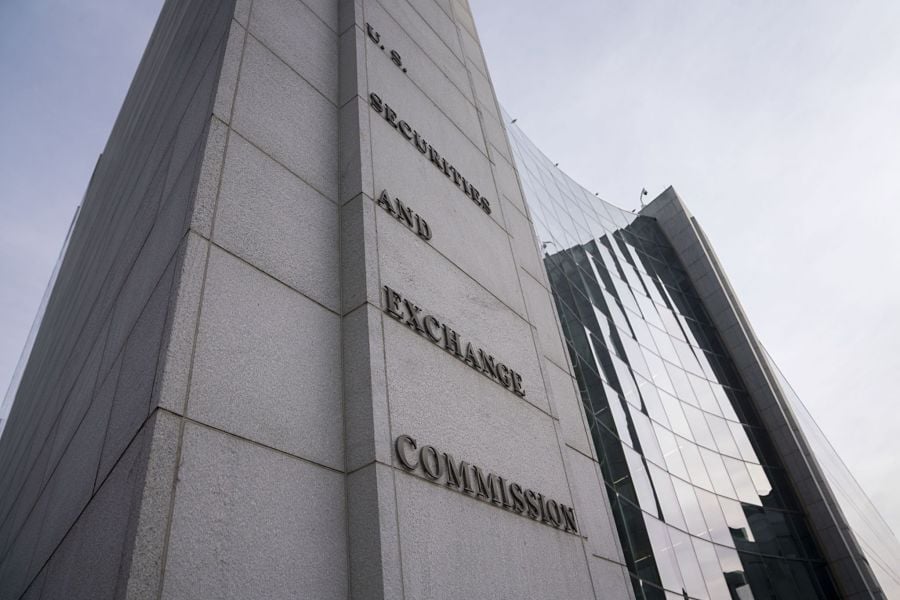
More than a decade ago, something extraordinary happened at a hearing of the House Financial Services Committee. One witness pretty much torpedoed legislation that had been written by the panel’s chair.
The pending bill would have established a self-regulatory organization to provide oversight of investment advisors. That meant an entity other than the Securities and Exchange Commission would take the lead in regulating advisors. Advisors were up in arms that the bill would allow the Financial Industry Regulatory Authority Inc., the broker-dealer self-regulator, to extend its reach to advisors.
The draft legislation started to falter at a June 6, 2012, hearing of the House committee due to the low-key but passionate testimony of David Tittsworth, then the executive director of the Investment Adviser Association.
Tittsworth asserted that most advisory firms were small businesses whose regulatory costs would increase sharply under an SRO’s oversight. His arguments persuaded many Republicans on the committee, which ended up never voting on the bill. Tittsworth passed away in early 2020.
Proponents of the bill said that an advisor SRO would be able to increase the number of advisors who undergo regulatory exams annually. They raised concerns that the SEC was examining only a fraction of the approximately 11,002 SEC-registered advisors at the time.
The same worries were raised last month at a meeting of the SEC Investor Advisory Committee. But now the number of advisors has risen sharply — to a record 15,114 last year. The SEC was able to examine about 15% of them in the last fiscal year, which equates roughly to an advisor being probed once every seven years.
The IAC, which is supposed to represent the voice of retail investors to the SEC, said the agency should increase its advisor examination rate to once every four or five years. But that would require Congress to increase the agency’s budget substantially, which is not likely to happen with Democrats controlling the Senate and Republicans in charge of the House.
The IAC made two recommendations at its June 22 meeting. One was for the SEC to request legislation from Congress that would allow it to impose user fees on advisors to fund exams. But, again, the prospects for such a bill are limited under the current political makeup of Capitol Hill.
The other IAC recommendation was that the SEC issue a request for public comment on third-party compliance examinations to explore questions about the potential qualifications for outside examiners, the scope and timing of probes and the types of advisors who would be reviewed.
Third-party exams are not exactly the same thing as an advisor SRO. But it’s a close cousin. That means that more than 11 years after that seminal House hearing, we’re recycling the same ideas for strengthening advisor oversight.
One thing on which everyone can agree is the need for more frequent SEC exams of advisors.
“We keep butting our head against the wall in terms of the SEC having enough resources,” Paul Roye, former senior vice president at Fund Business Management Group, said at the IAC meeting. “At some point, there could be be a major scandal in the advisors’ industry that gets missed because the examination cycle now is every seven years and may grow.”
Cien Asoera, an IAC member who's a financial advisor, expressed a similar sentiment.
“I broadly support the need for increased examinations, especially with the unprecedented growth in this space,” Asoera said. “We need to be thinking about this now before it gets out of control. Some would argue probably the numbers have gotten that large already.”
But there are potential significant drawbacks to third-party exams. Leslie Van Buskirk, administrator of the Wisconsin Division of Securities, said that when outsiders provide oversight, they sometimes lack the rigor of the government.
“I strongly object to the idea of delegating an essential government regulatory function to a non-government third party,” Buskirk said at the IAC meeting.
Even if the SEC puts out a comment request on third-party exams, it could be years before a rule is proposed. In the meantime, the agency has received budget increases over the last several years, although they may not have been as high as the SEC wanted.
“We encourage the Commission to consider ways in which it can increase the frequency and quality of investment advisor examinations under its current allocation of resources and any future allocated resources,” IAA spokesperson Janay Rickwalder said in a June 23 statement.
More than 11 years after Tittsworth launched his effective broadside against an advisor SRO, the organization he once led suggested the best idea for increasing advisor oversight quickly: The SEC should reexamine its own priorities to ensure that advisor exams can increase beyond the current 15% threshold.
If the agency does so, the approximately 65 million clients of advisors will be better protected.

A Nationwide survey finds 47% of GLP-1 users have never discussed the drugs’ financial impact with an advisor, even as many dip into savings.

The hundreds of millions of dollars from a sale of Inspired Healthcare properties does not mean an immediate windfall for investors.

Its SEC filings said one thing - a congressional probe said another.

Sham agreements allegedly padded revenue by 345%.

"Most pre-retirees are uncomfortable making key retirement income decisions without an advisor's help," said Chris Bailey of Cerulli.
Knighthead Life entered the market with a competitive MYGA. A strong launch earned advisor confidence and paved the way for FIAs.
As AI makes financial information more accessible than ever, Lana Hock explains why human judgment, trust, and empathy remain the qualities clients value most in a financial advisor

