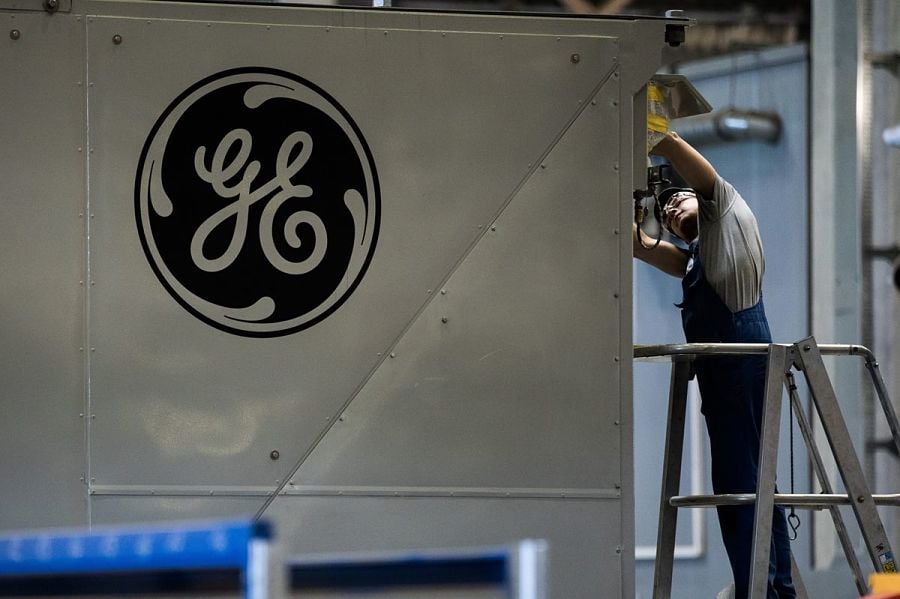
Two great American companies have seen their stock prices fall off a cliff. When my colleagues and I sold our investment firm, Centurion Capital, to GE Financial in the early 2000s, General Electric was the gold standard for great American enterprises. Over the subsequent years, GE has lost over half a trillion dollars in value and suffered the indignity of losing its position in the Dow Jones Industrial Average (it was the last remaining member from the original 12 participants).
In the meantime, retail megabrand Sears went from over $140 per share a decade ago to filing for bankruptcy this year after its stock plummeted to 60 cents per share.
How did two companies with such iconic brands and prestigious histories (both were founded in the late 1800s) end up with such disappointing outcomes? Are there lessons for entrepreneurs and business people to heed, even though we will likely never reach such lofty heights?
The Weight of History
1. Big ideas build big companies. Both companies were pioneers throughout their histories in their own way. General Electric went from creating mass-produced light bulbs to building one of the first multinational conglomerates, leading the way in multiple industries and becoming one of the world's largest capital providers as well. Sears started as a pioneer in catalogs and then evolved into one of the first national department stores, with thousands of storefronts.
But over the past few years, they stopped evolving, stubbornly holding on to their old ways of operating. Success is often its own worst enemy. Instead of looking for ways to keep thinking big, both companies dismissed the competitive forces that were chipping away at their business models. Then they became more focused on not losing (and trying to preserve their position with incremental changes) rather than on winning (and making bold moves).
The lesson: Don't rest on your laurels or someone will take them from you. Complacency is a choice, and the more comfortable you feel, the more likely competition is coming to take you on. Keep growing and changing.
2. Staying relevant is how you stay valuable. Both companies were woven into the fabric of America. It was hard to turn on a light fixture or use anything in your kitchen without seeing the GE name somewhere. At one time, every American with a mailbox would get the Sears catalog, and many had a Sears store anchoring their local mall.
But that was years ago. Both firms ignored the immense power of being household brands and stopped investing enough in what had made them great: being amazing consumer brands. GE sold its light bulb division and outsourced innovation. Sears stores were where people went to shop when they had no choice.
The lesson: If you aren't getting new customers, you aren't doing enough interesting things to attract them. Invest in
your customer experience so you are an indispensable part of their lives.
3. Your sacred cows can become your biggest blind spots. GE used its size, balance sheet and financial wizardry to manage an amazingly complex business and byzantine reporting system as its biggest assets. It reinforced that by hiring and promoting primarily from within. Sears thought its competitive advantage derived from its physical footprint and connection with the American consumer.
However, GE ultimately came undone by its financial complexity, and Sears was hamstrung by the size, reach and cost of its physical stores. By the time each company realized its assumptions were flawed, it was too late to shift their paradigms without massive equity destruction.
The lesson: Question your sacred cows because they might be the biggest thing holding you back. Stick with your values, but constantly challenge your assumptions.
4. You are never too big to fail. People are loyal only to themselves and their own interests. No one really cared how big GE was or that Sears was everywhere. People always want the best shopping experience in the most convenient way and at the best price, no matter the product or service. As the way we shop, interact and make decisions evolves, we all expect our vendors to adapt along with us. We might feel a pang when a part of our collective history disappears, but we very quickly replace it with the thrill of what's new.
You want to avoid the cliff? Keep building something new and exciting.
(More: The trillion dollar club: How to be a growth superstar)
Joe Duran is founder and CEO of United Capital. Follow him at @DuranMoney.