When
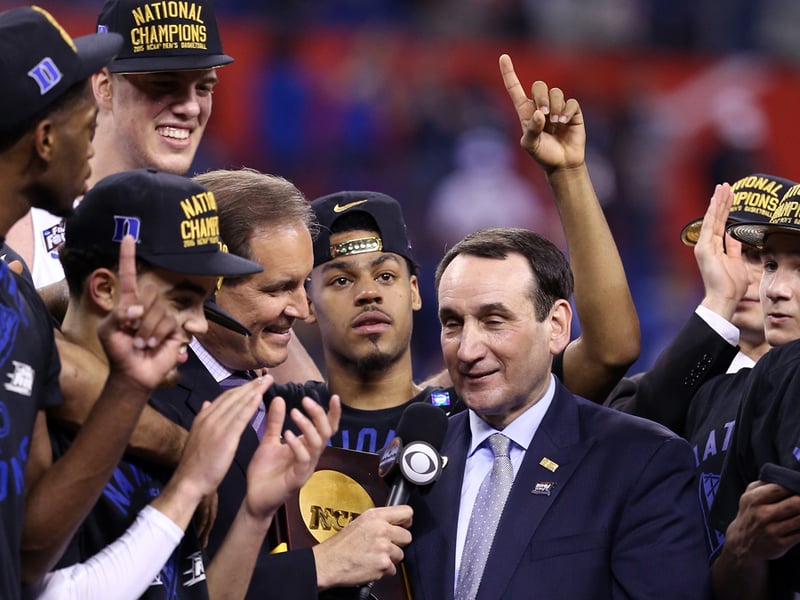
Fidelity Investments scheduled Mike Krzyzewski, the men's basketball coach at Duke University and the U.S. national team, to give the keynote address at their executive summit earlier this year, I doubt they foresaw that Coach K would just have won his fifth national championship. Serendipity aside, he delivered one of the most memorable speeches in a conference filled with great insights.
The first thing I was struck by is that this 68-year-old coach is not at all what you expect, if you have watched him on the sidelines during a TV broadcast. He still looks ridiculously young, but his energy, enthusiasm and humanness were a far cry from the impression I had of him as a mercurial, calculating, “take no prisoners” coach. While his delivery was straightforward, humble and often funny, his authenticity and passion was incredibly engaging. While they seem very different, he reminded me of John Wooden (another stellar coach).
THREE KEYS TO EXCELLENCE
Three lessons Coach K shared I think deserve repeating for any of us who want to build an exceptional team.
1. All leaders must be adaptable. The coach's perspective comes from the fact that he often loses half of his college team to the draft. In addition, when he coaches the U.S. men's team, he is dealing with bona fide superstars who are opponents during the regular season. Leaders need to adapt not just to the competition and their environment, but to the talent they have around them. In our own firms we probably don't experience the same level of turnover; however, our team is constantly growing and evolving individually and collectively, and we need to not be dogmatic about how things get done. Coach K shared that he has changed and grown every year to become more effective as a leader. He also lets some of his players take more control of the game than others — some players are capable of more, and his job is to recognize when that is the case and reward and empower those players. It is also his responsibility to see when some of his stars are not where they need to be and make the appropriate changes promptly, in order to stay competitive in a game and during a season.
2. Leaders instill a sense of ownership in their players. The goal of every leader should be to have the players care as deeply for the team as he or she does. Coach K gave one specific example that illustrates this point quite effectively. Instead of having team rules, he sits down with the team leaders every year and asks them to establish standards that all the players will abide by for the season. The list is remarkably similar year to year: We look each other in the eye when we speak; we tell the truth; we respect each other and are never late; we have each other's back. By having the team set the standards, the players hold each other accountable and he doesn't need to be forcing his rules on his players. He is simply enforcing the standards they established. In our companies, how often are we letting our team establish how to get things done and empowering our folks to own the solution?
3. Leaders understand feelings go beyond seeing and hearing. Coach K understands that knowing people's names, understanding their personal lives, and connecting with them as fellow humans is one of the crucial traits to building a genuinely connected culture. He shared that having a long-time marriage and three daughters has helped him realize the power of bringing a more feminine perspective to his leadership style and that this has had the largest impact in his growth as a leader (as a fellow father of three girls, I totally connect. Feelings come first at our house too!). He puts this to work in his coaching by creating videos that show players' faces as they fought throughout the season. His goal is for the team to feel the battle and the payoff of victory before they even play. We are in an industry ruled by intellect, but helping your players understand and feel the importance of what we do, and how it impacts our clients' lives, is as important as showing people how to do their jobs. His most reliable pep talk is to tell his players “I believe in you.”
(More: Secrets to growth: The difference between a racehorse and a pack mule)
SOUND BITES WORTH SHARING
During the Q&A, Coach K was asked how he keeps his passion and energy so high after 40 seasons. He gave a short list of really nice sound bites worth sharing:
• I love what I do.
• I'm in the moment.
• It's all new always.
• I stay balanced.
• I surround myself with good people (good people make you better).
• I am myself (but who am I really?).
• I always change.
In the end, I was left with one overwhelming impression from this speech: If our job as leaders is to get the most out of our people, then how many of us start by getting the most out of ourselves? It was quite inspiring to see a man at the top of the mountain still asking himself how far he could go. Shouldn't we all be asking ourselves the same thing?
Joe Duran is chief executive of United Capital. Follow him @DuranMoney.