
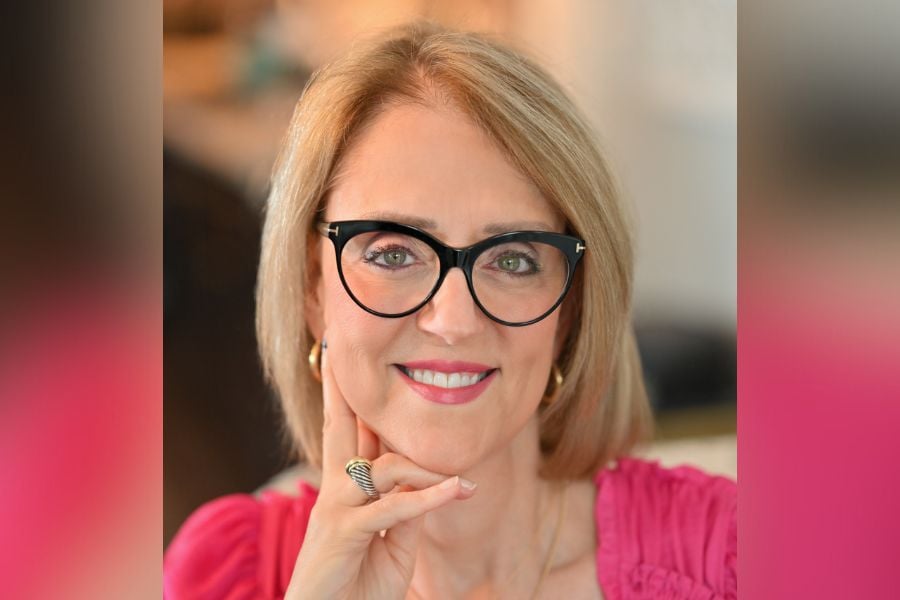
Carina Diamond has always been interested in what comes next.
That’s led Diamond, a former financial advisor, on a journey through the financial services industry, with a career that has spanned banking, a broker-dealer and an RIA.
Through much of that, she focused on mentoring, so it may come as little surprise to some that her new consulting venture, Stella Secunda, is all about succession planning.
“I was doing so much with young talent,” said Diamond, who earlier this year left her job as chief growth officer at Dakota Wealth Management, the firm that bought her RIA, Springside Advisors, four years ago. “The secret to my success has been bringing in college students, growing them and then hiring them.”
But she doesn’t want to just help leaders in financial services find successors who look like them. Part of her mission is to help make the industry less male, less white and less hetero.
“I want to be the face of normalizing succession planning,” she said. “We all need to take the responsibility of growing young financial advisors who look like this tapestry of the USA. It’s not all male, it’s not all white, it’s not all straight.”
Diamond, who was named as one of InvestmentNews’ Women to Watch in 2018, for 14 years ran a financial workshops program, Flourish — Women and Wealth. And working with The University of Akron, she established a scholarship for women who are studying financial planning. Through that school, she’s also a founding board member of Diversitas, a nonprofit aimed at expanding diversity in wealth management. During the pandemic, that program went national as sessions began being held virtually.
Over the years, Diamond has hired and mentored at least 25 people who were in college or just out of it, with about 40% of those folks being diverse in some way, she said.
“This is definitely my passion project,” she said. “I just reached a point in my life where my dedication to my own core values became very important. I’m interested in getting everyone to expand the talent pool to include more diverse people.”
The financial advice industry has a lack-of-diversity problem. Although women increasingly pursue careers in financial services, they are still underrepresented. Thirty percent of new CFPs in 2022 were women, and 15% were people who are racially or ethnically diverse, according to the CFP Board.
Diamond’s new firm, Stella Secunda, which soft-launched in July, provides succession planning, “next-generation” talent development, consulting on diversity initiatives and other services. Currently, she is developing a financial app for a large insurance company, she said.
“There’s definitely a methodology to recruiting and retaining young talent. A lot of folks are skeptical,” she said of mentoring. “This generation — they do need some love. They need some care … You might like it. It’s very rewarding.”
When Diamond left her practice, she “put [her] money where [her] mouth was” and turned the business over to people she had worked with and mentored, she said.
“The clients were not surprised. They knew everybody, and everyone was well trained, certified and familiar with them,” she said. “I was able to walk away knowing my clients were in good hands.”

The financial advice industry has been facing inquiries into its cash sweep programs for years now.

Investor money allegedly went to strip clubs, exotic cars, and landscaping

Procyon adds $415 million in assets under management in New Jersey while Savant picks up a $213 million Southern California planning firm

With a growing number of real estate-rich Baby Boomers aging into retirement, some advisors may be failing to consider all the options available for those clients' assets.

Cornerstone Advisors study reveals compliance bottlenecks stall campaigns weeks after customer opportunities close.
As AI makes financial information more accessible than ever, Lana Hock explains why human judgment, trust, and empathy remain the qualities clients value most in a financial advisor
Northern Trust’s Ken Lassner shows advisors how to convert volatility into after-tax portfolio gains

