
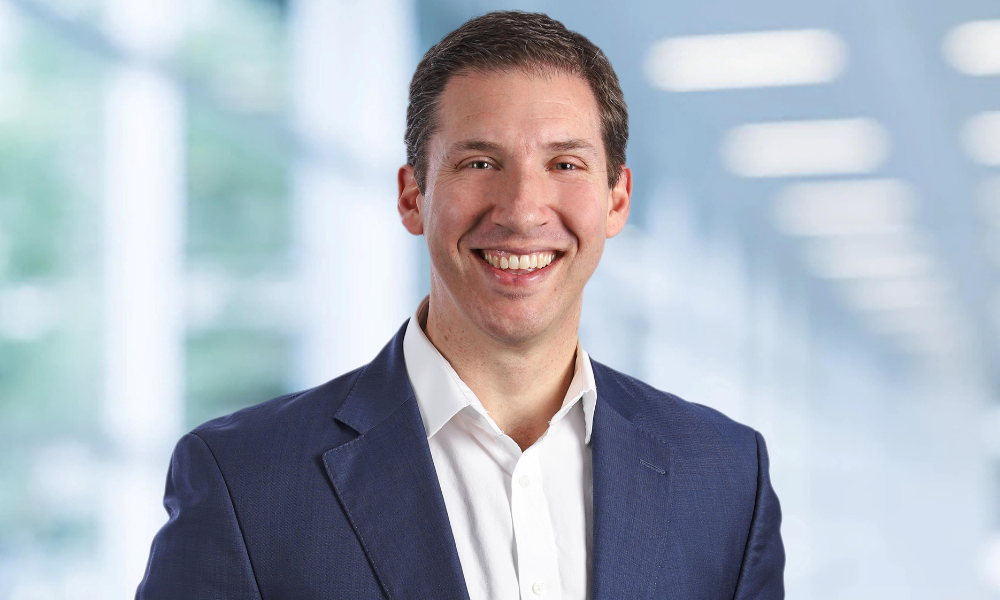
As someone who’s both led and developed advisor teams for the past two decades, Ed Kuresman, regional president and market leader at MAI Capital Management, understands how successful individuals tick – and how to propel them to their best.
“There’s no substitute for effort and making your team a priority,” Kuresman says. “It’s easy to look at team members or development as something you’ll get to later, but making it a priority makes the difference in terms of success.”
It’s this emphasis on prioritizing people that sits at the core of MAI’s culture, which Kuresman describes as being built on three fundamental tenets: “Take care of our clients, take care of each other, and take care of the community.”
A key aspect of fostering this collaborative environment is the structure of MAI’s operations. While many organizations have shifted to hybrid or fully remote models, Kuresman highlights the value of in-office interaction.
“Collaboration takes place organically in the office every day,” he explains. “People are walking up and down the halls, talking to each other, learning from each other, having fun together. It’s not just coming from your boss or supervisor; it’s happening in many different ways as we collaborate as a team. In our Cincinnati office, we’ll have about 40 people stemming from four different acquisitions working together with a common goal and mission, truly trying to help each other.”
For Kuresman, leadership is about consistently investing in people. As he says, if you’re not spending time with your team, if you’re not helping them get better, if you’re not giving them attention, you’re not going to be successful. To that end, MAI has implemented quarterly town hall meetings to highlight and celebrate how the firm’s values are being lived out in practice, reinforcing the cultural glue that binds the team together. And part and parcel of this is investing in the future generation of leaders.
“Mentorship and professional development can’t just be a checkbox item once a year during performance reviews,” Kuresman stresses. “We’re constantly speaking with each other. Feedback is provided regularly, and informal meetings throughout the year give us opportunities to check in and discuss how team members are progressing... You could reach out to the leader in your office, the leader of a region, or even Rick Buoncore, our executive chairman, and you’re going to get time and energy, and it’s going to be genuine.”
One of the standout features of MAI’s approach is its Planning Exchange, an internal system that allows team members to leverage collective knowledge and experience to solve client challenges.
“If the only resources I had were my own experiences and maybe the people around me, that would help with a lot. But leveraging much bigger teams that have done many different things is a huge opportunity,” Kuresman adds. “There are a lot of firms and people that want to continue to get better, and because things are changing so rapidly, it’s not easy to do everything within the same team you’ve had up until now."
And, when asked what advice he would give to other leaders in financial advisory firms, Kuresman has something of a laundry list of attributes.
“First, it’s important to know what qualities you’re looking for in a team member and a leader,” he says. While credentials and work experience are important, Kuresman emphasizes the importance of assessing the person behind the resume.
“Usually, within 15 minutes of meeting someone, I feel like I know if they’re the right fit or not. It often has little to do with their credentials and everything to do with who they are as people, how they communicate, and what they value.”
Patience is another critical quality he highlights, particularly in a fast-paced industry where leaders are often pulled in multiple directions.
“If you think about the sheer amount of work taking place day in and day out, it can be overwhelming. How you respond to that as a leader permeates across the organization,” he says.
Finally, and most importantly, Kuresman underscores the importance of setting the right tone as a leader.
“If you come in every day with a positive attitude, a desire to do good work, and – most importantly, in my opinion – a focus on creating a fun environment, it’ll be noticed and mirrored by others,” he says. “This is a marathon, not a sprint. Enjoying what you’re doing and who you’re doing it with is critical.”

Salespeople at the firm often went beyond the matching algorithm to recommend network advisors on its Zoe Wealth platform, according to the regulator.

The Protect College Sports Act would cap school payments and codify NIL rights, with implications for advisors guiding young athletes.

"I know the number that I want to be able to retire on, and now I just want out," says Wilmington Trust's Marguerite Weese, describing a common refrain among business-owner clients.

Bessemer and Brown Brothers Harriman veteran Robert Ludricks III and private markets specialist Olof Akesson join the ultra-high-net-worth push on the East Coast.

765 investors were promised 260% annual returns on truck leases
As AI makes financial information more accessible than ever, Lana Hock explains why human judgment, trust, and empathy remain the qualities clients value most in a financial advisor
Northern Trust’s Ken Lassner shows advisors how to convert volatility into after-tax portfolio gains

