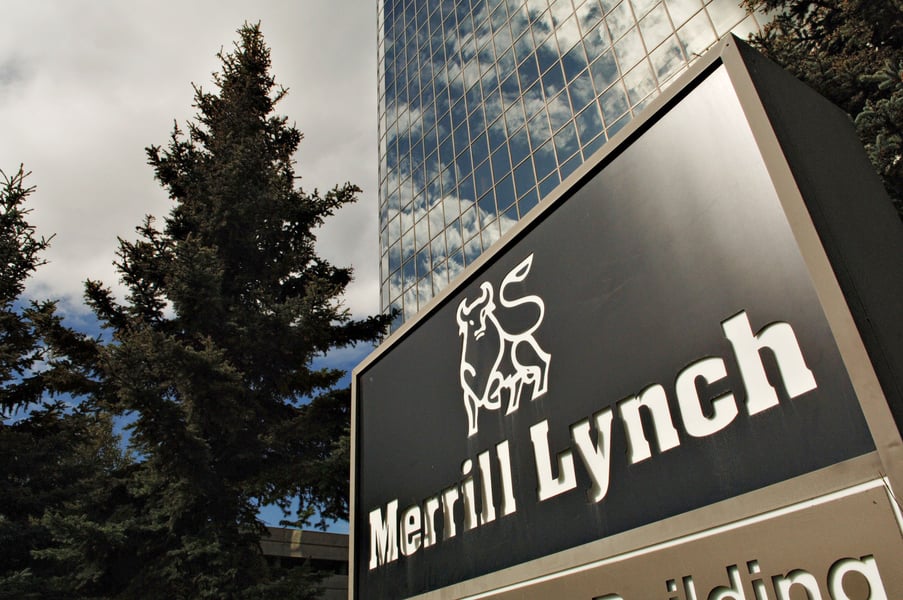
Thursday was not a good day for Merrill Lynch.
The wirehouse, owned by
Bank of America, admitted to wrongdoing in a record $415 million settlement with the Securities and Exchange Commission, which charged it misused customer cash and failed to safeguard their securities. Separately, it was fined an additional $15 million in another action by the SEC and a third brought by the
Financial Industry Regulatory Authority Inc.
The
$415 million settlement is “by far the largest” relating to a customer protection violation in the SEC's history, Andrew Ceresney, director of the SEC's division of enforcement, said during a media call Thursday.
While most cases settle with firms neither admitting nor denying the SEC's charges, the SEC thought it was important to obtain an admission from Merrill for its customer protection violations because of their severity, according to Mr. Ceresney. Mary Jo White, chairwoman of the SEC, has made obtaining admissions of guilt from defendants in settlements a priority during her tenure.
According to the SEC, Merrill maneuvered to free up billions of dollars of customer cash each week from 2009 to 2012, using it to finance its own trading activities. And from 2009 to 2015, the firm held up to $58 billion per day of customer securities in a clearing account subject to a general lien by its clearing bank.
Customers would have been exposed to a “massive shortfall” in the reserve account if Merrill had failed in its trades, according to the SEC, while exposing clients to significant risk and uncertainty in getting back their own securities had the firm collapsed.
Bank of America Corp. bought brokerage firm Merrill Lynch in January 2009 as Wall Street was struggling in the financial crisis.
“While no customers were harmed and no losses were incurred, our responsibility is to protect customer assets and we have dedicated significant resources to reviewing and enhancing our processes,” Bill Halldin, a spokesman for Bank of America Merrill Lynch, said in an emailed statement about the $415 million penalty.
“The issues related to our procedures and controls have been corrected,” he said. “We have cooperated fully with the SEC staff throughout this investigation.”
In a separate announcement Thursday, the
SEC said Merrill Lynch agreed to pay a $10 million penalty to settle charges that it made misleading statements in materials provided to retail investors for structured notes linked to a proprietary volatility index. The materials emphasized the commissions that were charged and the annual fee, but didn't disclose a quarterly cost of 1.5% that was tied to the value of the volatility index.
The notes were issued by Bank of America. Merrill Lynch had “principal responsibility for drafting and reviewing the retail pricing supplements,” according to the SEC.
Finra
said Thursday that it slapped Merrill Lynch with a $5 million fine for “negligent disclosure failures” in the sale of the volatility-linked structured notes. Merrill Lynch neither admitted nor denied the structured note charges made by SEC and Finra.
Mr. Halldin declined to comment on the fines tied to the structured notes cases.