
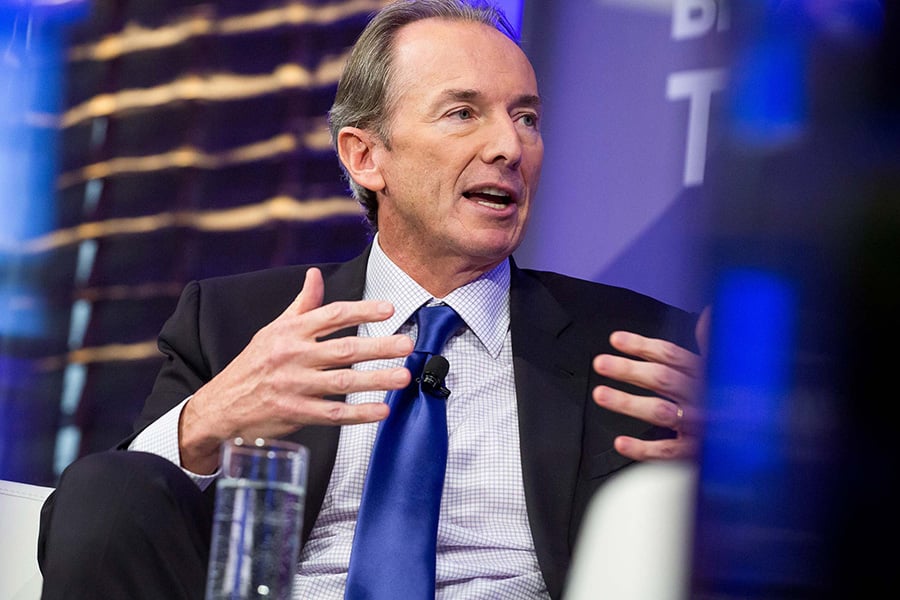
Morgan Stanley won’t cut its workforce this year even as the coronavirus pandemic sends markets into turmoil.
Chief Executive James Gorman told employees in a memo Thursday that the bank will take stock at the end of the year after central banks and governments have time to try to stabilize the economy.
“I am sure some, if not many, of you are worried about your jobs,” Gorman wrote in the memo. “While long term we can’t be sure how this will play out, we want to commit to you that there will not be a reduction in force at Morgan Stanley in 2020. Aside from a performance issue or a breach of the code of conduct, your jobs are secure.”
The bank’s shares are down 30% this year as banks have been pummeled by concerns that surging unemployment will spur loan losses while low interest rates weigh on margins.
About 90% of Morgan Stanley’s employees are working from home, Gorman said, as businesses around the world close down or keep their staff away from offices to stem the spread of the highly contagious virus. The “normal bonds created by everyday interaction with colleagues have surely been impacted,” Gorman said in his memo.
The memo follows Bank of America Corp.’s announcement last week that it’s hired 1,700 people so far in March. Most of the positions are in the bank’s consumer business, along with some support staff in its operations units, the lender said. JPMorgan Chase & Co., meanwhile, froze hiring across most of the firm, people familiar with the matter said this week.
In a memo last week, Gorman told employees that the economic turmoil doesn’t represent a crisis for the large banks, unlike in the 2008 recession, according to people with knowledge of the matter. Morgan Stanley and seven other giant U.S. banks have suspended stock buybacks, saying they will focus on supporting clients and the nation during the pandemic.
Morgan Stanley’s economists are among those on Wall Street who have declared that the pandemic has triggered a global recession. The bank’s team, led by Chetan Ahya, said a worldwide recession is now its “base case,” with growth expected to fall to 0.9% this year.

The financial advice industry has been facing inquiries into its cash sweep programs for years now.

Investor money allegedly went to strip clubs, exotic cars, and landscaping

Procyon adds $415 million in assets under management in New Jersey while Savant picks up a $213 million Southern California planning firm

With a growing number of real estate-rich Baby Boomers aging into retirement, some advisors may be failing to consider all the options available for those clients' assets.

Cornerstone Advisors study reveals compliance bottlenecks stall campaigns weeks after customer opportunities close.
As AI makes financial information more accessible than ever, Lana Hock explains why human judgment, trust, and empathy remain the qualities clients value most in a financial advisor
Northern Trust’s Ken Lassner shows advisors how to convert volatility into after-tax portfolio gains

