A New York City official launched an effort Wednesday to get the state legislature to pass a law that would clearly separate investment advisers from brokers when investors are seeking help.
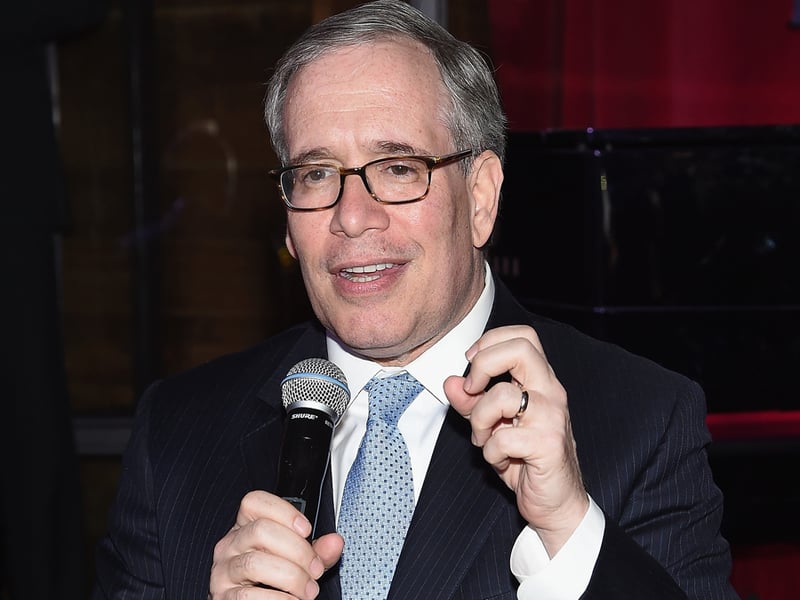
City comptroller Scott M. Stringer released a proposal that would require all financial advisers to state clearly whether they must act in the investor's best interest.
“We need a uniform, national fiduciary standard, but we can't wait to give New Yorkers the common sense reforms they need to make informed investment choices,” Mr. Stringer said in a statement. “This new law will ensure that New Yorkers know whether the investment advice they receive is in their best interest.”
Investment advisers already operate under a best-interest, or fiduciary, standard. Brokers adhere to a less-stringent standard in which products must be suitable.
The proposal would mandate that the following disclosure orally and in writing at the outset of a financial relationship, at frequent intervals and in advertising:
I am not a fiduciary. Therefore, I am not required to act in your best interests, and am allowed to recommend investments that may earn higher fees for me or my firm, even if those investments may not have the best combination of fees, risks and expected return for you.
A New York adviser who works under both the fiduciary and suitability standards endorsed Mr. Stringer's approach.
“What I really like about it is that it seems to be the hybrid answer,” said Doug Flynn, partner and co-founder of Flynn Zito Capital Management. “It doesn't dictate that you must operate as a fiduciary. It gives every investment professional a choice on how to work and it gives investors a choice of who to work with.”
A skeptic of the New York approach, however, said it is biased against brokers.
“The proposal is not exactly a neutral disclosure,” said Gary Sanders, vice president for securities and state government relations at the National Association of Insurance and Financial Advisors. “Disclosures are fine, but they need to be fair and balanced.”
A better disclosure, according to Mr. Sanders, also would outline the protections afforded by suitability, mention rules enforced by the
Financial Industry Regulatory Authority Inc. and indicate that brokers are examined more frequently than investment advisers.
Mr. Stringer prefers a simpler approach.
“Requiring this plain-language, unambiguous statement in advertising and at frequent intervals during the advisory relationship can help reduce consumer confusion and improve the investment security of all New Yorkers,”
a report written by Mr. Stringer's office states.
The New York proposal puts a finer point on disclosure already required by the SEC, said Knut Rostad, president of the Institute for the Fiduciary Standard.
“This is going to be sharper and more easily understandable,” Mr. Rostad said. “This is more blunt and could be more effective. Simply stating the truth makes sense.”
The prospects for such disclosure legislation in the New York Assembly are not clear. Mr. Stringer wants to move ahead at the state level, while federal regulators wind their way to rules.
“This is what states are supposed to do as laboratories of democracy,” Mr. Rostad said. “It's urgently needed, and the feds won't do it.”
The Department of Labor is about to re-propose a rule that would raise investment advice standards for brokers working with 401(k) and individual retirement accounts,
undergirded by a White House report that says retirement savers lose up to $17 billion annually due to conflicted advice.
On a parallel but independent track, the Securities and Exchange Commission is
considering a fiduciary-duty rule for retail investment advice.
The New York measure is likely to cause a fight in Albany, the state capital.
“If it does see the light of day as a legislative proposal, we will be actively engaged on it,” Mr. Sanders said.