
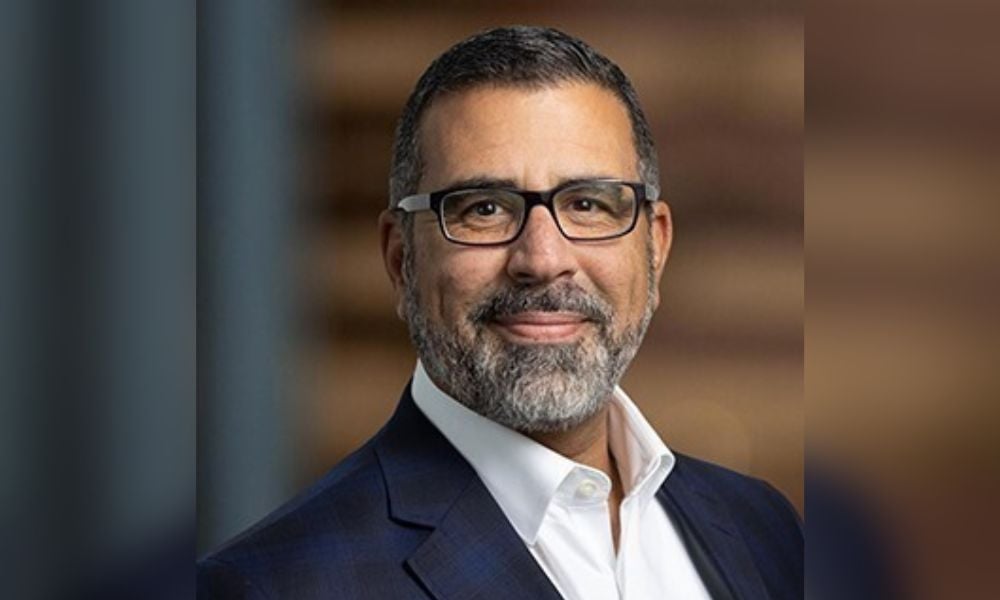
While headline deal counts suggest a steady but contained pace of RIA mergers and acquisitions, Gabriel Garcia believes the industry is missing a significant part of the story.
As Head of RIA Client Strategy and Experience at SEI Investments, Garcia sees a level of activity, particularly among smaller firms, that rarely makes it into industry tallies. He’s been speaking with InvestmentNews about the current state of the industry’s M&A landscape and his outlook for 2026.
“Industry reports often understate the true level of activity, particularly in the sub-$500M AUM segment and internal succession transactions,” says Garcia. “Many smaller firms execute ownership transitions without the involvement of capital partners or public announcements. Instead, they work through succession internally or with local buyers, which makes them harder to track despite their meaningful position in overall activity.”
He believes that this understated segment is not marginal but represents a structural shift.
“We see internal succession and localized deals accelerating as aging founders seek continuity without pursuing headline-grabbing consolidator deals,” he says. “This ‘quiet consolidation’ is reshaping the lower end of the market.”
From SEI’s vantage point across firms of varying sizes, Garcia estimates a meaningful gap of 15-20% of transactions not reflected in reports of more than 400 transactions.
Garcia points to a combination of demographic, economic, and structural forces driving consolidation across the RIA landscape.
“There are several drivers of the consolidation movement,” he says, starting with “an aging advisor population [that] leads to increased succession needs.”
Capital availability remains another powerful catalyst. “Private equity and strategic investors continue to provide liquidity and growth capital,” Garcia notes, alongside the rise of scalable platforms. “The rise of ‘Gators’ (Aggregators, Consolidators, Integrators) has created scalable platforms that attract firms seeking operational leverage.”
Underlying it all are the economics of the advisory business itself. “RIAs offer recurring revenue, strong margins, and predictable cash flows, making them highly attractive,” Garcia says, adding that many firms reach natural turning points where independence becomes harder to sustain. “Many firms reach a stage where additional resources, technology, and scale become essential, prompting founders to step back from day-to-day operations.”
Despite higher interest rates and macro uncertainty, Garcia sees surprising resilience in pricing and a shift in how deals are structured due to interest rates.
“Despite macroeconomic volatility, multiples have remained resilient and even ticked up slightly over the past five years,” he says. “While interest rates have increased, deal structures have not changed dramatically. However, we are seeing greater use of equity components in M&A transactions to align long-term interests and mitigate financing costs.”
Across deal types, Garcia sees activity increasing, though not evenly visible. “Both tuck-ins and large-scale acquisitions continue to increase,” he says. “And while tuck-ins are often less visible to the marketplace and typically undercounted, we see more acquisitions by larger firms.”
Mergers of equals remain less common but are gaining traction among firms seeking competitive footing. “This activity is less frequent but growing among mid-sized firms that aim to combine resources, talent, and technology to compete with national platforms,” Garcia says. “These transactions are often driven by cultural alignment and shared strategic vision.”
Large-scale acquisitions, while constrained by a limited universe of targets, remain highly sought after. “There are only approximately 1,295 firms with $2B+ AUM, which constrains volume, yet demand remains strong,” he says. “Strategic buyers and PE-backed platforms continue to pursue these deals aggressively, as they offer immediate scale and significant revenue impact.”
Overall, Garcia sees buyers favoring bolt-on growth. “We are seeing mergers where the acquiring firm is 3–5x larger than the target, reflecting a preference for bolt-on growth rather than equal partnerships.”
In today’s environment, Garcia says fundamentals still win.
“Cash (flow) is king, and it’s driven by talented advisors and leaders,” he says. “The most attractive firms are profitable, growing, talent-rich, and run by advisors hungry for resources that will unlock their potential for many years to come.”
Leadership depth is increasingly critical. “Increasingly, acquirers are excited to add advisors who bring not just experience and a profitable set of right-fit clients, but leadership qualities that can help augment the acquiring firm’s team and long-term success.”
Garcia frames firm attractiveness through SEI’s S.E.T. lens: Sustainable, Enhanceable, and Transferable. He explained that buyers look for durable revenue streams, strong compliance, and a clear succession plan; firms that can be scaled through technology, marketing, and operational improvements; and client relationships and processes that can transition smoothly post-acquisition.
Despite strong preferences for internal succession, Garcia says most firms are not ready.
“While some firms have taken proactive steps, a significant majority remain ill-prepared for succession,” he says. “Many lack formal internal succession plans and default to finding an external buyer when retirement approaches. This reactive approach exposes firms to valuation risk, rushed transitions, and potential client attrition.”
Still, external sales can be a solution under the right circumstances. “Owners with a shorter timeline, shallower talent pool, or desire for a partner to help fuel growth often end up selling externally,” Garcia said, noting these deals can support client handoffs and create new ownership paths for internal teams.
Garcia defines scale as more than size alone. “Scale is the cumulative effect of good work habits, well-designed operational processes, and appropriately robust systems,” he says, emphasizing the supporting role of technology.
However, technology is not a substitute for advice. “High- and ultra-high net worth clients still prefer to work with advisors first, not technology,” Garcia says. “But technology can be a critical driver of operational efficiency in the background and a powerful complement to the advisor in augmenting the client experience.”
He cautioned against reactive tech decisions: “Advisors are often quick to change technology because they can’t hurt its feelings and don’t have to coach it out of bad habits, but it’s not magic. Technology is most useful when selected, understood, managed, and used in service of the firm’s priorities and goals.”
For Garcia, alignment rather than price often determines success. “While dollars get headlines, deal decisions are about people,” he says. “The buyer and selling advisors need to be aligned, including in how they engage with and add value for clients. Perceived inflexibility on either side can prematurely end otherwise promising conversations.”
Garcia expects momentum to continue into the new year.
“We anticipate acceleration overall, with potential temporary bumps along the way,” he says. “Regardless of economic volatility, our industry’s profitability, quantity of owners near or beyond retirement age, and increasing appetite for synergies and scale will continue to fuel deal activity.”
Short-term disruptions, he noted, rarely derail long-term trends. “Short-term fluctuations rarely halt in-progress negotiations or long-term trajectories of industry M&A.”

Goldman Sachs retirement survey finds 83% want guaranteed income, while the annuities providing that income increasingly hold private credit.

The AI meeting assistant's Advisor Intelligence plugin turns client conversation data into annual reviews, tax scans and attrition alerts.

Chuck Roberts and Stifel have been facing scrutiny due to sales of structured products and structured notes.

Among other updates, the proposals would let advisors to regulated funds earn performance fees and allow interval funds to offer monthly repurchases.

What will financial advice look like 20 years from now? Evan Vladem explores how AI may transform wealth management while reinforcing the enduring value of human guidance, trust, and empathy.
As AI makes financial information more accessible than ever, Lana Hock explains why human judgment, trust, and empathy remain the qualities clients value most in a financial advisor
Northern Trust’s Ken Lassner shows advisors how to convert volatility into after-tax portfolio gains

