
Remind clients you're here to help them avoid costly mistakes

Remind clients you're here to help them avoid costly mistakes
Most clients won't know this adviser duty exists unless you take the time to tell them.
DEC 23, 2015
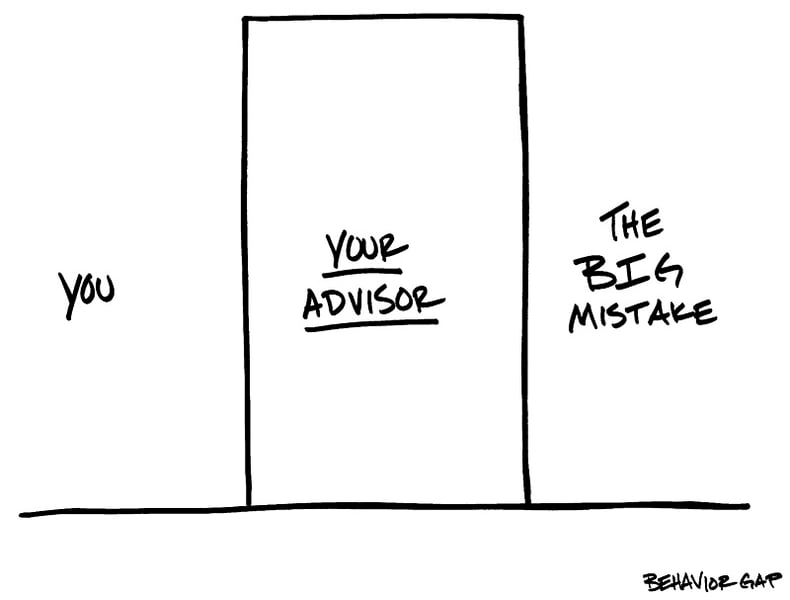
Many financial advisers struggle to define their value to clients. But it doesn't have to be that way. I came up with this sketch not long after my wife and I decided to hire an adviser for our personal finances. Many people were confused. "But isn't that what you do?" they said. True, but think of it this way. Surgeons have a great deal of knowledge and skill, but they don't operate on themselves. Why expect something different for financial advisers? This process of being the client and not the adviser helped me better define an adviser's value. I came up with three reasons: 1. Help me get really clear about my goals. 2. Remind me what I said my goals were. 3. Be the thing between me and stupid. Now these reasons won't be the original reason a client seeks you out. Most people will show up at your door because they need help with something right now. But long term, these three reasons matter a lot. And of course, these three things sound simple, but in practice they define our biggest value as advisers. That's why it's so important to have this conversation and explain your value to current and prospective clients. Because at some point, everybody will run into a situation where they're tempted to make a big money mistake. Even super-smart people face this issue because we're talking about decisions involving emotions. Advisers exist to help people avoid costly mistakes. Knowing in advance that you're there to help is a huge value to clients. But most won't know this value exists unless you take the time to tell them. Yes, other important things like designing a well-built portfolio matter, too. But please don't forget your primary role. We're here to stand between clients and costly mistakes. We're all human, and without some help, we'll make a mistake we're sure to regret. Carl Richards is a certified financial planner and director of investor education for the BAM Alliance. He's also the author of the weekly "Sketch Guy" column at the New York Times. He published his second book, The One-Page Financial Plan: A Simple Way to Be Smart About Your Money (Portfolio) this year. You can email Carl here, and learn more about him and his work at BehaviorGap.com.

Latest News

IRA assets swell to $19.2 trillion as 401(k) rollovers drive growth

IRAs now hold nearly twice the assets of 401(k) plans — and most of that money didn't arrive through annual contributions.

Women feel confident about saving, but many still keep cash in low-yield accounts

A new survey finds that many women prioritize financial security but continue to leave savings in accounts that may not keep pace with inflation.

SEC seeks comment on prediction-market ETFs after May pause

Roundhill, Bitwise and GraniteShares funds remain on hold while the agency weighs how novel ETFs should be regulated.

Dump investment banks, buy alternative asset managers, says Oppenheimer

"Shares of alternative assets managers have lagged this year as investors grow wary of private-credit exposure."

TaxStatus rolls out rules-based tool to flag advice gaps

The fintech platform is touting a new AI-free Planning Observations feature, which draws on IRS tax records to uncover opportunities for advisors.

SPONSORED Who builds the income when the pension disappears?

Dan Biagini of American Equity says the steady decline of pensions, longer lifespans and a reset in interest rates are rewriting how advisors build retirement income

SPONSORED Why direct indexing stopped being optional

Direct indexing is on pace to outgrow ETFs and mutual funds. Northern Trust's Ken Lassner explains why the advisors who get it wish they had started sooner.




