
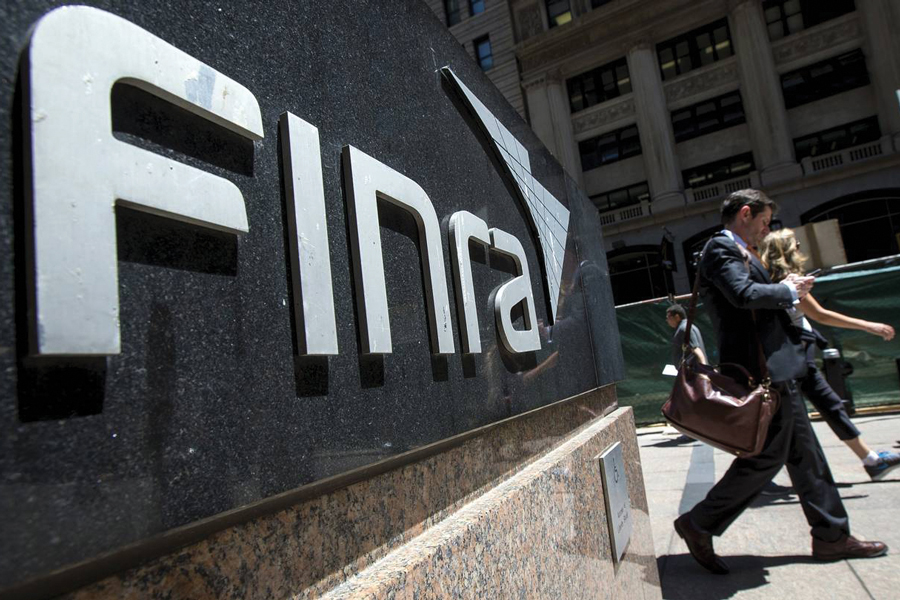
The SEC approved Friday a Finra rule designed to rein in brokerages with a history of misconduct or that employ a high number of registered representatives with disciplinary records.
The rule imposes additional capital obligations on high-risk firms by requiring them to deposit cash or qualified securities in an account controlled by the Financial Industry Regulatory Authority Inc., the broker-dealer self-regulator. The money, which cannot be withdrawn without Finra’s consent, could be used to fund arbitration awards or for other purposes.
The rogue brokerages — known as “restricted firms” — also could face other conditions or restrictions. They would fall into the category by having “significantly higher levels” of disciplinary problems, especially sales practice violations, than similarly sized peer firms, the Securities and Exchange Commission order states.
Under the rule, a restricted firm can challenge the designation and is given a “one-time opportunity” to avoid sanctions “by voluntarily reducing its workforce,” the order states.
Finra has been under pressure for years to crack down on firms that hire a high number of brokers who have violated the self-regulator’s rules and caused investor harm. In April 2018, it issued guidance on heightened supervision.
The SEC order said Finra cited academic studies that show “some firms persistently employ registered representatives who engage in misconduct, and that misconduct can be concentrated at these firms.”
The rule is designed to give Finra more firepower to address the potential investor harm posed by rogue brokerages. It will go into effect in six months.
“The proposed rule should create incentives for firms to change behaviors and activities, either to avoid being designated as a restricted firm or lose an existing restricted firm designation, to mitigate Finra’s concerns,” the SEC order states.
Finra first proposed the rule in 2019. It filed the measure with the SEC in November, and the SEC then took public comments on the proposal. Several commenters said the proposal didn’t go far enough to curb rogue brokers.
SEC Commissioners Allison Herren Lee and Caroline Crenshaw praised Finra for agreeing to share information about rogue brokerages with state regulators. They also said the Finra board approved a plan to file a separate rule to disclose the identities of the firms to the public.
“A firm’s high-risk status is important information and will help investors make informed choices about the firms they select,” Lee and Crenshaw said in a statement. “We intend to monitor this important investor protection issue and will evaluate whether additional steps may be needed to address recidivist firms and brokers.”

Iowa's Greenwood Wealth Partners exits D.M. Kelly as UBS and Ameriprise win Merrill Lynch recruits in California and Florida

Less than 1% of pool funds went to actual trading, CFTC says

Plus, SEIA builds a governed data foundation for its in-house AI and Snappy Kraken debuts a read-only marketing coworker for advisors.

He owes $364 million but pays $100 a month

Broadridge, Wedbush and Alaris Acquisitions have also filled senior wealth management roles with hires from J.P. Morgan, Osaic and SageView.
As AI makes financial information more accessible than ever, Lana Hock explains why human judgment, trust, and empathy remain the qualities clients value most in a financial advisor
Northern Trust’s Ken Lassner shows advisors how to convert volatility into after-tax portfolio gains

