
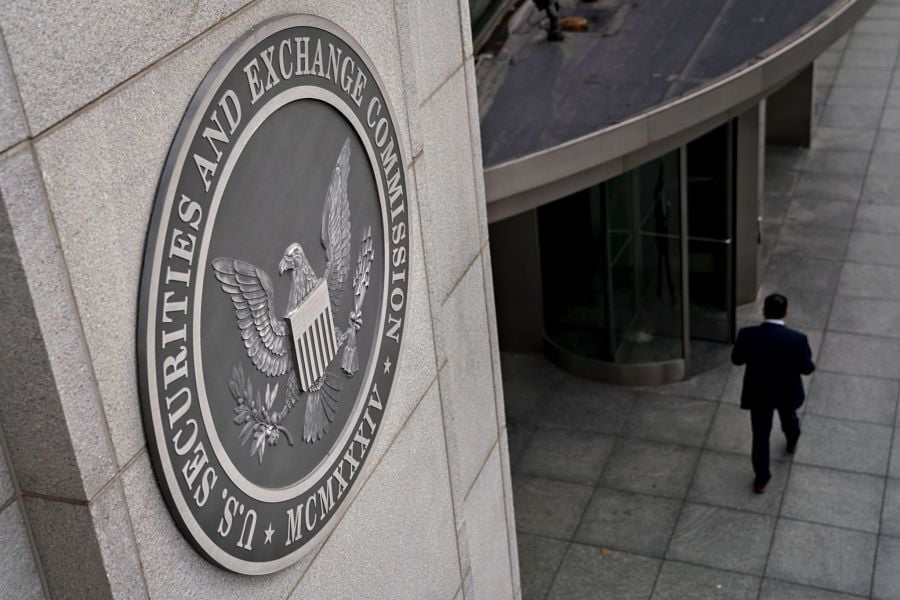
Securities and Exchange Commission examiners found widespread compliance deficiencies at branch offices of registered investment advisory firms, the agency said Monday.
In a risk alert, the SEC said some firms had outdated policies and procedures or had not implemented them for advisory activities in operations outside the main office. The problems cropped up in compliance programs related to ethics, custody and supervision and with fiduciary obligations involving fees, expenses and advertising.
SEC staff observed that compliance risk may be heightened “when the main and branch offices have different practices,” the alert states. “For example, advisers that do not monitor, review, and/or test their branch office activities may not be aware that the compliance controls they have adopted are not effectively implemented or do not appropriately address the intended risks and conflicts in these remote locations.”
More than half of the examined advisers were cited for deficiencies related to portfolio management practices, according to the agency. Problems arose in overseeing investment recommendations, managing and disclosing conflicts of interest and allocating investments.
The alert highlighted shortcomings related to recommendations of high-fee mutual funds.
“Advisers purchased share classes of mutual funds that charged 12b-1 fees instead of lower cost share classes of the same mutual funds that were available to clients,” the alert states. “The advisers stood to benefit from the clients paying for higher cost share classes, which created a conflict of interest that was not disclosed to clients.”
There were also problems in the management of wrap-fee programs.
“Advisers failed to adequately assess whether programs were in the best interests of clients, erroneously charged commissions, misrepresented or failed to have appropriate disclosures regarding their wrap fee program (i.e., fees, trading away practices, and delegation of responsibility), or failed to implement appropriate oversight of trading away practices, including monitoring whether subadvisers traded away,” the alert states. “These practices typically caused clients to incur additional costs, such as ticket charges and other fees.”
The risk alert’s observations were based on 40 examinations of advisers’ main offices combined with one or more examinations of branch offices. Most of the advisers in the sweep had more than 10 branch offices and collectively managed approximately $110 billion in assets for about 185,000 clients.

Halbert Hargrove senior wealth advisor weighs in on the products' guaranteed income upside, the operational drag and his wish list for carriers.

With 8.6% of advisors set to switch firms in 2026, Cerulli says advisor recruitment hinges on technology, branding and HNW support.

“I’m seeing more disputes like this between advisors and other advisors at the same practice,” said one industry executive.

Longer retirements and steady inflation could drain retiree portfolios before heirs inherit, with 4% net returns running dry by year 34.

A single fintech partner triggered a $68.8M credit hit.
As AI makes financial information more accessible than ever, Lana Hock explains why human judgment, trust, and empathy remain the qualities clients value most in a financial advisor
Northern Trust’s Ken Lassner shows advisors how to convert volatility into after-tax portfolio gains

