
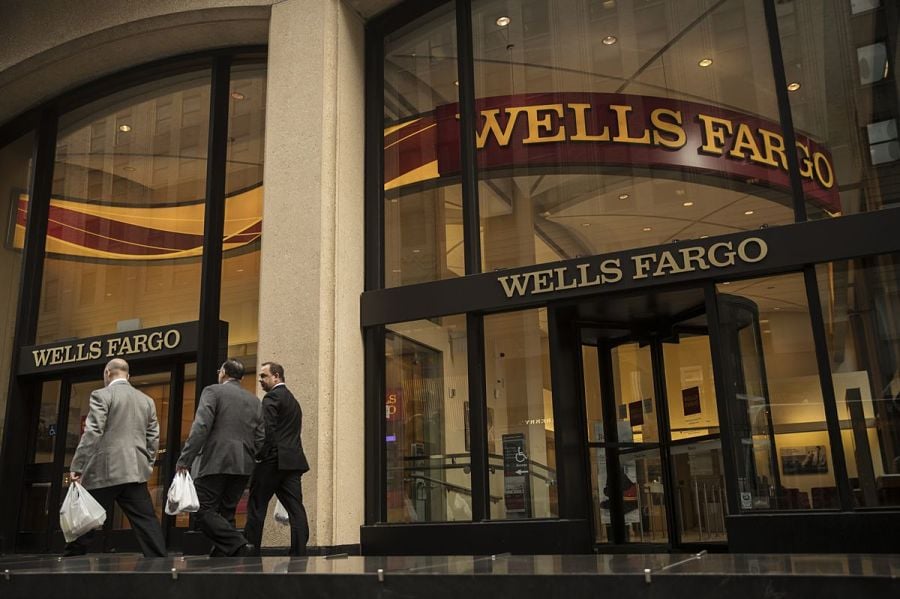
The Securities and Exchange Commission ordered Wells Fargo to pay a $35 million fine for selling complex exchange-traded funds that were unsuitable for the retirement savers who bought them, the agency announced Thursday.
In its order, the SEC said that from April 2012 through September 2019, Wells Fargo Clearing Services and Wells Fargo Advisors Financial Network recommended that retail investment advisory clients and brokerage customers – many of whom were senior citizens and retirees on limited incomes -- add risky single-inverse ETFs to long-term portfolios.
That kind of ETF is designed to reap gains for betting against an index for a limited trading period, typically a day. If they’re held longer, customers may experience significant losses.
The SEC charged that Wells Fargo sold the complex ETFs to investors who had no business owning them. The firm didn’t implement adequate policies and procedures to monitor the transactions nor did advisers understand the products.
“Wells Fargo recommended that certain clients buy and hold, in many cases for months or years, single-inverse ETFs with daily reset features, including in retirement accounts,” the SEC order states. “Some of these clients had little or no relevant investing experience and had been identified to Wells Fargo as clients with moderate or conservative risk tolerances.”
The SEC said the Wells Fargo fine would be distributed to harmed investors.
Wells Fargo conducted the unsuitable sales despite a previous Financial Industry Regulatory Authority Inc. sanction for similar behavior prior to 2009. In May 2012, the firm paid more than $2.7 million in fines and sanctions. At that time, it said that it had reformed its policies and procedures for sales of single-inverse ETFs.
But the SEC said it found no improvement.
“Firms must maintain effective compliance and supervisory programs to ensure that the securities they recommend are suitable for their clients,” Antonia Chion, associate director of the SEC Enforcement Division, said in a statement. “As a result of Wells Fargo’s failure to meet these important obligations, some of its employees recommended complex instruments to retail investors who did not understand the risks involved.”
Wells Fargo neither admitted nor denied the SEC’s charges. The firm said it has abandoned the complex ETFs that consistently have caused it problems.
“Wells Fargo Advisors settled claims with the U.S. Securities and Exchange Commission related to our policies and procedures and supervision of single-inverse exchange-traded funds,” Wells Fargo spokeswoman Jackie Knolhoff wrote in an email statement. “Wells Fargo Advisors no longer sells these products in the full-service brokerage.”

The financial advice industry has been facing inquiries into its cash sweep programs for years now.

Investor money allegedly went to strip clubs, exotic cars, and landscaping

Procyon adds $415 million in assets under management in New Jersey while Savant picks up a $213 million Southern California planning firm

With a growing number of real estate-rich Baby Boomers aging into retirement, some advisors may be failing to consider all the options available for those clients' assets.

Cornerstone Advisors study reveals compliance bottlenecks stall campaigns weeks after customer opportunities close.
As AI makes financial information more accessible than ever, Lana Hock explains why human judgment, trust, and empathy remain the qualities clients value most in a financial advisor
Northern Trust’s Ken Lassner shows advisors how to convert volatility into after-tax portfolio gains

