
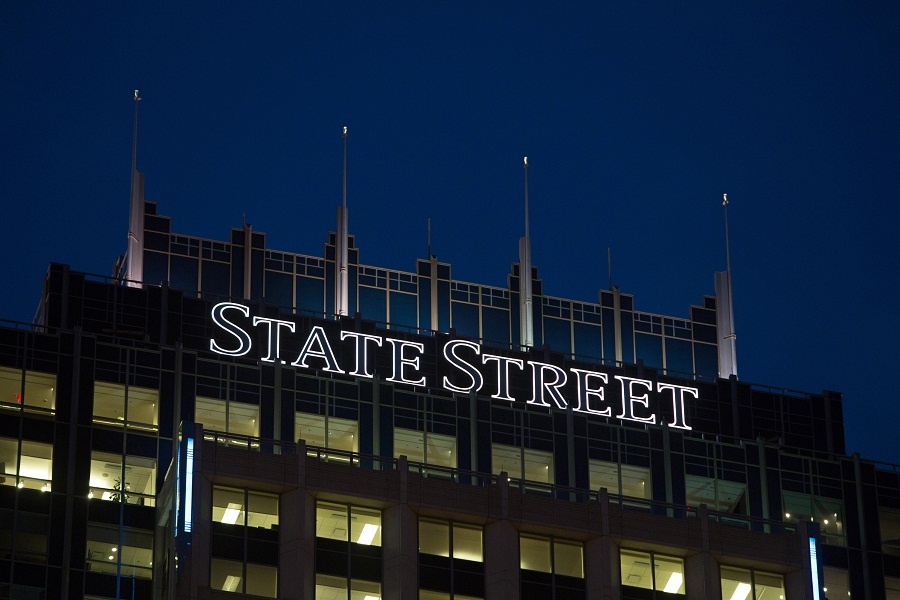
State Street Corp. will leave its two New York City offices, making good on plans to transition its Manhattan-based staff to a hybrid work model.
The company plans to close its two midtown Manhattan offices, it said Monday in a statement. Its New York-based staff will work remotely or from buildings in New Jersey and Connecticut.
Financial firms and other companies are reevaluating their real estate footprint in New York after more than a year of remote work. Office supply continues to set records, and large employers including BlackRock Inc. and Wells Fargo & Co. have delayed plans to return to offices as the Covid-19 delta variant spreads. Just 23% of office workers have returned to their desks in the New York metro region as of Aug. 11, according to data from Kastle Systems.
“We absolutely see the value for having physical space in the area that serves as a hub for employees and clients in the NYC area,” according to the State Street statement. “But we also know this is a tremendous opportunity to reimagine and redesign the workplace in a very fit-for-purpose way that improves performance, productivity and our employees’ experience.”
State Street has been considering whether or not to renew its Manhattan leases since at least February. In the first quarter, the company subleased more than 50,000 square feet of its 1290 Avenue of the Americas office. Its lease on that space ends in 2025.
The company will also close its offices at 1040 Avenue of the Americas. In the meantime, State Street has added a shared workspace in the city.
The decision was previously reported by Dow Jones.

Elsewhere, Wells Fargo Advisors adds a $400 million Morgan Stanley veteran in Naples as an ex-Cetera advisor goes independent with LPL

According to a federal charges Bradley Heppner, 60, received more than $150 million in payments through funneling money from GWG Holdings to a shell company.

A $1B fund allegedly skimmed 30% off the top, then swapped cash for locked-up stock.

Insiders allegedly rewrote projections three times in four days.

TCI Wealth Advisors also has also tapped JIFFYAI to unify onboarding and servicing, while TradePMR adds ICE market data to its Fusion advisor platform
Knighthead Life entered the market with a competitive MYGA. A strong launch earned advisor confidence and paved the way for FIAs.
As AI makes financial information more accessible than ever, Lana Hock explains why human judgment, trust, and empathy remain the qualities clients value most in a financial advisor

