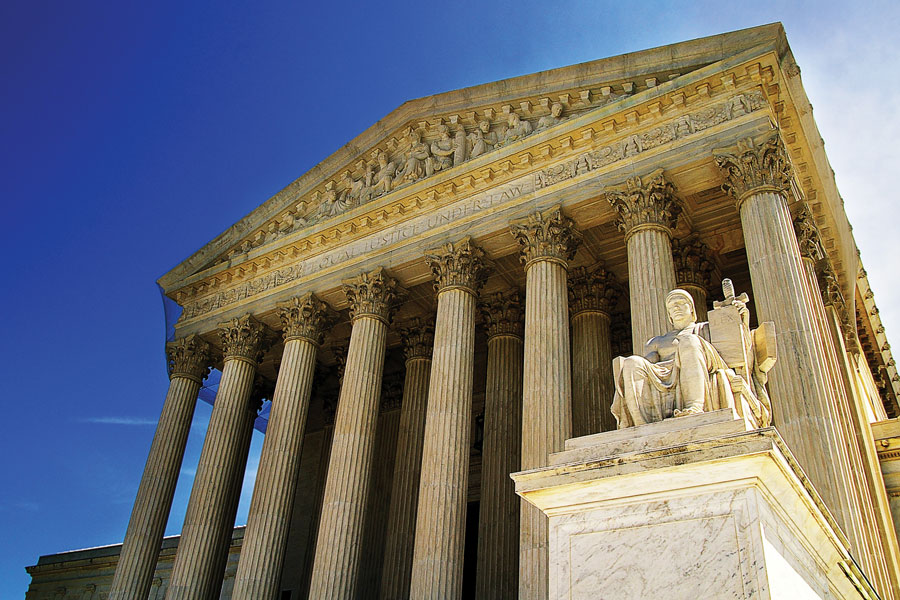
The Supreme Court's
ruling on Thursday against the Securities and Exchange Commission could help some financial advisers who are currently engaged in legal battles with the agency, but will likely have little impact on new cases, according to securities lawyers.
The high court, in a 7-2
decision, sided with former investment adviser
Raymond J. Lucia, who said the SEC's appointment process for its in-house judges, called administrative law judges,
was unconstitutional. Mr. Lucia's counsel, Mark Perry of Gibson Dunn & Crutcher, said the ruling validated that his client was "the victim of an unconstitutional proceeding."
When bringing a lawsuit against financial advisers, the SEC may do so before one of its five in-house judges rather than a federal judge in district court. Critics argue this tinges the proceedings with a level of bias in favor of the SEC.
Legal experts don't believe the Supreme Court's ruling will have a broad effect on the use of administrative law judges — the ruling didn't challenge the judges' overall constitutionality, just the constitutionality of the process by which the judges are appointed.
"In the biggest picture, it doesn't change anything," said Kenneth Berg, a partner at Ulmer & Berne. "There are still going to be sanctions imposed by administrative law judges."
The Supreme Court said the constitution requires in-house judges to be appointed by the president, a department head (i.e., the SEC commissioners) or a court. In November, the SEC took the step of ratifying the appointment of its in-house judges, which experts believe cleared them to hear new SEC cases without it being unconstitutional.
"This decision wouldn't affect a proceeding that hasn't happened yet," said Ira Matetsky, partner at Ganfer & Shore, speaking of the Supreme Court ruling. "It will have an impact on some present or past proceedings."
The proceedings that would likely be most impacted are those currently pending and in which advisers raised a question about the constitutionality of administrative law judges, legal experts said.
One high-profile example: financial adviser Dawn J. Bennett, who wanted her case heard in federal court rather than before an in-house SEC judge; she
skipped out on the SEC's administrative hearing rather than defend herself. Her case, Bennett v. SEC, is currently pending before the 10th Circuit Court of Appeals.
"I do think this is a victory for anyone who's raised the issue and questioned if proceedings were constitutionally valid," said Gregory Morvillo, Ms. Bennett's former attorney and a partner at the law firm Orrick.
There are roughly 100 cases pending before the SEC and more than 10 pending in appellate courts, said Mr. Perry, who defended Mr. Lucia in the Supreme Court hearing. The SEC had barred Mr. Lucia from the industry in 2013 and fined him $300,000 for allegedly misleading claims about his "buckets of money" retirement investing strategy.
Mr. Perry also expects legal challenges from financial advisers who hadn't previously raised the issue of in-house-judge constitutionality, by arguing that their constitutional rights had been violated.
"My guess is at least a few people will take a run at it," he said. However, he acknowledged it's likely an "uphill battle."