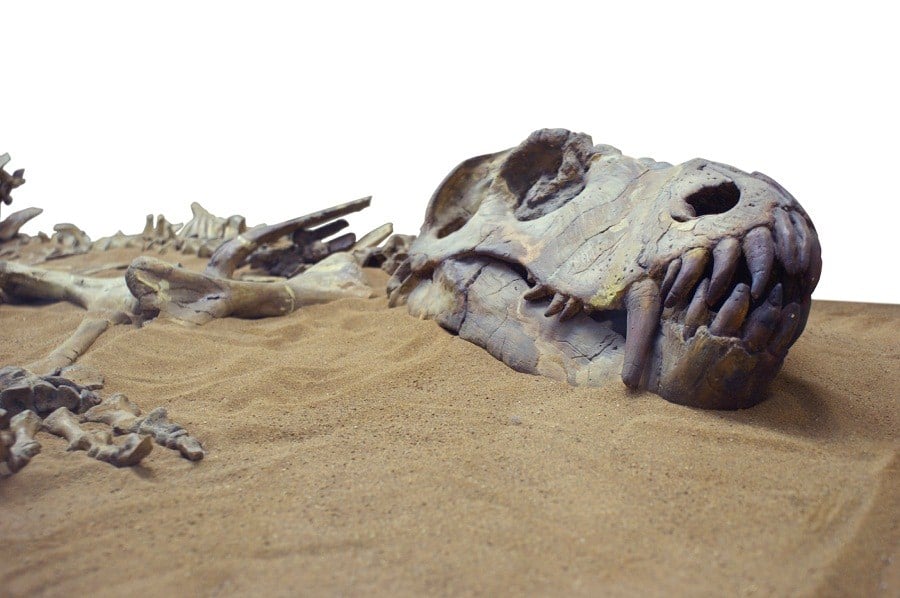
"It's not the strongest of the species that survives, nor the most intelligent, but the ones most responsive to change." — Charles Darwin
“Jurassic World” is making a killing at the box office. Interesting to think about how such powerful and dynamic creatures simply died, while a mammal as seemingly unimpressive as the duck-billed platypus continues to thrive. What was it that allowed one species to live through massive global disruptions and others to perish?
This is important to all of us because the business world is going through one of the most profound periods of change and disruption since the Industrial Revolution. The
consumer revolution and the
digitization movement that is empowering it are forcing us all to rethink how we work. However, not all of us have the same perspective when it comes to change.
When any industry is going through major disruption there are four strategies you can follow in order to avoid extinction. Below is a brief primer on the four, and how and when to use each:
1.
Ignore it. Denial is not a strategy. But if you do not believe that the changes will notably affect your business, your clients or your employees, then doing nothing is a viable alternative. In our industry, if you think all the talk about a digitized industry is a fad and you are right, or if you have less than five years left in your practice and if your clients are over 65, then doing nothing is fine. You should ensure that you are considering such subtle implications as the long-term value of your practice if you do not evolve it with the industry.
2.
Fight it. Sometimes the challenges to an industry are fickle and impermanent. Remember when accountants were going to take all our clients? If you believe that is the case, then simply resisting the change and explaining why you are not changing will work for a brief spell. Unfortunately, this strategy only works when a threat is cyclical, not secular and permanent. It was the right plan to explain to clients why you weren't investing heavily in Internet stocks in the late 90s, but another altogether to explain why you are ignoring the fact that clients can get a portfolio managed, rebalanced and reported on for no fees from the same custodian you are currently using! This strategy will work if you think digital and bionic advisory firms are a passing fad.
3.
Go along with it. This is the safest strategy when you aren't sure how the landscape will evolve or you simply do not have the resources to evolve by yourself. Staying open to improvement and, once winning technologies take shape, adopting them into your firm is a safe path. But there's a little bit of a catch-22. On one hand, the earlier you adopt new tools, the more likely you will have to change frequently along the way; but on the other hand, the longer you wait, the harder adoption will be. Make no mistake that the early adopters will have shaped the industry and established their position at the top.
4.
Lead it. This is the right plan when you have a clear perspective on where the industry is headed and the resources to do something about it. There is a lot of advantage to the first movers, including becoming the dominant market shapers, but they also suffer the pain of being a pioneer, which means needing to be able to withstand mistakes. Invariably new winners evolve when major disruption occurs.
Evolution was a new idea when Charles Darwin conceived of the notion after visiting the Galapagos Islands in the 1830s. He correctly surmised that the ability to adapt and be agile is the single biggest determinant of a species survival. So what was the secret of the duck-billed platypus? Probably that it was an odd hybrid — a small water-born mammal that lays eggs like a reptile, has fur like a mammal, has a bill like a bird, webbed feet like a sea creature and breathes oxygen like a land creature. It was built to withstand whatever changes occurred to the environment and could hide out in water or come out to land in whatever temperature shifts occurred.
Digitization has consumed whole industries already, from travel to retail shopping to taxis and home buying. It will leave our industry forever different, and whether you go the way of the dinosaur or the platypus is realldy up to you. Ensuring your business is built to survive the change is no passing fad, but all change has to start at the top. So are you building a dinosaur or a platypus?
Joe Duran is chief executive of United Capital. Follow him @DuranMoney.