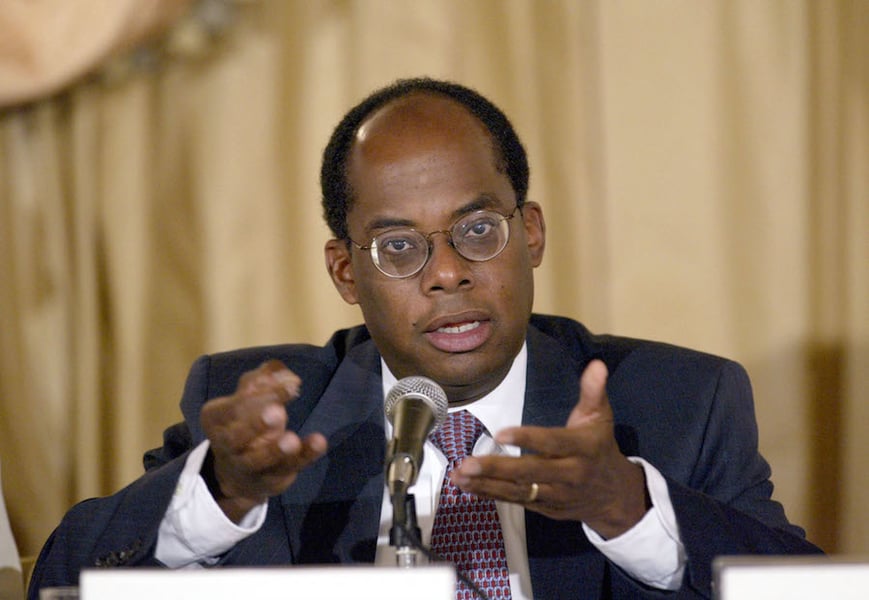
Roger Ferguson, the former
Federal Reserve vice chairman who is chief executive officer of TIAA, is breaking from industry groups that sued the U.S. Labor Department to challenge increased government oversight of retirement products.
“We are not supporting litigation,” Mr. Ferguson said in a phone interview Wednesday. “The department, in my assessment, ran a good process.”
Congressional Republicans have voted to nullify the new rules, which were designed to protect investors from being pushed into high-fee retirement products by advisers who put their own interests before their clients' needs. President Barack Obama vetoed the resolution, and the House of Representatives could hold a vote as soon as Wednesday to override it. The plan also faces attack in the courts, with Wall Street groups suing this month and saying the regulations include a “deliberately unworkable” fiduciary standard.
MetLife Inc., the largest U.S. life insurer, likened the Labor Department rules to requiring a car dealership that sells Chevrolets to guide a potential customer to a Ford outlet. The company decided to sell an adviser unit after saying that proposed rules could make it too expensive to provide advice to lower-income customers, an argument dismissed by Mr. Ferguson.
Many such people are already overlooked by Wall Street, he said, adding that new technologies might offer the solution to lowering the cost of financial advice.
Mr. Ferguson said the rules help address one of his concerns: In some cases, customers were encouraged by outside advisers to roll over workplace retirement plans into individual accounts that might not have been in their best interest. The CEO's remarks carry weight because of both TIAA's size and his ties in Washington. The company, which is known for providing financial services and insurance to teachers, oversees more than $800 billion. The executive was named in 2011 to Obama's Council on Jobs and Competitiveness.
“My view is that there's always tension over rules that come out,” Mr. Ferguson said. “I know that from my days in the government.”
The CEO praised the department's efforts to work with his company and the rest of the industry over their concerns. He declined to comment on the specifics of the Wall Street lawsuits.
He said advisers should embrace the idea of putting their clients first, and if parts of the rule present fresh challenges, “We should deal with those as they emerge, but not let the fear of unintended consequences stand in the way of moving to this kind of standard for the industry.”