
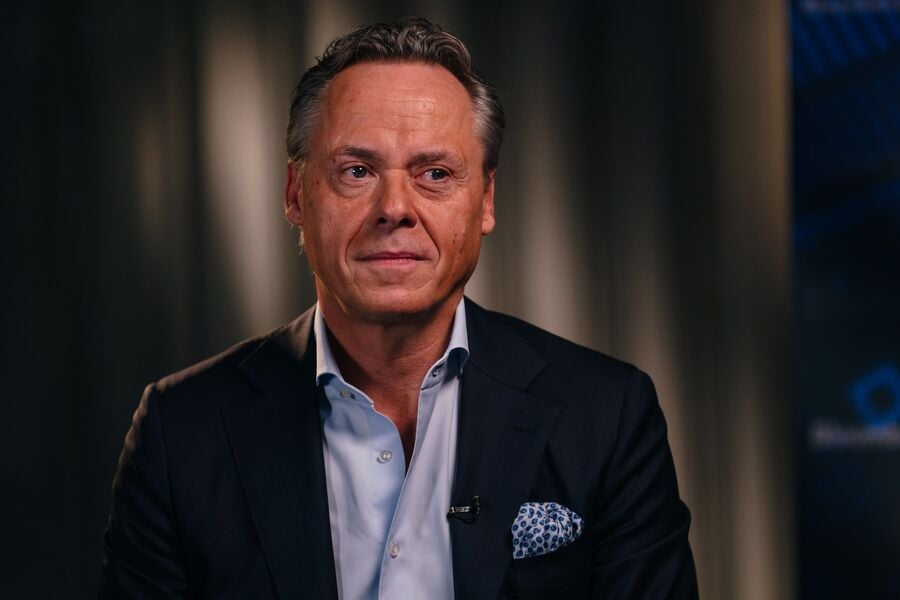
UBS Group AG raised Chief Executive Officer Ralph Hamers’ compensation for last year by 11%, making him one of Europe’s best-paid bank bosses, even as bonuses for the rest of the firm were cut in a challenging period for dealmaking.
Hamers received $13 million for his second full year in the job. That included a bonus of 9.7 million francs, an increase of 14% from a year earlier when his compensation was impacted by a loss related to the collapse of prime brokerage client Archegos Capital.
The overall bonus pool for the Zurich-based lender was cut 10% to $3.3 billion, UBS said in its annual report Monday.
The pay award caps an uneven performance for Switzerland’s largest bank, which managed to lift profit slightly despite steep declines in the business of advising on deals. The firm’s shares gained 4.8% in 2022, a year in which the main index of European banks fell.
“Ralph Hamers successfully led UBS through a challenging year and delivered good financial results despite significant headwinds due to geopolitical and macroeconomic developments,” the bank said in its report, adding that the performance last year was in line with its targets.
While Hamers has made progress on cost cuts, one of his key initiatives hit some bumps last year. In September, the lender pulled out of a deal to acquire U.S. robo-advisor Wealthfront, which would have been the first major acquisition for the CEO in his effort to make UBS a more digital bank. The purchase was meant to widen the bank’s reach to the lower rungs of the wealthy there. Instead, UBS retrenched, saying it would focus on its traditional high-net-worth customer base.
UBS increased profit by 2.3% last year, with cost cuts including in personnel expenses making up for lower revenue, particularly in the business of advising on mergers and stock and bond issuance. Hamers had previously warned that bonuses could be cut if deal-making didn’t come back. He said in January that UBS has a “healthy culture of pay for performance,” though he didn’t see a need for a bidding war.
That’s in part because several Wall Street rivals that only a year earlier were still competing for talent have begun to cut jobs in preparation for an economic slowdown. Cross-town rival Credit Suisse is mired in a complicated restructuring that includes thousands of job cuts and a spin-out of the investment bank. The firm slashed the bonus pool for 2022 by about half and said the management board took nothing after its worst year since the financial crisis. Some rivals, however, are still handing out large increases. Italy’s UniCredit SpA is boosted the pool for last year by 20%, likely one of the most generous awards among European banks, Bloomberg reported. CEO Andrea Orcel, a former UBS investment banker, was given a 30% compensation increase after he received €7.5 million for 2022.
At Deutsche Bank AG, rates traders received some of the biggest increases in bonuses, with currency and emerging markets desks also seeing gains, people familiar with the matter have said. The financing business was roughly flat and the pool for credit traders was cut, the people said. Hamers’ pay figure for last year doesn’t include some 440,000 francs in benefits and contributions to retirement benefit plans.
New Chairman Colm Kelleher earned 4.8 million francs after taking over at last year’s annual general meeting. Axel Weber, who stepped down from that role in April after a decade, earned 5.2 million francs, according to the report.

South Carolina estate planning firm joins Osaic’s IBD network, citing succession planning tools and multigenerational growth resources.

A new SIFMA and KPMG study of more than 2,100 US investors finds satisfaction high, AI-only trust falling, and demand for human guidance growing across every generation.

Retail banks and private wealth firms scored 40 in Fitch's AI stress test, signaling possible one-notch downgrade risk under an adverse scenario.

Elsewhere, Wells Fargo Advisors adds a $400 million Morgan Stanley veteran in Naples as an ex-Cetera advisor goes independent with LPL.

According to a federal charges Bradley Heppner, 60, received more than $150 million in payments through funneling money from GWG Holdings to a shell company.
Knighthead Life entered the market with a competitive MYGA. A strong launch earned advisor confidence and paved the way for FIAs.
As AI makes financial information more accessible than ever, Lana Hock explains why human judgment, trust, and empathy remain the qualities clients value most in a financial advisor

