
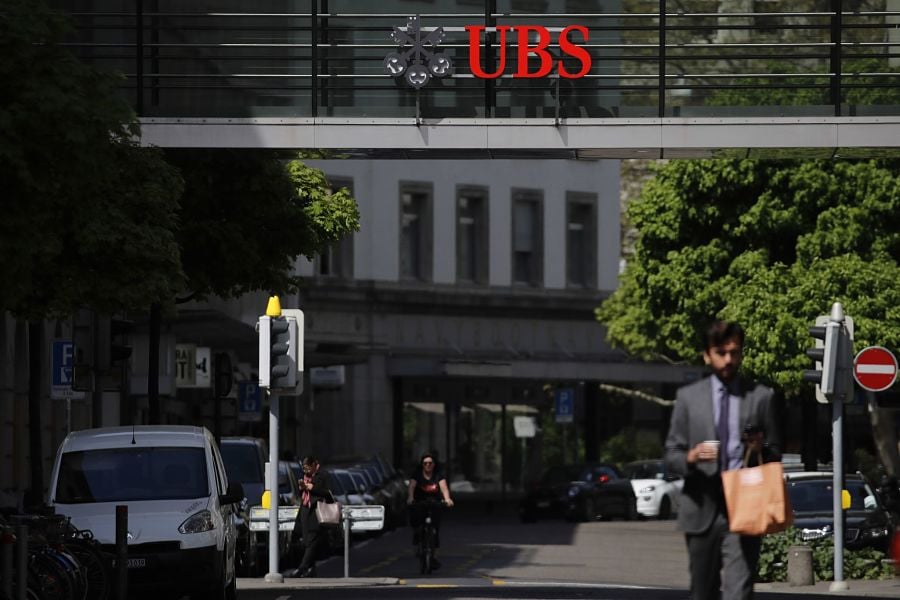
UBS Group plans to raise the fixed salaries for some of its more senior employees by as much as 20% in a move that may help reduce poaching and allow the bank to lower its bonus pool.
A review at Switzerland’s largest bank found differences in base pay among employees in the same roles, and when compared with competitors, people familiar with the plans said. As a result, UBS will increase fixed compensation for those it found were underpaid while reducing their variable pay, the people said.
The changes come as competition for top bankers heats up, with Julius Baer Group and Credit Suisse Group poaching teams from UBS in recent months. At the same time, retaining talent with the promise of large bonuses is getting harder as the Covid-19 pandemic puts a spotlight again on banks’ variable compensation.
“UBS regularly analyzes its total compensation structure,” a UBS spokesman said. “As a result, we will adjust selectively certain salary levels to remain competitive. However, we view any change in salary as total compensation neutral.”
At UBS, bonus pools for 2020 are expected to be allocated next month and awarded to staff in the first quarter. Up until now, line managers had used variable compensation to make up for the pay inequities, the people said. Going forward, bonuses will be used to reward employees for out-performance.
Investment banks have seen bumper revenue this year, in part thanks to stimulus measures from governments and central banks. Paying out large bonuses for that performance may be hard to explain at a time when workers elsewhere are losing their jobs. European regulators have already called on banks to limit bonuses during the pandemic to help maintain their financial strength and keep lending.
Variable compensation has long been controversial in Europe. European Union lawmakers capped bonuses in 2013, adopting what was then the world’s toughest bonus rules in a bid to tackle a corporate culture blamed for contributing to the 2008 financial crisis. Under the rules, banks can’t pay staff who meet certain criteria bonuses that exceed their annual fixed pay, unless shareholders approve a doubling of the cap. Some countries have taken an even stricter approach.
Switzerland, where UBS is based, requires that shareholders in public companies sign off every year on executive and board compensation, another rule introduced after the financial crisis.
The new compensation structure at UBS affects employees in every region, from executive directors to managing directors that the bank does not want to lose, the people said. The change will be made retroactively from Jan. 1, 2020.
UBS has already made a number of other changes to its compensation policies, including allowing staff to collect bonuses more easily after leaving the bank as the pandemic prompts more workers to reconsider their careers. The bank is also paying employees in less senior ranks an additional week’s worth of salary.

The financial advice industry has been facing inquiries into its cash sweep programs for years now.

Investor money allegedly went to strip clubs, exotic cars, and landscaping

Procyon adds $415 million in assets under management in New Jersey while Savant picks up a $213 million Southern California planning firm

With a growing number of real estate-rich Baby Boomers aging into retirement, some advisors may be failing to consider all the options available for those clients' assets.

Cornerstone Advisors study reveals compliance bottlenecks stall campaigns weeks after customer opportunities close.
As AI makes financial information more accessible than ever, Lana Hock explains why human judgment, trust, and empathy remain the qualities clients value most in a financial advisor
Northern Trust’s Ken Lassner shows advisors how to convert volatility into after-tax portfolio gains

