
Silver broke through the $36 barrier last week, reaching its highest level since February 2012. The iShares Silver Trust (Ticker: SLV) is up 26% year-to-date, on par with the SPDR Gold Shares (Ticker: GLD).
Of course, gold has been rolling in the past year, rising over 43% to $3,345 an ounce - almost double silver’s 22% gain – thanks to the declining dollar. Nevertheless, in the past month silver has surged 11% while gold has remained flat. Such impressive performance has wealth managers taking notice – though not necessarily diving in.
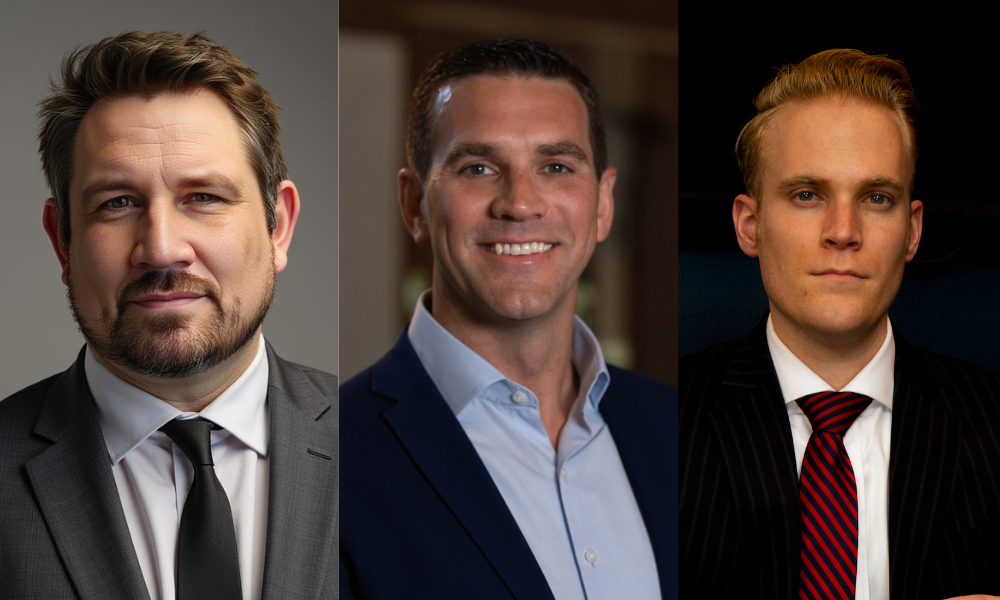
Corey Voorman, president and founder at Voorman Investment Counsel, said precious metal exposure has long been a “non-negotiable addition” to client portfolios. In his view, it provides unique exposure to an asset class that, at times, is uncorrelated to both equities and bonds.
“In an investing environment of increasing equity and bond correlations and near-record single name concentration in equity indices, precious metals provide an unmatched diversifier for client portfolios. Gold has outperformed the S&P 500 over the past three years and the index has had an admirable run,” Voorman said.
Voorman generally prefers gold to silver, saying silver is better suited to investors who are not afraid to hold “high risk assets.”
“Estimates peg silver’s industrial usage at near 50% of annual silver supply. This makes it more susceptible to boom and bust cycles. It is also more abundant than gold and historically has less value per density, making it less used by central banks as a store of value,” Voorman said.
Elsewhere, Brian Glenn, chief investment officer at Premier Path Wealth Partners, said silver has a “checkered history with maintaining purchasing power, let alone generating real gains” and therefore avoids it – and other precious metals - for clients.
“For us, we prefer to be deliberate about allocations that historically have generated wealth over the long-term, namely equities, and what a client needs for liquidity in the near-term, which we prefer yield-generating cash. Precious metal commodity prices can be volatile and fail to generate cash yield, making them less ideal for that portion of allocations,” Glenn said.
Ben Lies, president and chief investment officer at Delphi Advisers, meanwhile, believes that having a small amount of silver in certain types of portfolios could help create some buoyancy in times of high inflation. That said, it would not be his commodity of choice, preferring a basket of commodities instead because “timing is everything in commodities.”
“If you want to invest in silver, you are better off waiting until it falls significantly off its high and then hold until it approaches its all-time high. The problem is that the stagnation phase of commodities can last for years. The last stagnation phase lasted about 10 years and the one before that was about 25 years,” Lies said.
Moving on, Noah Damsky, principal at Marina Wealth Advisors, does not allocate to precious metals at all, believing that a relatively small allocation can be a significant distraction rather than additive.
“While silver is having its day in the sun, clients can get hung up on the periods of underperformance in precious metals,” Damsky said.
Added Damsky: “For most retirees, a speculative allocation is outweighed by investing in income producing and growth-oriented assets including public and private markets equities and fixed income,” Damsky said.
Finally, Joshua Barone, wealth manager at Savvy Advisors, said his precious metals strategy is "deliberately gold-centric," and based on sound macroeconomic, fiscal, and geopolitical fundamentals.
“We do not allocate to silver, due to its redundancy and lack of institutional demand. At this stage of the cycle, we view miners as offering compelling value, and we continue to maintain complementary exposure to copper and other strategic metals for their role in global reindustrialization and energy transition,” Barone.

Jim Walesa worked in the securities industry for 39 years before leaving in 2021.

As the market turned from pricing in cuts to betting on hikes this year, the developing reality of a K-shaped economy has real implications for households and investors alike.

Also, SEI names LPL’s Kristie Edling-Day as CIO, TD Bank U.S. taps Hardeep Walia to lead wealth, and BMO adds an Illinois regional president

FINTRX data shows 342 company transactions in the quarter, with wealth management consolidation driving nearly one in seven deals.

State regulators secure $4.4 million from two broker-dealers over unreasonable charges on small-dollar retail equity trades.
Knighthead Life entered the market with a competitive MYGA. A strong launch earned advisor confidence and paved the way for FIAs.
As AI makes financial information more accessible than ever, Lana Hock explains why human judgment, trust, and empathy remain the qualities clients value most in a financial advisor

