
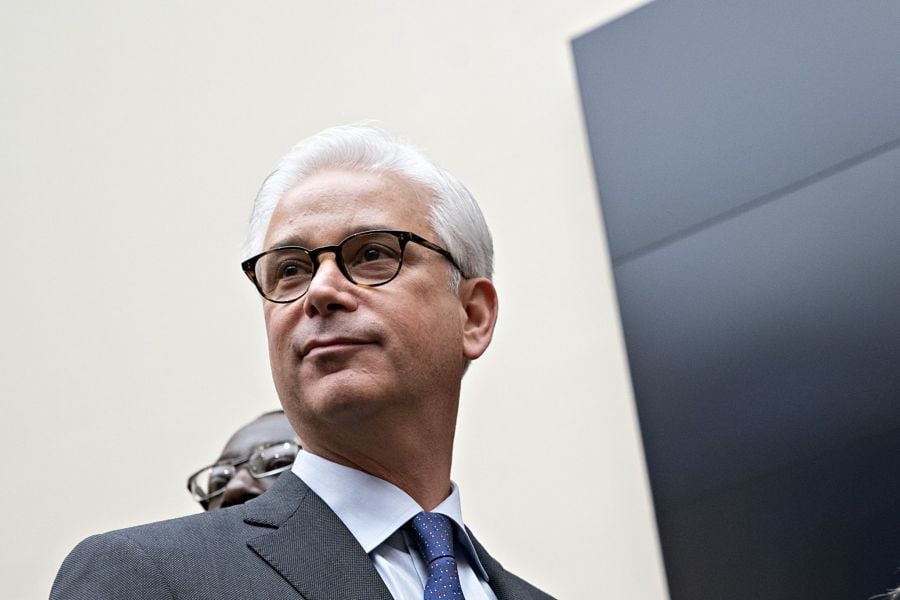
Wells Fargo & Co. raised Chief Executive Charlie Scharf’s pay 20% for 2021, a year in which the bank's profit recovered and shares advanced more than most of its rivals.
The board paid Scharf $24.5 million for his second full year atop Wells Fargo, up from $20.3 million for 2020, according to a filing Monday. The package consisted of a $2.5 million salary, a $5.4 million cash bonus, $10.8 million in performance shares awards and $5.8 million in restricted share rights.
With a 59% gain last year, Wells Fargo’s stock was the third-best performer in the 24-member KBW Bank Index — a stark contrast to 2020, when it was the worst performer of the group. Profit rebounded to above pre-pandemic levels last year after shrinking dramatically in 2020. The San Francisco-based bank, which has been beset by scandals since 2016, also cleared some key regulatory hurdles last year, including the termination of a consent order.
Still, Wells Fargo has nine public regulatory orders that remain in place, including a costly Federal Reserve-imposed asset cap. The firm was handed a fresh consent order from the Office of the Comptroller of the Currency in September over its lack of progress in addressing longstanding problems. Scharf has repeatedly cautioned that while he believes the company is making progress, there will likely be setbacks along the way.
As Scharf's pay is reported, compensation is in focus across Wall Street this year after pay pressures arose from the junior ranks through the C-suite last year. Morgan Stanley CEO James Gorman, JPMorgan Chase & Co. CEO Jamie Dimon, Goldman Sachs Group Inc. CEO David Solomon and Bank of America Corp. CEO Brian Moynihan also scored raises for 2021 after their respective firms reported annual profit records.

New Escalent research finds younger, more diverse DC plan participants are open to rollovers - but increasingly prefer outside firms.

UBS finds millionaire investors are more optimistic than before 2024 but are actively repositioning portfolios ahead of November 3.

Auto-enrollment has landed for 60 million children, but Baird planning director says key questions on rollovers and Roth conversions remain open.

MyComplianceOffice's AI-assisted surveillance links employee chats on Slack and Telegram with prediction market trades as Wall Street tightens rules

Elsewhere, Raymond James absorbs a family-run practice from Commonwealth into its independent channel, while RBC welcomes a father-son tandem formerly from UBS.
Knighthead Life entered the market with a competitive MYGA. A strong launch earned advisor confidence and paved the way for FIAs.
As AI makes financial information more accessible than ever, Lana Hock explains why human judgment, trust, and empathy remain the qualities clients value most in a financial advisor

