
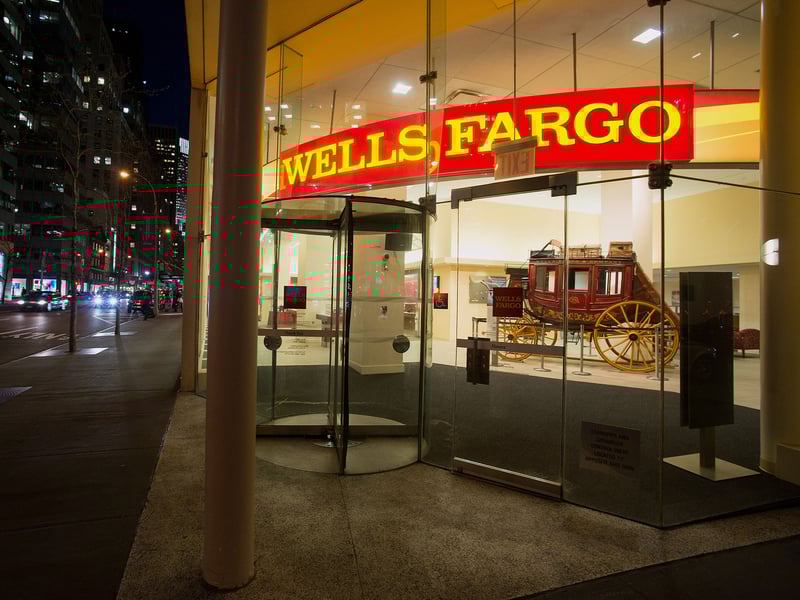
A majority of Wells Fargo & Co. investors voted in favor of a shareholder proposal requesting an annual public report on the firm’s efforts to prevent harassment of and discrimination against protected classes of employees, bucking the board’s recommendation to vote against it.
The results are preliminary, the firm said Tuesday at its annual meeting. A vote on a separate shareholder resolution calling for a simple majority vote for proposals was too close to call, the bank said, while investors rejected all other shareholder proposals and approved all company ones.
The proposal on the annual harassment and discrimination report, submitted by New York State Comptroller Thomas DiNapoli, suggested the board consider disclosures such as the total number and aggregate dollar amount of abuse-, harassment- or discrimination-related disputes settled by the company in the previous three years.
“A public report such as the one requested would assist shareholders in assessing whether the company is improving its workforce management,” DiNapoli said in his supporting statement. “Civil-rights violations within the workplace can result in substantial costs to companies, including fines and penalties, legal costs, costs related to absenteeism and reduced productivity.”
In its recommendation against the proposal, Wells Fargo’s board said the company has policies in place intended to prohibit harassment and discrimination.
“We do not believe that the proposed report would provide shareholders with meaningful information on our efforts to prevent workplace harassment and discrimination and would require a level of disclosure that is not common practice among our peers or the broader market,” the board wrote.

South Carolina estate planning firm joins Osaic’s IBD network, citing succession planning tools and multigenerational growth resources.

A new SIFMA and KPMG study of more than 2,100 US investors finds satisfaction high, AI-only trust falling, and demand for human guidance growing across every generation.

Retail banks and private wealth firms scored 40 in Fitch's AI stress test, signaling possible one-notch downgrade risk under an adverse scenario.

Elsewhere, Wells Fargo Advisors adds a $400 million Morgan Stanley veteran in Naples as an ex-Cetera advisor goes independent with LPL.

According to a federal charges Bradley Heppner, 60, received more than $150 million in payments through funneling money from GWG Holdings to a shell company.
Knighthead Life entered the market with a competitive MYGA. A strong launch earned advisor confidence and paved the way for FIAs.
As AI makes financial information more accessible than ever, Lana Hock explains why human judgment, trust, and empathy remain the qualities clients value most in a financial advisor

