
Years on the job are not what determine whether a next-generation advisor is ready to inherit a book of business, according to senior advisors and executives interviewed across the industry. Instead, they point to judgment under pressure, emotional intelligence and the client's willingness to transfer trust – not just the retiring advisor's willingness to hand it over. With RIA succession planning gaps persisting across the wealth management industry, what makes a successor truly ready has taken on new urgency.
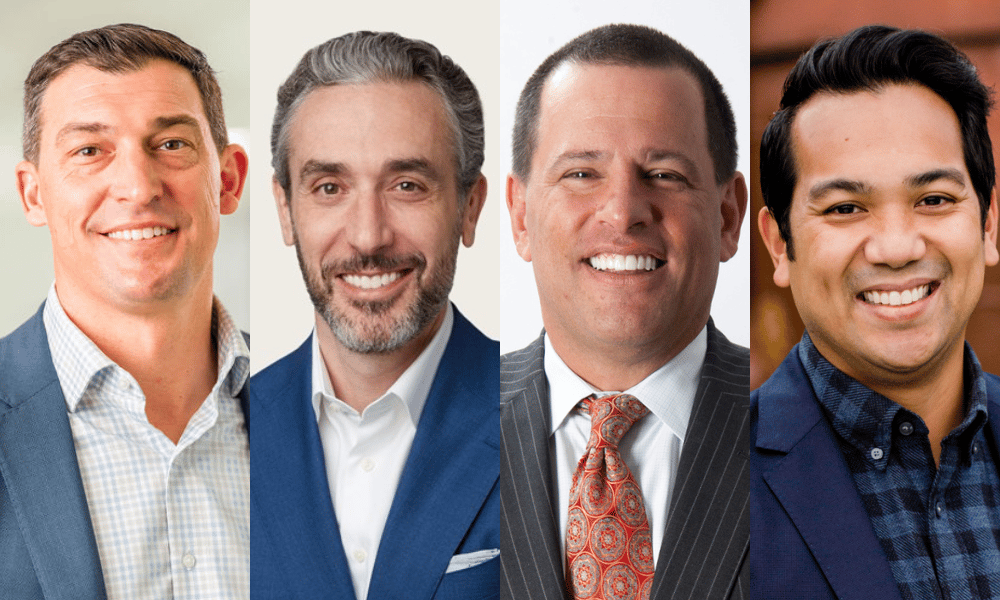
Will Turner, co-founder and principal at Indianapolis-based Forta Wealth Partners, said he has made his own mistakes on both sides of a handoff. He believes a successful transfer depends on team culture: strong support staff so clients feel their trust circle is not disappearing, a company mission not solely driven by revenue, and open communication about why the change is happening.
"When I approach a client handoff with a great support staff, aligned mission, and open communication, the success rate increases," Turner said, adding that senior advisors often underestimate how much clients already sense about a coming transition. "Clients trust me because I recognize this and I treat them with respect. As I age, one of the most respectful things I can do for my beloved clients is to make sure they are properly serviced and cared for."
Stuart Katz, president of private wealth management at Los Angeles-based Lido Advisors, said readiness has little to do with tenure. What he looks for is judgment, emotional intelligence and the ability to understand a client beyond the portfolio itself.
"You know an advisor is ready when they stop thinking primarily about demonstrating what they know and start focusing on understanding what matters to the client," Katz said. "The client begins calling them directly because they trust their judgment – not simply because the senior advisor told them to. That's the real transition point."
Katz said he has seen advisors with strong credentials and deep investment knowledge fail an important test: missing the real concern behind a client's question because they were focused on delivering the technically correct answer. "A client may ask about portfolio risk when they're actually worried about whether their family will be financially secure," he said, "or ask about an estate strategy when the real concern is how their children will handle wealth."
Senior advisors often assume trust transfers automatically once they vouch for a successor, Katz said – and it does not. A relationship built over decades carries history a new advisor cannot inherit through an introduction alone. "The best transitions happen gradually," he said. "Succession isn't complete when the senior advisor is comfortable stepping away. It's complete when the client is comfortable with them stepping away."
Chris McMahon, founder and chief executive of Pittsburgh-based MFA Wealth and Aquinas Wealth Advisors, said the biggest mistake senior advisors make is waiting for a successor who sounds and operates just like them.
"If you wait until someone sounds like you, carries a room like you, handles objections like you, you've waited too long," McMahon said. "What I'm actually looking for is whether they've developed their own voice. If someone is 70% there, that's your window. Hand off then. The remaining 30% only comes from actually doing it."
Advisors typically overestimate their own indispensability while underestimating how ready a junior advisor already is, McMahon said, and the cost of delay is asymmetric. "The cost of handing off a little early is manageable," he said. "The cost of crushing someone's momentum, or losing them altogether, is not." He added that senior advisors should measure candidates against who they actually were at that age, not a polished memory, since advisors ignore succession planning at their own peril when they hold out for perfection.
Dave Valdez, chief strategy officer at Anchorage-based Alaska Wealth Advisors, said sound judgment during difficult moments – a market drop, a death, a divorce – is the clearest signal of readiness. "When they can hold their ground instead of looking over their shoulder for permission, that's when they're ready to own the relationship," Valdez said. Many young advisors have the technical ability but lack the emotional maturity to stay neutral and warm under pressure, he added, and senior advisors often misjudge the pace a handoff should take, since trust-building differs for every client.
Heather Welsh, senior vice president and wealth planning department leader at Akron, Ohio-based Sequoia Financial Group, said the real test shows up around adversity, not technical skill. She recalled a junior advisor who froze slightly – technically correct but emotionally absent – when a client faced a parent's sudden need for long-term care. "The plan wasn't the hard part," Welsh said. "Sitting in the discomfort with the client was."
Senior advisors underestimate how much trust is built or lost in these moments rather than in quarterly reviews, Welsh said. "Trust isn't always transferred at the handoff meeting," she said. "It's earned in the first hard moment that follows it."

Meanwhile, DPL Financial Partners adds two annuity executives and Prime Capital Financial hires a Mid-Atlantic retirement plan consultant

Andrew Komarow pleaded guilty Thursday in federal court in Hartford to defrauding three financial services companies of close to $3.3 million.

Elsewhere, Cetera picks up a $210 million Connecticut team from MML, while Wells Fargo FiNet adds a San Diego family practice from LPL

Celebrity endorsements, $500M in claimed assets, and a state regulator stepping in.

“We needed to become a more agile and efficient organization,” said American Express CEO Stephen Squeri.
Knighthead Life entered the market with a competitive MYGA. A strong launch earned advisor confidence and paved the way for FIAs.
As AI makes financial information more accessible than ever, Lana Hock explains why human judgment, trust, and empathy remain the qualities clients value most in a financial advisor

