
A sharp drop in enforcement activity at the US Securities and Exchange Commission comes at a time when the regulator is simultaneously emphasizing strong investor protection, creating a mixed signal for wealth managers and advisory firms trying to interpret its direction.
Recent results show enforcement cases fell more than 20% in the latest fiscal year, even as the agency continues to highlight aggressive action in key areas, including a reported $17.9 billion in monetary remedies and a continued focus on protecting retail investors, pursuing fraud, and holding individuals accountable.
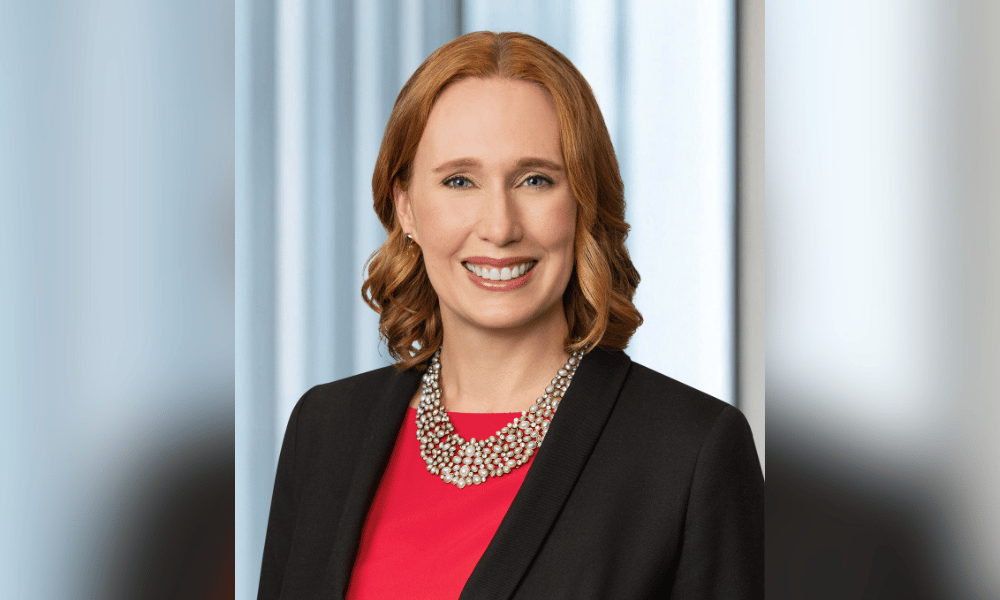
For Rebecca Fike, partner in the Regulatory and Enforcement group at Reed Smith and a former attorney in the SEC’s Division of Enforcement, the decline in case numbers is less surprising than the broader context surrounding it.
“The drop in enforcement activity comes as no surprise, though its’ always interesting to see numbers,” Fike told InvestmentNews. “It is genuinely surprising to see some commentary criticizing the previous SEC leadership, especially in an official SEC press release. I don’t think I’ve ever seen that before. They also noted the number of closed cases, which I’ve never seen before either but industry participants have been asking about for a long time.”
The more than 20% drop in enforcement cases may suggest a pullback, but Fike points to a period of significant disruption inside the regulator that complicates any simple interpretation.
“I hate to immediately rely on a classic lawyer response, but ‘we’ll see’ and ‘it depends’ really are the answers here,” she said. “While it is true that enforcement dropped fairly dramatically at 20%, given all the changes that took place at the SEC last year – from a new administration, new interim Chair, new Chair, DOGE and other cost-cutting and staff reduction measures, a longer than usual delay in appointing an Enforcement Director, and then her short tenure and abrupt resignation, it’s hard to pinpoint whether the reduction in case is due to all of the above or a true change in selectivity or aggressive enforcement of matters.”
That uncertainty leaves open the question of whether the SEC is becoming more selective—or simply navigating internal turnover.
Despite fewer cases, the SEC’s broader messaging suggests enforcement priorities remain firmly intact, particularly around protecting retail investors and addressing misconduct that affects them.
Fike sees those themes continuing, especially in areas tied to transparency.
“I think it will come down to a focus on finding poor disclosures and bad behavior,” she said. “The Commission will always be focused on rooting out fraud and harm to investors, but we can also expect attention on whether companies and funds are speaking honestly to investors about fees, conflicts, costs, results, and more. Companies cannot overemphasize or exaggerate the good, nor can they minimize or hide the bad. Transparency supports market integrity and allows investors to make informed decisions.”
One notable shift is how the SEC is communicating its priorities. Fike highlighted the agency’s unusually explicit criticism of prior leadership, which she views as a signal of a more pronounced philosophical shift.
“It seems to be signaling just that,” she said. “Oftentimes, a new administration will emphasize their particular areas of focus and why they think those areas are important, but a direct criticism of past priorities is usually only implied. Here the SEC seems to be saying ‘the last guy got it wrong’ as opposed to a much more subtle ‘we have different priorities on where to focus our resources.’”
The SEC’s decision to highlight closed investigations alongside enforcement totals may also provide firms with a clearer view of how cases are resolved.
“Statistics on closed investigations is something the defense bar and securities industry has requested for years,” Fike said. “It gives a much better picture into the overall enforcement landscape and gives support to SEC statements claiming that self-reporting and cooperation matter. Disclosing this number, and even emphasizing it in their press release, does give more insight into how investigations are being resolved. It will be particularly interesting to compare that number year over year and across future administrations, assuming it continues to be disclosed.”
For firms, that additional data may help validate decisions around cooperation and remediation.
At the operational level, however, Fike says it is still too early to identify meaningful changes in how exams and investigations are being conducted.
“Not yet,” she said. “So far a lot of what I have seen is the wrap-up of investigations opened under the prior administration. There has been so much turnover among the SEC staff that it has been hard to determine how much change in process is being driven by the change in leadership versus the change in the staff member handling matters that have been handed over by departing attorneys. As new cases are opened over the next year, I think we will learn a lot more about how much of the day-to-day examination and investigation steps are actually changing.”
Even with fewer enforcement actions, Fike warns that firms could misread the environment and scale back compliance efforts at their own risk.
“I’m not necessarily seeing it yet, but I do have concern that some firms will take their foot off the gas on compliance, feeling that time and resources are better served elsewhere on matters that seem more immediately critical,” she said. “The SEC is still very much an enforcement agency and if there’s anything this ‘new’ SEC has shown, it’s that the SEC can vacillate wildly from administration to administration based on the Chair and his or her views. Firms should ensure they are focused on compliance for their own sakes – fraud is inefficient. Strong controls ensure your organization learns about internal problems before they become external headaches and that is true regardless of the current SEC enforcement statistics.”
Looking ahead, Fike sees unpredictability itself as the central challenge for firms navigating the SEC’s evolving posture.
“The uncertainty,” she said. “For as much as this Commission is issuing statements and speaking at industry events, the changes we’re talking about here mean there is less predictability in SEC behavior and action. The best way through an issue a year ago may not be the best path now, and firms are looking at a future where the SEC could swing back and forth in approach every four years. This creates a lack of confidence that the compliance infrastructure you’re building today will be a sound investment a few years down the road. And that creates the risk that people don’t invest in the infrastructure at all or have a more difficult time convincing stakeholders that they should.”

As Robinhood and Schwab roll out AI agents and assistants, a new survey finds advisors still edge out chatbots in terms of client trust.

See which platforms and providers earned 5-Star recognition this year

Meanwhile, a multigenerational Cambridge team has hopped to LPL in Michigan, and Cetera's run of Commonwealth recruitment continues in New Jersey.

TIAA survey finds 53% of Americans worry about running out of money, as AI and medical advances scramble retirement income planning.

Two wirehouse veterans choose advisor-owned model as independents target ultra-high-net-worth clients beyond portfolio management.
As AI makes financial information more accessible than ever, Lana Hock explains why human judgment, trust, and empathy remain the qualities clients value most in a financial advisor
Northern Trust’s Ken Lassner shows advisors how to convert volatility into after-tax portfolio gains

